Art
The Case Is Closed, Full Stop: Andisheh Pouya in Conversation with Dariush Shayegan and Bahman Farmanara
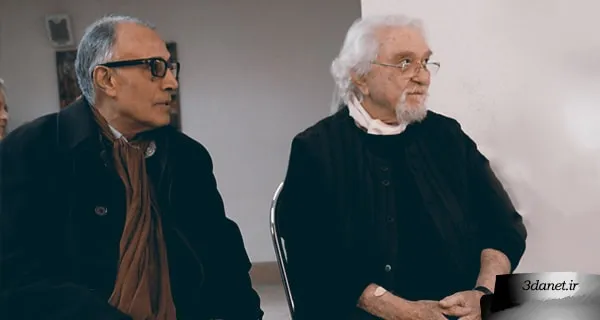
Bahman Farmanara and Dariush Shayegan discuss the relationship between life and death, one through the lens of cinema and the other through philosophy. Farmanara sees contemplating death as a path to living better, while Shayegan calls it a release: “The file is closed, and that’s that.”
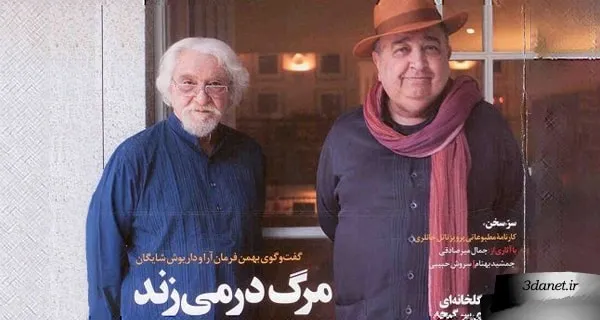
Mr. Farmanara! Three of your films—Smell of Camphor, Fragrance of Jasmine, A House on the Water, and A Little Kiss—can be combined into a trilogy on the themes of death and middle age. Of course, even since Prince Ehtejab, there has been at least one funeral in all your films, which itself shows that the subject of death is a central theme in your filmmaking. Why did this issue of middle age and death become a preoccupation in your filmmaking, especially after your return to Iran at the end of the 1980s?
Farmanara: Critics have said and written these analyses about my films, and I personally was not seeking to make a trilogy or to make films about death. The truth is that returning to Iran was very good and pleasant for me. Of course, they didn't let me work for ten years, and I constantly wrote screenplays, and my screenplays were rejected. As you know, Smell of Camphor, Fragrance of Jasmine was the eleventh screenplay I wrote, and it was accepted at the beginning of Mr. Khatami's administration. The theme of Smell of Camphor, Fragrance of Jasmine is that you live in a country but you cannot work and make films. A country that belongs to you. I was not hopeless and I did not think about death. My issue was that I do not want to live and make films anywhere other than Iran.
Shayegan: Meaning we shouldn't have to justify our presence, why we are here!
Farmanara: Yes! I left Iran in 1980. The reason was that the film Tall Shadows of the Wind, which had even received an A-grade license from the Islamic Republic, was banned after three days and created many troubles for me. At that time, I also said that the reason for my leaving was that I wanted the cultural disputes among the managers to be resolved, and then I would return. Our situation was unclear. After 35 years, I still feel that these disputes have not been resolved, and every minister who comes surpasses the previous one. It is as if culture in our country has four-year terms. My children were young, and by emigrating, I gave them the right to choose. But as soon as they went to university and no longer needed me, I returned. That was the story. Some say that my return was accompanied by thinking about death. But it was absolutely not like that. The story was just as I said. I never think directly about death. Death is something that is always present in the back of our minds. Going toward death is like a flyweight wrestler wrestling a heavyweight wrestler. It is obvious that the heavyweight always wins. So what business do we have with death? Shamloo says: "The time was short, but glorious." My view of life and death can be summed up in this line of poetry. How much time do we have, anyway? That is why I have emphasized that thinking about death always makes me live better. Let us know that our time for living is limited.
Mr. Shayegan, what image do you have of death? To what extent is thinking about death accompanied by anxiety, fear, and dread?
Shayegan: The great poet Rilke offers this image of death: "In the womb of the pregnant woman, behind her tired and kind face, two fruits are about to take shape: one is death and the other is life." Death is a part of life, and death and life are paired with each other, and the very moment of entering the realm of existence, death begins. In fact, every day that we are alive, we have stolen a day from death. When you are young, you do not think about death at all. You think you exist forever. As you age, you perceive death and understand it. I will soon be eighty years old. I have lived my useful life. From seventy onward, you know that you are moving toward death. That is why, for me now, death is liberation. The case is closed, full stop.
Farmanara: In today’s world, what intensifies the fear of death is loneliness. Once, if you fell ill, you were in your bed and the family gathered around you… Today, however, it’s fifty- or sixty-meter apartments and loneliness… . In the new century, in cities like New York and Paris, the issue of loneliness in a small apartment consumes you. This question of what happens when death comes for you has heightened the anxiety about death. But the truth is, one should not fear death. As the saying goes, when death is, I am not. There is a dialogue in Familiar Soil where the late Mrs. Nikoo Kheradmand, God rest her soul, says: “We are almost owed nothing by life either; because we did whatever our hearts desired.”
So you have no claims on life? You have no regrets in life?
Farmanara: No, there are no regrets. My father always said that if God wanted to divide His blessings equally among His servants, we have received more than our share; so always be grateful and do something so that others may also eat at your table. This has been the idea by which we have lived.
Shayegan: My father said exactly the same thing. There is truly wisdom in this saying. There are seven billion people on the face of the earth, we are among that one percent… perhaps even less than that one percent. What regrets could we possibly have?
If one can come to terms with death so easily, then why has immortality been important to human beings and why have they created myths for it? What is the importance of immortality?
Farmanara: Immortality as an alternative to death is very terrifying. In the early 1960s, a play was made into a film in America called Death Takes a Holiday. Fredric March stars in it. In that film, you see what predicaments arise when death does not exist. Everyone begs for death to return.
Borges portrays immortality very interestingly in the story “The Immortal.” He explains that under these conditions, everything becomes repetitive for everyone. It is as if life repeats itself in a labyrinth and one cannot hope for anything new.
Shayegan: It is interesting that while human beings know they are mortal and will die, they have always yearned for and still yearn for eternity. Michio Kaku, a Japanese-American physicist, has recently written a book titled Physics of the Future. He says that in the next hundred years, science may advance so much that cells can be constantly rejuvenated and humans become immortal. The possibility truly exists. It is as if for modern science and for Westerners, death is a solvable biological problem. Nevertheless, death remains a problem for modern man today because he is unaware of what comes with it.
And it is this unawareness that brings anxiety and dread.
Shayegan: But one can also push all these anxieties aside and live like a Khayyami, seizing the moment. I deeply believe in such a perspective and I am a Khayyami. Like Khayyam and the Stoics, one can come to terms with death very easily. Of course, those who are mystics believe that if you reach the station of annihilation in God and subsistence through God, you have become immortal, but I am neither a mystic nor have I reached the level of Rumi. Or, as the Indians say, you can reach a stage where you are dead and are a 'living liberated one.' In the wisdom of the East, and to some extent in the West, there are paths to immortality through asceticism. The true yogi is a 'living liberated one'; that is, he is both dead and alive. This is what immortality means. That is why in Islamic mysticism, death is called the intermediate resurrection; that is, a resurrection you experience while still alive. After that experience, you are both dead and alive. This is the great ideal and aspiration of Eastern mysticism. But there is a difference between me and a Hindu who lives in his mythological world. A billion Hindus live in mythology, not in reality. For a Hindu, suffering is sacred. Because the more you suffer and the more poverty presses upon you, it causes your karma to be dissolved. To be dispelled. And you will have a better next life. It is strange that in India, you walk out of a famous hotel like the Taj Mahal and see beggars sitting there, and they feel no sense of deprivation or resentment toward you. It is very strange; they should feel cheated, but they have no sense of grievance and are content with their poverty. This comes from their particular belief about life and death.
Farmanara: It is like having watched a very good film and at the end it says 'The End.' Why would you sit back down in your chair and watch this 'The End' again in the closing credits? There have been many good things in my life. Who guarantees that if I became young again, I wouldn't make mistakes and still achieve all of them?
But Mr. Shayegan, you who once believed that the problem of modern man would only be solved by returning to the continent of the spirit… You, who once had certain special experiences, it seems you have moved beyond all those experiences. As if they were just experiences. Of course, we had once heard you describe yourself as a cultural tourist…
Shayegan: … Yes! I have had various experiences in my life. I am not at all aggrieved; I have done everything. I used to be a yogi enthusiast and even sought out fakirs and exorcists. I associated with great scholars. I came to the conclusion that perhaps a truth lies hidden in many ascetic practices, but the difference between mysticism and charlatanism is only a hair's breadth. It is very easy for a Rasputin to emerge from the heart of a mysticism. I am not saying there is no truth in these ascetic practices. Perhaps there are yogis who can control their entire parasympathetic system for forty days. The parasympathetic system is the one you have no control over. They can lower their heart rate so much that they are considered dead. A person can do many things with their inner power, but doing these things requires a specific type of life, which I never wanted to have.
Shayegan: The further you go, the longer the street behind you becomes, and the shorter the street ahead. You reach a point where there is only a horizon in front of you. The street comes to an end, and behind it is a long, long street. I, too, have reached a point where there is no longer a street ahead of me. Behind me is a long street, but ahead of me, there is no path left.
Farmanara: Perhaps it would be interesting to say that three or four years ago, when I woke up in the morning, I was sitting on the edge of my bed when my gaze fell upon my hand and the wrinkles that had settled on my skin, resembling the fine lines I remembered from my mother’s hand. I saw that the former freshness was no longer there. I thought, it’s coming. Whether at work, on a film set, or at night? I didn’t think about it anymore. Brief flashes come in life and capture your attention for a moment, but if you are content with yourself and satisfied with the life you have lived, you move on. There is a line in Scent of Camphor, Fragrance of Jasmine that says: “My fear is not of death, my fear is of having lived in vain.” We have come and done things; now, if future generations look upon these works, we will live on in people’s memory—if we remain, that is. Because many have come and gone but have not remained. Ultimately, the end is death itself.
Mr. Farmanara, you said you have no regrets in life; but isn’t it a natural human desire for the time machine to turn back and return one to their youth? So that one might choose their profession, plan, and path again, more consciously, with a more conscious awareness of death?
Farmanara: No, not at all. I have no such wish, and I say this seriously. Not because I had a bad youth. But because I think, how much anxiety would you have to experience again, and wonder what will happen in the end? It’s like having watched a very good film and at the end it says “The End.” Why would you sit back down in your chair and watch this “The End” in the closing credits all over again? There have been many good things in my life. Who guarantees that if I became young again, I wouldn’t make mistakes and still achieve all of them? There is no specific blueprint for success in life. We just move forward, and as we age, more light falls upon the road we travel.
Shayegan: A return to youth, when you still don’t know what you want to become? Absolutely not. I don’t want to become young at all. At this age, horizons are open to me, but in youth, no horizon is open at all. You are in a whirlpool, not knowing what will happen and where you will end up. As soon as you reach our age, it’s as if you have read the scenario once. You know what the end is. Repeating the scenes again requires patience. For youth to return, to study, and to wonder what my future will be, and so on… For those fears and anxieties to repeat themselves again is terrifying to me… Around the ages of 55-60, the fears and anxieties depart. Why should one return to the period of fears and anxieties?
The image Tolstoy presents of death in The Death of Ivan Ilyich is perhaps the most unparalleled depiction of death ever given……
Shayegan: It is extraordinary. In The Death of Ivan Ilyich, Tolstoy precisely measures the problem of life with death. That is why it was so interesting to me. Much like Rilke, who also measures life against death. Ivan says, I have done nothing in my life; I never had the courage. He constantly doubts. When I was young, two books greatly influenced my view of death, one of which was Tolstoy’s The Death of Ivan Ilyich. In this book, Ivan is dying and thinking about what he has done in his life, now that he is dying. Its message is that perhaps the disproportion between life and death causes us to feel a sense of loss at the moment of death. Rilke’s approach to confronting death can also be called a heroic one. A person who, through the constant posing of questions, anxieties, and problems, heightens their awareness to the point of madness and elevates their authenticity and honesty to an almost pathological degree. The other book that influenced me is the collection of poems Rilke wrote in Paris under the influence of Baudelaire. In his book of poems, Rilke says: “O Lord, give each his own authentic death, a death born of his life.” That is, let each person’s death be as beautiful as their life. This is the best wish one can have.
If the image of death given in The Death of Ivan Ilyich is a realistic depiction of a person’s confrontation with death, you seem to be an exception to this rule. You are content, whereas Ivan, like most people, is discontented…..
Shayegan: Yes, but when I look at my own life, I don’t see myself facing such a doubt. Ivan never thought he was going to die. He becomes aware of it suddenly. Every morning when I wake up, I think about why I am alive. And I think it is a miracle that I have woken up again. Just as in Iran, the fact that every morning I turn on the tap and there is water, and the gas and electricity haven’t been cut off, seems like a miracle. The story of Ivan Ilyich’s death also shows that if life and death are in proportion to one another, then death becomes easy. I think my life has been full and complete, and I no longer have any claims on the world; I have taken everything I wanted. I know that many people are claimants from life and the world, they bear grudges against it and are resentful… This malady is common among intellectuals. But fortunately, I am not afflicted by it.
Mr. Farmanara, if you were to choose the most interesting image of death you have seen in a film, what would your choice be?
Farmanara: In one of Kieślowski’s films, White, there is an image of a man who decides to commit suicide. The person who is supposed to fire a bullet into his brain realizes at the last moment that there is no bullet in the gun. He pulls the trigger, but nothing happens. It cuts immediately, and the man who wanted to kill himself comes out. The weather is snowy, and he slips in the white snow; that is, the blackness of death that had come for him and did not happen exchanges itself for the whiteness of life, which is the reverse image of death. For me, the most beautiful existing image of death is that; the reverse image of life.
Shayegan: In the film The Killers (1946), we also encounter a shocking image of facing death. Lee Marvin played the role of a hitman who was paid to kill someone. When he finds his prey, he sees that the person is not afraid of death at all and is resigned to it. He kills him, but is shocked and so transformed that he goes after the person who hired him to kill that individual.
Mr. Farmanara, death and the confrontation with it is an important theme in your films. Although you might say you haven’t made a trilogy about death. The encounter with death changes the perception of life held by the heroes of your films. Personally, when did you seriously feel that something called death was standing before you in life? And what was its effect on you?
Farmanara: The first time was when I felt that time was passing quickly for me. I was 37 years old. The feeling had come over me that the weeks were passing quickly. I had gone to Canada and expected to work, but I felt that the weeks were ending quickly. I had a friend who was a famous writer; “George Woodcock.” I brought it up with him, and he said this is the first sign in every person’s life that they become aware of the passage of time. Because as long as you are young, you keep asking yourself why this year isn’t ending? A few days ago was my mother’s anniversary. We had gone to my mother’s graveside. Not just me, but my brothers and sisters were all surprised that nine years had passed. On the sixteenth of Khordad, it will be fourteen years since Golshiri’s death. When you notice this passage of time, you also appreciate it. For example, I no longer like having people around me whom I don’t like.
What about you, Mr. Shayegan; when did the issue of death become an issue for you?
Shayegan: From the age of 45–50, through reading modern literature, I thought about death and accepted it. In modern literature you are constantly confronted with the subject of death. In mystical literature the path of death is mapped out in advance. They give you an address of where you came from and where you are going. But in the new world, where everything becomes a problem, death naturally becomes a problem too. Then it is up to you to overcome death and accept it. Death becomes a part of your life. Right now I am here, and I may not be here tomorrow morning. I must accept this. The only thing I dislike is long illnesses, Alzheimer's, and the like. One should write a will for those around you so that if this happens, they can resolve the issue for you. Emil Cioran, the Romanian-born French writer whom I like very much, says that the day you mentally accept that you can end your life at any moment you wish, that day your death has arrived. This right must exist, and as the Italians say, we must be able to say, 'Enough, the comedy is over.'
So you would like your death to be as magnificent as your life?
Shayegan: Yes, it is meaningless to fall into a sickbed and suffer. Years ago I saw Sohrab Sepehri hospitalized in London. He was in bad shape and it was clear he would die very soon. But he himself did not think at all that he was dying. It was very strange to me. He was rejecting death. His illness was serious, but he would not accept death.
Farmanara: My mother died after ten years of Alzheimer's, but for me she had died ten years earlier. Alzheimer's is the death of those around the patient. You suddenly see that the mother who used to look at you with affection is no longer there. I felt sorry for my mother because she was caught up in a terrible illness. My father, at the age of 78, had just learned Spanish so he could speak easily with my mother's nurses. But the night before my father died, he called us four brothers and sisters, and we sat around his bed. He said two things hold a family together: affection and unity. And enjoy your lives. He said nothing more until he died the following afternoon. I felt very sorry for my father's death; because he was in love with life.
Shayegan: Some deaths one never forgets. For me, my father's death was like that. This year marks fifty years since my father's death, but not a day goes by that I do not remember him. I miss his absence terribly.
Now let us think about a more precise situation. If you were told you have three months left, and three months from now, your life will end on a set date and time, what choices would you make during those three months and with the onset of the final moments?
Farmanara: Three months is not a lot of time. If I had more time, I would take another look at my films; because in every film there is a shot where you think how good it would be if you could redo it. Even if you cannot redo it in this short time, just being able to improve its sound even is good. At least I would have spent my time on something positive.
What benefit would this positive action have for you after death?
Farmanara: In any case, whenever you see Prince Ehtejab, it is connected to "Bahman Farmanara." I wish I could have done something so that Prince Ehtejab was not dubbed. Because we did not record the sound on set, it was dubbed. I would have liked the sound quality of the actors to be perfect. I read somewhere that when Truffaut was told he had seven months until death, knowing he had a tumor in his brain and would die soon, he remixed all his films.
So your attention is essentially on what remains of you for the public, not your private life?
Farmanara: No… For instance, what should I do that I haven't done?
What about you, Mr. Shayegan? If you were told you only have three months left?
Shayegan: My life’s routine won’t change at all. My peace of mind won’t be disturbed. I wake up every morning and carry on with my daily schedule. Because I already know that my life will end one day. What difference does the timing make now? We must become aware that the ego, this dragon inside us, forever craves nourishment, and at some point you have to hit it on the head to calm it down. The ‘I’ within a person does not simply quiet down. But the day it does quiet down and you tame it, you become at ease. You come to terms with everything. You become serene.
Kübler-Ross explains the five stages an individual goes through after becoming aware of approaching death; from the stage of denial to the stage of acceptance. So, if you were informed of your death in the near future, you would no longer need to go through a period of passing through these stages?
Shayegan: No, because I have already reached the final stage and I see myself from the other shore.
Farmanara: What Kübler-Ross says relates more to deaths that come upon people suddenly and in their youth. For instance, you are thirty years old and they tell you that you have cancer. You ask yourself, why me? First you deny it, then you get angry, until finally you accept the reality. I have no desire to climb to the peak of Damavand, nor is there any other exciting thing left that I wish to do. Perhaps my only wish would be to see the people I love, that’s all.
Shayegan: Perhaps my only wish, which is not even a personal one, is for the situation in my country to improve. I love Iran and I think our people deserve a change in circumstances.
For you too, Mr. Farmanara, as one can understand from your films, it is not only death that is a serious component. Alongside death, you also pay attention to the change in living conditions that Mr. Shayegan mentioned. For example, in Smell of Camphor, Fragrance of Jasmine, the body of a fifteen-year-old girl who committed suicide is shown in the morgue, which is an image of the disarray of social and political conditions.
Farmanara: Yes, because we have had friends who committed suicide. As if you hadn’t paid attention to them, and by committing suicide they wanted to break your heart. The fact that Hajir Darioush committed suicide in an apartment on the other side of the world, and they only found out two days later that he had killed himself, is very painful. I held a memorial service for him here and only 28 people came, whereas considering the years he was in Iran, if only five people from each year of his students had come, the hall should have filled and emptied ten times over. But it didn’t. When one sees these things, one’s heart aches for the painful fate of people. These were good people.
Shayegan: They were the elites of this country. In the old days, when they sent us abroad to study, our fathers would drum into our ears that you go, you study, and you come back and serve your country. They repeated this sentence many times. The idea of serving the country was etched into our minds. Our mission was that if we went to Europe, we absolutely had to return and serve.
Farmanara: And in the face of these events, you feel that you are alone, and your heart breaks that you took so much trouble, loved your country passionately, served it, and were an elite, but now you are a nonentity.
In the film Familiar Soil, at one point Namdar says that when a person reaches a certain age, they must live day by day. So, having passed middle age, do you also have such a picture of life?
Farmanara: Yes, I say this about myself as well. After reaching a certain age, every morning when you wake up, you are surprised that there is still another morning for you, that your name hasn’t been crossed off yet, and you still have to go about your work and life. In any case, the further I go, the shorter the future becomes. I have a long past behind me and a very short future ahead.
Shayegan: I was reading a book whose author had given a wise image of death. He wrote that for a young person, life is like a long, tree-lined street stretching out ahead. But the further you go, the longer the street behind you becomes and the shorter the street ahead. You reach a point where there is only a horizon before you. The street comes to an end, and behind it is a long, long street. I, too, have reached a point where there is no longer a street ahead of me. Behind me is a long street, but ahead of me there is no more road. At thirty, you still have to build your life; you are still at the beginning of the street, and the street continues before you. But what about at eighty? Sixteen years ago, in this very next room, I had a personal experience. My chest was hurting. For a moment, I thought I was having a heart attack. But I wasn't afraid at all; I wasn't terrified or flustered. I calmly called my cousin. I said, I'm having a heart attack, take me to the hospital. I don't know why, but I was in very good spirits. I said to myself, perhaps death has come and I am to be set free.
Farmanara: The recent illness I've been afflicted with for nine months is bothersome. An unknown virus that attacks the walls of the carotid artery, causing headaches and dizziness. But at this age, if I let myself become depressed and fall apart because of illness, I'm done for. A while ago, I saw Ahmadreza Ahmadi. He said, let's issue a statement that we will never die. I said, many people would be upset by that statement. But write it, and I'll sign it too.
Shayegan: I also work a lot and keep myself busy with life. I am working on Baudelaire, who changed the concept of modernity. So now, this is my new pastime.
Mr. Farmanara, at the end, please tell us a little about Delam Mikhad; your new film, which critics are already saying is the first film in Bahman Farmanara's trilogy of life.
Farmanara: These are all the critics' words. The film has a comedic theme in the first sixty minutes. It's the story of a man who thinks that over these past 34-35 years, people's right to happiness has been trampled. And because people's happiness cannot be realized, he has blown a fuse and lives in a delusion; whenever he hears a particular piece of music in his mind, he is compelled to dance, regardless of whether the surroundings are suitable for dancing or not, and sometimes he gets a thorough beating. From a certain point onward in the film, you sense that these are all his delusions.
.
A Conversation with Dariush Shayegan and Bahman Farmanara | Andisheh Pouya | Issue 17 | Tir 1393
.


Discussion2 comments
آموختم از نگاهشان ، قرابتی نیست ، ولی همین هم بر زیبایی آن نگاه و نظرات می افزود
با سلام و درود فراوان بسيار عالي بود . قبلا هم خوانده بودم ولي اين بار اثر ديگري داشت . نه فقط به خاطر سن و سال خودم بلكه به إستاد شايگان فكر ميكنم كه ايشان واقعا بر بالهاي انديشه پرواز ي داشتند بر گستره زندگي . روحشان شاد