Cultural reform in a religion-centred society requires rethinking religious thought. Omar Ahmadi identifies the common denominator across Salafi currents as devotion to the pious predecessors, and characterises radical Salafism as holding a 'law-oriented ijtihad' grounded in the 'sovereignty of the text'.
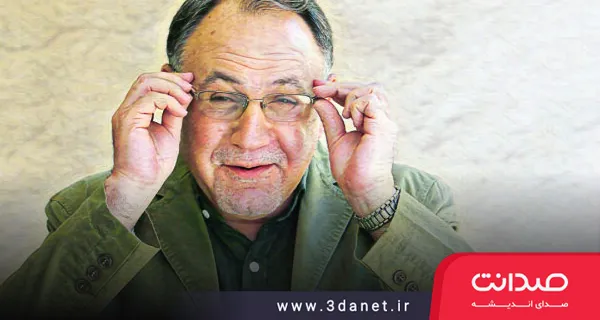
Omar Ahmadi was born in 1962 in Piranshahr. He is a retired mathematics teacher and completed his master's degree in Philosophy of Science at Sharif University with a thesis on "Falsification in Popper's Methodology and Epistemology." He believes that cultural reform in our society requires rethinking religious thought with the aim of reconstructing it.
.
The Transition from "Religiosity" to "Religious Practice," the Semantic Spectrum of Salafism and Religious New-Thinking
In conversation with: Omar Ahmadi – M.A. in Philosophy of Science
Note: Omar Ahmadi was born in 1962 in Piranshahr. He is a retired mathematics teacher and completed his master's degree in Philosophy of Science at Sharif University with a thesis on "Falsification in Popper's Methodology and Epistemology." He believes that cultural reform in our society requires rethinking religious thought with the aim of reconstructing it. At the outset of the discussion, he said:
"Religion is the most important pillar of culture in religion-oriented societies. In such societies, there exists a deep and complex relationship between religion and other categories, including cultural categories, in the underlying layers. In fact, one cannot undertake serious cultural work in a religion-oriented society without paying attention to the category of religion. Any fundamental work in a religion-oriented society requires a fundamental look at the category of religion. Neglecting religion, in reality, means neglecting any fundamental movement."
The conversation began without preamble and in a friendly manner, focusing on violent religion-oriented currents and, generally, the macro-component of the Salafist attitude. In his view, "Hadith-sufficiency," especially in the realm of rulings (i.e., Ahl al-Hadith), which leads to the "dominion of the text," is the most important component of radical Salafism. The "dominion of the text" in turn leads to "law-oriented ijtihad." However, the macro-component that links all Salafi spectra together is "their concern for the heritage of the righteous predecessors (al-Salaf al-Salih) and their utilization of it in their religious understanding and practice."
The Idea of Reform:
What do you see as the common component of Salafi currents?
Omar Ahmadi:
In my opinion, the main and central element of Salafi thought is their positive and optimistic view of the righteous predecessors (al-Salaf al-Salih), and at the head of them, the Companions of the Prophet (PBUH). It is a view and attitude that drives them to believe that the correct understanding of religion and a faithful life according to the teachings emanating from this correct understanding are the monopoly of the righteous predecessors, especially the Companions of the Prophet. Hence, they aspire, by drawing near to this ideal, to organize their system of religious beliefs as well as their system of individual, social, ethical, and jurisprudential conduct "like the righteous predecessors" or "with inspiration from the righteous predecessors." This fundamental notion directs Salafi thought (in its radical sense) and other thoughts close to it towards a "law-oriented ijtihad" approach to the reserves of religious culture, instead of a "model-oriented ijtihad" approach. From the perspective of the Salafi approach, religion (i.e., the Quran and Sunnah) has presented us with a collection of the best laws, and by referring to our tradition and past, we can benefit from that open table. (Refer to the treatise "Salafism Between Proponents and Opponents" by Muhammad Shakir al-Sharif.)
According to the Salafist view, two fundamental functions are envisioned for the righteous predecessors:
The first function: It is exclusively these righteous predecessors who are considered the only path connecting us to the primary sources of religion, namely the Quran and the Prophetic Sunnah. Given that the Quran's authenticity is definitive due to its mass transmission (tawatur), the first function pertains more to the Prophetic Sunnah. In this regard, special attention has been given to slowing down the process of diminishing the repository of hadiths and also strengthening its historical reliability, in order to make this path more open and increase its security. To achieve these two goals, efforts have been made to expand the semantic domain of the term "Companion" as much as possible and also to be less strict in using and applying the concept of the "uprightness of the Companions"!! (The third tape of the "Debate" by the late Naser Sobhani is illuminating in this regard.)
The second function: Among the Salaf al-Salih, the Companions and, foremost among them, the Sabiqun (the Forerunners) hold a privileged position. Because they witnessed the kindling of the furnace of prophethood and the descent of the rain of revelation, were present in the midst of the events of revelation, and were educated and nurtured in the school of the Prophet, their collected commentaries, interpretations, and elucidations of religious teachings derived from the Qur’an and Sunnah must be heeded with the ear of the heart and regarded with the eye of favor.
By reflecting on these two functions pertaining to the Salaf al-Salih, we realize that, for Salafism, the Qur’an and especially the Sunnah possess essential and supreme importance, and, as the saying goes, have a “substantive aspect,” whereas the entire importance of the Salaf al-Salih stems solely from their “instrumental aspect.” For this reason, they are placed in a lower rank and, in fact, acquire a secondary and subsidiary importance. Hence, one might imagine that it would be more fitting for Salafism, and particularly radical Salafism, to be named and called “Ahl al-Hadith,” even though they are sometimes referred to by this title. However, it must be noted that, given that every process is oriented toward a product commensurate with itself, the value of the process is tied to the value of the product it aims for and establishes a direct relationship with it. Moreover, we humans, according to our capacity and ability, are “duty-bound to the task” (= adopting the process), not “commissioned for the result” (= obtaining the product). Therefore, it seems that the choice of the title “Salafism” is not unjustified in this respect.
It is worth mentioning that when studying the category of Salafism, as with many other categories, one must adopt a “spectral view.” At the two ends of this spectrum, one can name “moderate Salafism” and “radical Salafism.” The common denominator of all spectra of Salafism is according special attention to the Salaf al-Salih, being in their company and intimacy, sitting at their table, nourishing oneself from it, and drawing strength. But one becomes addicted to this companionship and, indifferent to other tables, harbors the ambition of chaining the present and the future within the cage of the past (= radical Salafism). Meanwhile, the other seeks to bring the past into the present and link it thereto, so that it may inspire its orientations (= moderate Salafism). Other layers of this spectrum, as circumstances dictate, are closer to or farther from one of the two ends of this spectrum. It could perhaps be said that individuals like Muhammad ibn Abd al-Wahhab are instances of radical Salafism, whereas figures like Shah Waliullah Dehlawi, the 18th-century Indian mystic, hadith scholar, and theologian, represent moderate Salafism. And likewise, individuals such as Muhammad Abduh stand at the boundary between moderate Salafism and religious intellectualism.
Radical Salafism, in defense of its position, has devised certain arrangements and resorted to justifications, which are as follows:
Firstly: The contemporary world is merely a “quantitative extension” of the past world and has therefore not undergone “qualitative transformation and essential revolution.” Hence, the problems and difficulties of humanity today are, in reality, an extension of its problems and difficulties of yesterday.
Secondly: According to radical Salafism, by relying on religious rulings, all human problems and difficulties can be solved. In this regard, they have fixed their gaze, above and beyond all else, upon the Prophetic Sunnah and Sirah. For, in their view, the Sunnah is like a polygon that both contains all Qur’anic rulings (= the declaratory or confirmatory Sunnah) and includes foundational rulings that the Qur’an did not address (= the foundational Sunnah). In addition, the Sunnah is the detailed elaboration of the concise rulings of the Qur’an (= the detailed Sunnah), and finally, the Sunnah is the interpreter of the ambiguities of the Qur’an (= the interpretive Sunnah). It is in this way that the Sunnah, in the view of radical Salafism, attains such an elevated status and enjoys a unique and unparalleled position (= Ahl al-Hadith or hadith-sufficiency).
This type of religious sufficiency (or, more precisely, hadith-sufficiency) leads radical Salafism down a path where it falls into the trap of the “illusion of self-sufficiency” and cries out: why should we seek from strangers what we ourselves possess? The disparagement and belittling of reason and acquiescence to a “pittance of reason” is a necessary corollary of such an outlook (= anti-innovationism).
Moreover, this type of attitude also pits radical Salafism against the prevalent jurisprudential schools (= Salafism closer to the middle layers), because where hadiths can and must be our jurisprudential school, there is no longer any license for school-making. It is based on such a conception that the radical Salafist approach will entail "aversion to ijtihad and opposition to ijtihad." For this reason, one must be vigilant that the free-thinking gesture of radical Salafism under the title of "opposition to imitation (taqlid)" is in fact nothing but a ruse for "opposition to ijtihad." It is quite clear that the negation of ijtihad leads to the negation of the mujtahid, and this in turn leads to the negation of imitation (and this is also a distinguishing feature of radical Salafism from the layers closer to the middle spectrum of Salafism).
Following the relatively detailed explanations given, the critique of Salafism is also a critique of the dominant current of traditional religious people and scholars. When the main effort of a religious scholar is to go and recognize the determined and rigid laws and rulings of the past and bring them back to the new era (= text-centrism or the dominance of the text), we are faced with a "radical and semi-radical Salafi-oriented" approach. It is quite clear that an approach whose heart is set on chaining the present and the future in the prison of the past cannot think of anything more than "law-oriented ijtihad." Therefore, to escape the straits and break free from the dead ends that this type of approach entails, it is necessary, instead of centering the model based on "law-oriented ijtihad," to seek a model based on "model-oriented ijtihad." A model for which Shah Waliullah Dehlawi has been one of the prominent heralds in recent centuries.
Considering what was mentioned above, the cultivated reader may see some of the above claims as being in conflict with one another. For on the one hand, we attributed "opposition to ijtihad" to radical Salafism, and on the other hand, we considered them as believing in "law-oriented ijtihad." In fact, to resolve this apparent contradiction, it is necessary to point out that in these two different places where the word ijtihad is used, two different meanings of this word were intended, not a single meaning. And we have not imposed these two different meanings on the text; rather, one can discern those two meanings from the context of the speech and with the help of intra-textual clues. Where the discussion was about "Salafism's opposition to ijtihad," alongside it, the discussion of hadith-sufficiency and school-making also came up. Therefore, it is clear that here the intended meaning of the word ijtihad (= the first meaning of ijtihad) is the methodical and disciplined effort to "infer" (= fabricate or establish) a ruling for a subject that, due to the silence of the Lawgiver (God or the Messenger), lacks a prior and determined ruling from the Lawgiver. But where the discussion is about "law-oriented ijtihad," it emerges from the context of the speech that the intended meaning of the word ijtihad (= the second meaning of ijtihad) is the methodical and disciplined effort to "discover and unveil" a ruling for a subject that is somehow implicitly embedded within the words of the Lawgiver (God or the Messenger).
The Idea of Reform:
What differences do you see between "law-oriented ijtihad" and "model-oriented ijtihad"?
Omar Ahmadi:
To answer this question, I consider myself indebted to the excellent explanations of Abolqasem Fanaei in his book The Ethics of Religious Studies, the chapter on the Expansion of Prophetic Jurisprudential Experience. Therefore, I will try to suffice with presenting a suitable, fair, and concise account of his opinion in this regard:
In both types of ijtihad, the person is in pursuit of an answer to the two main questions of religion. These two questions are:
(1) How should one live? And what should one do?
Proponents of both types of ijtihad seek to follow the Prophet, but with this difference that one calls for the outward following of the outward form of the commands that were issued by the Prophet in the past, and becomes heedless of the spirit and inner meaning of these commands. But in the second, the person tries to discover the spirit and inner meaning of the Prophet's previous commands and thereby infers new, contemporary commands appropriate to their time and place.
Law-oriented ijtihad and model-oriented ijtihad share the following presupposition:
(1) One must live like the Prophet and act like the Prophet.
The answer that guides and exemplifies law-oriented ijtihad is this:
(1) One must live and act according to the "previous" commands of God and the Prophet.
The answer that guides and exemplifies model-oriented ijtihad is this:
(1) One must live and act according to the “current” commands of God and the Prophet.
Of course, the “current” commands of God and the Prophet are not necessarily different from their “previous” commands, but they are not necessarily identical to those “previous” commands either. In this ijtihad, we are not rendered needless of referring to the Qur’an and the Sunnah, but in addition to that, we are compelled to bring God and the Prophet onto the scene and, through inner emulation of the Prophet, to cultivate and nurture our own jurisprudential taste and experience, and to involve it in jurisprudential ijtihad.
In law-oriented ijtihad, one strives to return to early Islam, to follow the conduct of the pious predecessors (al-salaf al-ṣāliḥ), and to build a society in which the rulings prevalent in early Islam are operative and current. However, in model-oriented ijtihad, one strives to bring the Prophet into one’s own era and to see what he would say if he were appointed to prophethood “now” and “here,” how he would live, what he would agree with and what he would oppose, and what his war and peace, his mode of thinking and sociability, his economy, politics, and management would be like.
In model-oriented ijtihad, God’s previous commands are not ignored; rather, these commands are utilized in a different way. In this ijtihad, the outward aspect of these commands is overshadowed by their spirit and inner meaning and is interpreted in light of that spirit.
The Idea of Reform:
Is it possible to have an independent reading of religion, one not dependent on the understanding of the predecessors?
Omar Ahmadi:
Before answering this question, I would like to point out an important matter. Aramesh Doustdar, in a short piece titled “The Difficulty of Beginning,” rightly reminds us: “Every society is culturally, and by necessity, based on its past. At the same time, if it does not wish to remain static, it must live in conflict with its past. The latter is a necessary and fundamental condition for cultural dynamism. If every cultural present does not wish to play the role of a coffin for its pasts, it must clash with them, so that the pasts do not decay in veneration and honor, and so that it keeps itself alive and sustained in the relevant struggle. But cultural conflict, which is not ‘enmity’ so as to arise from hidden causes such as envy, spite, baseness, prejudice, and narrow-mindedness—and which should by no means be mistaken for objection or aggression—remains a meaningless and contentless phrase only if cultural presents can stand against the pasts in every respect and thus realize the aspects of their own and the pasts’ strengths and weaknesses. And this is naturally not an easy task in a culture for which conflict has been and remains entirely unknown. Taking a stance against the predecessors is not an audacity against their dignity and status; rather, it is only through this path that one can first recognize, measure, and make known their cultural dignity and worth. Until I know what the content, meaning, and value of Rumi’s poetry is, how it is, and what it is good for, I have both made a dead god out of him and become his hearse-bearer myself. Its opposite, which takes shape in conflict, is that we can bring our great figures, including him, out of the cemetery of reverence and glorification, and instead of being their gravediggers, we can engage with them mentally. But precisely because our culture did not emerge in conflict, the dominance of its founders over us, their successors, has become ever more natural and has practically become our second nature. The more their dominance has increased and taken deeper root in our sight and mind, the more their infallibility for us, and our fallibility before them for ourselves, has become more certain and assured. When they are ‘spiritual physicians’ for us, we naturally become their ‘spiritual patients.’”
اما افزون برنکته فوق باید یادآوری کنم ، یکی از واژههایی که در زمان ما در حق آن جفا شده ، واژهی« سلفیت » است. به خاطر مواجهه ی غیر منطقی و نامعقولانهای که امروزه نحله هایی در دفاع از سلفیه اتخاذ کردهاند وبه ناحق ازآن نمایندگی کرده اند، معنای این واژه چنان مخدوش شده وگزند دیده است که گمان می رود این واژه درمعنای خود به مقابله بااخلاق مبتنی برمداراوتسامح انجامیده وهم عنان وقرین خشونت گرایی ، عقل گریزی ویاحتی عقل ستیزی ، گشته است. اقتضای عدالت این است که این واژه رابه جایگاه اصیلاش بازگردانده تا ازآن رفع ستم شود. درحدی که من درمی یابم ، سلفیت معتدل و لایه های نزیکتر به آن ( درمعنای، اهتمام به میراث سلف صالح وتلاش برای بهره برداری ازآن و نه محبوس شدن درحبس اسلاف) نسبت به سلفیت رادیکال ، راحت ترمی تواند با گرایشات عارفانه ، مداراگرانه وحتی عقل گرایانه سازگاروقابل جمع باشد. ابن تیمیه (رح) که به ناروا چترحمایتی سلفیت رادیکال خوانده شده وشیخ الاسلامش می نامند و ورد زبان آنان گشته است ، نماد تفکیرونه تکفیروازغولهای عرصه اندیشه ورزی وعقلگرایی است . به قول ابراهیم دینانی فیلسوف وحکیم معاصر، کمترکسی درمیان عالمان مسیحی واسلامی یافت می شود که چون ابن تیمیه وبه اندازه او به تبیین مناسبات میان «عقل ودین » پرداخته باشد . مقاله محققانه ومنصفانه عماالدین باقی تحت عنوان «تبری ابن تیمیه ازگروههای تکفیری وتروریسم » نیزدراین خصوص خواندنی است.
باری ، سیره عقلاء اقتضا میکند پیوندمان را با سلف وبویژه سلف صالح حفظ کنیم وبا میراث بجای مانده ازآنها درتعامل وترابط باشیم ( = سلفیت معتدل وغیررادیکال ). اما اتخاذ رهیافتی برگونه وسیاق سلفیگری رادیکال همواره وبویژه دردنیای معاصرمی تواند امری شاق ، توأم با تنش وغیرقابل دفاع باشد ، زیرا :
اولا : نیک روشن است که قول ، فعل وتقریراسلاف برای آنهامسئله تاریخی نبود . امادرعوض برای اخلاف ، به تبع دوری شان ازاسلاف ، تبدیل به مسئله ای تاریخی شده است . لذا اخلاف ناگزیرند برای کشف وثاقت تاریخی این میراث وارائه فهم معتبری از آن ، درپرتو دانش وتجارب عصری شان، خورا ملزم به اخذ و بکارگیری علوم پژوهشی تاریخی وهمچنین استفاده ازدانش هرمنوتیک وتفسیرمتون نمایند. مضافا اینکه ، بعضی ازمسائل آن دوره امروزه بلا مصداق شده اند وازموضوعیت افتاده اند . وپاره ای دیگرازآن مسائل نیزدرپرتودانش ومعرفت مدرن نیازمند صورتبندی جدید وارائه راه حلهای متناسب بااین صورتبندی جدید هستند . همچنین بعضی ازمسائل نیز کاملا جدیدندودرخوراین عصرومصرند. وهمه این ها ، خود می تواند حداقل وجه فارق وخط فاصل بین اخلاف واسلاف باشد. لذا به قول ویتگنشتاین: «هر کس به شیوهی خود». پیشینیان به شیوهی خود دین را فهم میکردند ومسائل خودرا داشتند و به مقتضای شرایط خود دینورزی میکردند. بر ما هم لازم است به مقتضای شرایطی که در آن هستیم ومسائلی که به آنها مبتلا هستیم وبه تناسب سطح دانش ومعرفتمان ، فهمی صائب وشایسته از دین پیدا کرده و مطابق این فهم صواب دینورزی کنیم.
کوتاه سخن اینکه، به نسبت دوری ازدوران سلف ویاسلف صالح وبه تبع عوض شدن جهان آدمی، می باید ازمعنای رادیکال سلفیت دورترشویم. والبته این امرناگزیر وناگریزمی نماید ، زیرا درغیر این صورت درمعرض تبدیل شدن به نسلی سرگردان وسرگشته وغوطه ور در شکاف وخلأ معرفتی عظیم ، باذهنیتی مشوش وهویتی مغشوش خواهیم بود. نسلی که به هیچ وجه درتدارک حضور و ورود برای زیست مومنانه دردنیای معاصرنبوده ومحروم از بهره مندی ازحیات دینی شایسته وبایسته است .
ثانیا : ازمیان سلف صالح ، صحابه و بویژه در رأس آنها سابقین ومتقدمین ، نمی توانستند سلفی مسلک باشند. واطلاق چنین وصفی درخصوص آنها نارواست . زیرا برای آن نسل یگانه ، سلف صالحی قابل تصور نبود. افزون براین آنان بواسطه مواجهه انتقادی بااسلاف خود( فراروی وعبور صحابه ازاسلاف = به نقد کشیدن آئین آبا واجدادی وفراروی ازعصبیت قومی وقبیله ای وگرفتارنشدن دربی منطقی های مشرکانه) استعداد وقابلیت اقبال به دعوت نبی (ص) رایافتند.
But in addition to the above point, I must recall that one of the words that has been wronged in our time is the term
Third: If we scrutinize the meaning of the term “the Pious Predecessors” (al-Salaf al-Ṣāliḥ) a little, we easily find that this term suffers from severe semantic ambiguity and is very dusty. According to the common understanding, the hadith of “the best of generations” refers to the superiority of the first three centuries of the Hijra (the community, or even the individuals of the community of these three centuries) over all subsequent centuries. Three centuries that, in a pyramid-like structure, contain the three strata of “the Companions,” “the Successors,” and “the Followers of the Successors.” The manner of organizing and arranging this pyramid is based on “temporal precedence and sequence” and, consequently, on “axiological and epistemological precedence and sequence.” In the prevalent and dominant literature, the totality comprising these three strata is referred to as “the Pious Predecessors.” With this description, when we seek to state the instances of “the Pious Predecessors,” we face numerous problems in practice. For, based on interpretations of verses from Surah al-Tawbah, the “early Islamic community” consisted of nine strata, among which were also strata of various groups of hypocrites and weak, wavering, and vacillating believers (the late Naser Sobhani has well explained this issue in one of his “Debate” tapes). On the other hand, during the period of Imam Ali’s rule, we witness the emergence of phenomena such as the Kharijites and the Ghulat within the Islamic community. Additionally, among the later generations of these three centuries as well (which includes the entire period of Umayyad rule and approximately one hundred and fifty years of Abbasid rule), one can widely witness the presence, alignment, confrontation, and conflict between various theological, jurisprudential, exegetical, and political opinions. For example, during these periods, numerous jurisprudential and theological schools and sects such as the Jahmiyya, Qadariyya, Mu‘tazila, Murji’a, and others were formed.
Now the fundamental question is: among this diverse and broad spectrum of individuals of the Islamic community with differing, and indeed conflicting, jurisprudential, theological, exegetical, and political inclinations of the first three centuries, can one easily deem the Islamic community of these three centuries to be righteous? And fundamentally, with this high volume of diversity and plurality of opinions and tastes, and due to the lack of homogeneity of the community (or the community of religious scholars), will this type of community, by virtue of lacking a single and coherent identity, have the capacity to be relied upon and trusted? More precisely, with such a pluralistic and diverse community, can one adopt a follower-and-followed relationship?!! Or perhaps, what is meant by the Pious Predecessors is not these three centuries, nor the community or communities within these three centuries, but rather a specific subset or subsets of the Islamic community that exist within these three centuries. In that case, the main question will be: what is the criterion for distinguishing and the basis for preferring this specific subset or subsets over other possible subsets within these three centuries? Furthermore, what exactly is meant by “being righteous”? Is righteousness an “ethical attribute” and thus a description of actions, or is it an “epistemological attribute” and thus a description of thoughts, or a description of both?!
Fourth: The formation and development of numerous jurisprudential schools in the second and third centuries of the Hijra was more the product of a “tradition of criticism” among the community of religious scholars than the product of a “tradition of dogmatic transmission of religious teachings.” To the extent that our jurisprudential Imams, by adopting a “critical approach” instead of a “submissive approach” towards their teachers (who were and are considered part of the Pious Predecessors), arrived at opinions different from, and even conflicting with, their opinions.
Of course, from what has been said, one should by no means conclude a disregard for the predecessors, and especially the Pious Predecessors. In general, every human being, religious or non-religious, is indebted to their predecessors for what they possess. The coherence of rationality relies upon and is contingent upon the heritage left by the predecessors. Complete neglect of the past and severing connection with it is neither possible nor desirable. It is not possible because it reduces the human being to the threshold of being emptied of humanity and losing individual and collective memory. As the saying goes, “He who does not know his past must constantly repeat his past.” On the other hand, it is not desirable either, because hostility to the past hurls us back to the era of Adam and Eve and places us in a starting position, and thus, one must always experience everything anew, neglect the transmission of the experiences of predecessors, and constantly be in a vicious cycle, wandering bewilderedly in time. The result is that the claim “the past is past” is invalid, and the claim that can be deemed correct and defensible is “the past is not past.”
The Idea of Reform:
یعنی همان که در علم میگویند : ما بر شانهی غولها ایستادهایم. در واقع پیشنهاد شما، بازخوانی انتقادی ذخائر سلف است. یعنی ما از سلف الهامگیری و اقتباس کنیم اما استقلال خود را حفظ کنیم، که البته دیگر به چنین کاری «سلفیمآبی» درمعنای رایج، شاید نتوان گفت.
عمر احمدی:
بله دقیقاً. نیوتن میگفت من اگر نیوتن هستم به این جهت است که روی شانهی غولها ایستادهام. نیوتن روی شانهی غولهایی مانند کوپرنیک ، کپلر ، گالیله وعالمان دیگری از منجمین و فیزیکدانان به نام وشهره ، ایستاده بود. او روی شانهی اسلاف ایستاد اما در اسلاف متوقف نشد. اگر در اسلاف متوقف میشد ، مکانیکاش باید مکانیک گالیلهای میشد. در حالی که این توفیق را یافت تا مکانیک نیوتنی را تولید کند. اما تولید مکانیک نیوتنی از سوی وی ، وامدار قرار گرفتنش روی شانهی غولهاست. از همین رو، ما نیز نباید بیاعتنا به سلف یا سلف صالح باشیم، ولی این به این معنا نیست که از آنها زندان بسازیم. سلف صالح، هر گز نباید بسان میلههای زندانی باشند که ما را از حرکت بازدارند، بلکه آنها باید چون پلههایی باشند که ما را فراتر ببرند تا بدینگونه بتوانیم از منظررفیع تری عالم رانظاره کرده وبدینگونه افق معرفتی مان را توسعه دهیم.
برای تقریب هرچه بیشتر مدعای فوق به ذهن ، مناسب می دانم دوگانه « اخلاف واسلاف» را با دوگانه هایی چون « تخیل وتفکر » و « پرواز ومقاومت هوا » مقایسه کنم . همه ما می دانیم که حدی ازتخیل برای تفکر بسیار ضروری است ، اما افراط درتخیل سراز « خیالبافی » درمی آورد ورابطه آدمی رابا واقعیت تهدید به گسست می کند. و تفریط در تخیل نیز آدمی راتاسرحد نابودی « خلاقیت فکری» سوق می دهد. به طریق مشابه ، حدی ازمقاومت هوا، پرواز کردن راسهل وممکن می گرداند. اما کثرت مقاومت هوا، پرواز را سخت ویاغیرممکن می سازد. ازسوی دیگر، قلت مقاومت هوا(تقریبا خلاء) نیز پرواز را دچار سختی کرده وممکن است به سقوط بیانجامد. برهمین قیاس ، حدی ازنزدیکی وتعامل اخلاف با اسلاف سبب رشد وترقی وشکوفایی می شود. اما نزدیکی بیش از حد (= ذوب شدن) اخلاف به اسلاف، به انحطاط ، تحجر وسنگواره شدن اذهان منتهی می شود. بریدن ازگذشته نیز « اگر ممکن باشد » به فقدان حافظه فردی وجمعی وتهی شدن از انسانیت منجر می شود. بنابراین ، برای برقراری رابطه ونسبتی سازنده بین هر کدام از این دو گانه ها ، باید با ظرافت ودقت بسیار به تناسب وتعاملی مؤثر وسازنده بین آن دو نزدیک شویم .
باری ، در این شکی نیست که سابقین ازصحابه ومتقدمان نهضت اسلامی، شاگردان مستقیم پیامبر(ص) بودند که درمحضر وی تعلیم یافته ورشد کرده بودند وبه همین جهت پر روشن است که آن بزرگواران بهترین فهم ازدین را داشتند، اما بهترین فهم دینی که در خور عصر خود شان بود ، نه بهترین فهم از دین که درخور همهی اعصارباشد. چراکه این کاراز اساس شدنی نیست. زیرا هر فهمی تخته بند شرایط زمان و مکان خودش است. برای تحکیم این مدعا حداقل می توان به چند شاهد صدق اشاره کرد : می دانیم امروزه قائلان به « اعجازعلمی قرآن » علی الاغلب درمیان لایه های سنتی ترعالمان جامعه دینی یافت میشوند تا نزد نوگرایان دینی. با قدری تأمل در می یابیم که آنان با قول به اعجازعلمی قرآن ، ازیک سو مرجعیت واعتباریافته های علمی جهان مدرن را درتفسیر پاره ای ازآیات قرآن ، پذیرفته اند وازسوی دیگر ، ناخواسته درخصوص تفسیرعلمی این دسته ازآیات به ترجیح وتصویب فهم وتفسیر عالمان امروزی ومرجوح بودن وتخطئه فهم وتفسیرپیشینیان وحتی صحابه رأی داده اند.
Moreover, many concepts, both in conception and assent, are subject to transformation (indeed, evolution) over time. There is no doubt that today our understanding and perception of a category such as “justice” has undergone considerable transformation (or evolution). In areas such as political justice, judicial justice, and economic justice, we no longer find the understanding and perception of the ancients regarding these categories very satisfactory. In an area such as political justice, few today would be willing to sacrifice the political model of democracy at the altar of the model of the caliphate. In the area of judicial justice as well, we do not consider the formation of courts in the manner of the ancients to be adequate. Courts that, based on traditional Islamic jurisprudence, relied solely on the individual judge’s sense of justice and in which there was no trace of a jury, defense attorney, or prosecutor. Furthermore, if among our predecessors the “criminological methods” of traditional Islamic jurisprudence, which were primarily based on “witness testimony, oaths, and confession,” were deemed “necessary and sufficient,” without a doubt, this type of jurisprudential criminology can today, at best, be “necessary but insufficient.” For this very reason, in order to expand and realize judicial justice as much as possible, and in proportion to the elevation of his knowledge and experience, man has achieved the enhancement and optimization of crime detection methods. Recourse to advanced audio and visual devices, as well as the use of fingerprints and the application of genetic testing, DNA, and so forth, for the purpose of crime detection, confirms the above claim.
The result is that the Companions were fortunate servants for whom religion was revealed in proportion to their level of knowledge and mode of livelihood. The fact that many (or most) of the rulings in the chapter on transactions are of an approbative nature attests to the validity of this claim. Whereas today this fortune and luck has turned away from us, it is therefore incumbent upon us, when confronting sacred texts, to take steps towards achieving an understanding of the text that is proportionate and compatible with our mode of livelihood and level of knowledge. Therefore, it is fitting to engage with the heritage of the righteous predecessors with care, abundant enthusiasm, and empathy, and to draw inspiration from it, in a way that prepares and predisposes us to employ model-based ijtihad, so that by relying upon it we can demonstrate the efficacy of religion in the new world and prepare conditions that make a faithful life possible in the contemporary world.
The Idea of Reform:
So, in your opinion, can the main root of extremist and violent readings of religion be considered to lie in law-based ijtihad?
Omar Ahmadi:
In the analysis of issues, and especially social issues, a reductionist approach entails risk and may cause neglect of other aspects and dimensions of the problem. For this reason, one should not, by adopting this type of approach, reduce multifaceted issues to just one of their facets. A network of causes and factors can play a role in the formation of a violent reading of religion. But certainly, their role in the genesis of this type of reading of religion is not identical. Moreover, these causes are primarily of a psychological, sociological, epistemological, linguistic, ethical, historical, or economic nature. Of course, among these, one of the causes of a violent reading of religion can be “law-based ijtihad,” which is of an epistemological nature. An ijtihad that can only take shape and sustain its existence within the context of “textualism” (= the hegemony of the text). “Textualism” which finds its coherence and continuity in reliance and dependence upon “hadith-sufficiency.”
Now, the main question is: how and in what way can “rule-oriented ijtihad” contribute to and play a role in a violent reading of religion? We know well that in the traditional world, a portion of religious rulings—such as those concerning slavery, retribution (qisas), theft, stoning, apostasy, abandoning prayer, and so on (which are stipulated in the Qur’an and Sunnah or are the product of the jurisprudential ijtihad of the mujtahids)—were considered instances of “morally permissible violence.” In contrast, however, in the modern world, these rulings are regarded as instances of “morally impermissible violence.” “Rule-oriented ijtihad” serves as a vehicle that readily extends and generalizes this type of rulings to the contemporary world, thereby abetting a violent reading of religion. In other words, by confining and chaining themselves to the past and filling their throats and lungs with the atmosphere and climate of that time, the proponents of “rule-oriented ijtihad” have become estranged and alienated from the contemporary world. An estrangement and alienation that may well cause the accepted norms (ma‘rufat) of the age to appear as reprehensible acts (munkarat) in their eyes, and its reprehensible acts as accepted norms. For this very reason, an approach based on rule-oriented ijtihad, especially when coupled with a concern for the application and implementation of Sharia (= radical Salafism + political Islam), is not unlikely to foster conditions in which a faithful life in the new world faces fundamental challenge and tension.
It is worth noting that even among the more traditional and even extremist strata, despite the multitude of claims in the theoretical realm, it can be observed that this segment of believers has not remained immune to the challenge of modernity in the contemporary world and, in some cases, has found itself compelled to practically move beyond a portion of the texts (Qur’an and Hadith) and deviate from them in a way. A challenge that has caused a gap between practice and theory to form among this group of believers, thereby damaging their personality coherence. A gap that, in religious literature, can also be interpreted as an instance of practical hypocrisy (nifaq). In this regard, as examples, the following can be mentioned: the disregard for and forgetting of Prophetic medicine and, instead, the unequivocal and decisive embrace of modern medicine; the weakening and fading of discussions concerning the rulings on purifiers and impurities (kurr water, qalil water, etc.); taking modern health recommendations seriously, as well as modern rulings pertaining to nutrition, especially for patients; the use of television, which has now become a universal phenomenon and has led to the generous consumption of products from the realm of “song,” “music,” and “cartoon films” (depicting animate beings). This, in turn, has naturally led to the ignoring of numerous hadiths found in the six canonical collections (Sihah Sittah). And also the contamination of economic life with “usurious transactions” despite explicit Qur’anic stipulations. These mentioned examples and many others bear witness to the truth of the above claim.
However, despite the involvement of “rule-oriented ijtihad” in the formation of a violent reading of religion, it is unjust to exaggerate in this regard and attribute a major share to it. As far as I can discern, it might be said that one of the primary causes in the genesis and formation of this type of reading of religion is the “erosion of moral identity” or, in other words, the “weakening and fading of moral beliefs and intuitions” among the proponents of a violent and extremist reading of religion. A cause by which “rule-oriented ijtihad” can also, in a way, be influenced or even be its effect. Of course, what is meant here by “moral beliefs,” in the broad sense of the word, encompasses both “moral beliefs pertaining to the realm of thoughts” and “moral beliefs pertaining to the realm of actions.” It is certain that the reading of a text cannot take place in a vacuum; rather, the “firm epistemic backgrounds and the adorned, refined personality background of the individual” (= pre-religious piety) are instrumental in the process of their entry into the world of the sacred text and in producing a defensible reading of it.
Neglect of and indifference to the fundamental role of “pre-religious piety” in reading the sacred text readily exposes the individual to falling into the abyss of “interpretation by personal opinion” (tafsir bi al-ra’y). In this situation, the individual becomes so audacious and insolent that they are recklessly prepared to put their own words into the mouth of the Lawgiver and, in His place, become a measure and criterion for assessing religious claims.
As Arash Naraghi puts it, the process of entering the world of the sacred text is a perilous and at times hazardous process. From a religious perspective, the sacred text, if understood correctly, is a source of salvation, but if misunderstood, it will be a source of misguidance and perdition. It is in reference to this characteristic of the sacred text that Rumi says:
For many have gone astray because of the Qur’an
A people went down into a well by means of this rope,
The rope has no crime, O obstinate one,
Since you had no aspiration for the heights.
Rumi also considers a kind of inner purity to be the condition for receiving guidance from the Divine Word. From his perspective, sacred truths cannot be perceived with a polluted ear (or in his words, a “donkey’s ear”); for this purpose, one must find “another ear”:
Sell the donkey’s ear and buy another ear,
For the donkey’s ear will not comprehend this speech.
We know that for entering the world of the sacred text, we face obstacles; some of these obstacles are of an epistemological nature. Understanding the Quran in all times has required learning certain preliminary sciences such as morphology and syntax, familiarity with the conditions of pre-Islamic Arabs, rhetorical sciences, lexicology, Quranic sciences, and so on. Ignorance of these sciences and preliminaries prevents one from an accurate understanding of the Quran’s allusions and meanings. But in addition to this, to facilitate and accelerate the process of entering the world of the sacred text, the “ethics and etiquette of inquiry” (= ethics pertaining to the realm of ideas) is also needed. In this station, the individual, in the arena of thinking on a theoretical level, must be endowed with intellectual (= epistemological) virtues and free from intellectual (= epistemological) vices (= a part of pre-religious piety).
For this reason, in order to attain a correct understanding of the sacred text, on the one hand, the individual must adorn and embellish themselves with intellectual virtues. Virtues such as: the courage of knowing, forbearance, patience, auditory piety (readiness to hear what ought to be heard, not what one wishes to hear), visual piety (readiness to see what ought to be seen, not what one wishes to see), verbal and written piety (readiness to say and write what ought to be said and written, not what one wishes to say and write), empathy and assistance towards those who think differently, humility, diligence, truth-seeking, and so on. On the other hand, it is incumbent upon the thinking individual, in the station of thinking, to purify and refine themselves from intellectual vices. Vices such as: cowardice, hastiness, narcissism, following carnal desires, fanaticism, stubbornness, obstinacy, arrogance, lethargy, laziness, hostility to truth, and so on.
On this basis, it would have been more fitting for the proponents of a violent reading of religion, by observing the etiquettes of the “ethics of inquiry” and in order to dispel the suspicion of “interpretation by personal opinion,” to exercise patience within the “dual-voicedness of the sacred text” (which are manifestations of the divine attributes of Beauty and Majesty) and, with reflection, forbearance, truth-seeking, and far from fanaticism, hastiness, and recklessness, not to see God solely in the stature of “the Avenger, the Compeller, the Swift in Reckoning, and the Misleader.” Rather, as was fitting and proper, they would better recognize and know the divine status and worth, and would also see and find Him as “the Most Gracious, the Most Merciful, the Compassionate, the Guide, and the Forgiving.” This recklessness of theirs is while God has obligated the believers, prior to entering the world of the sacred text, by saying “In the name of God, the Most Gracious, the Most Merciful” instead of “In the name of God, the Avenger, the Swift in Reckoning” at the beginning of every chapter (except for Surah At-Tawbah), to initially imbue and saturate the realm of their mind and soul with the fragrant atmosphere of “Divine Mercy,” and then, in such an atmosphere, to proceed to contemplate and understand the word of the Creator. So that in this way, they may attain a reading of the text that is entirely perfumed with the “fragrance of Divine Mercy.”
Furthermore, the “reduction and weakening of beliefs and the sources of moral intuition” in the “realm of action” will also push the proponents of a violent reading of religion in a direction where they will have the least empathy with others. The drying up of the sources of moral intuitions has so deprived them of the blessing of the faculty of imagination that they may hardly be able to put themselves in the place of others or others in their own place. Given this, they cannot think about reducing the pains and suffering of others and increasing their joy and satisfaction, or practically attend to it. Instead, they initially, with ease and simplicity, unjustly label a multitude of individuals as “wrongdoers, sinners, and criminals,” and then, in a hasty action, instead of hating the “wrong, sin, and crime,” they become more inclined to harbor hatred towards the “wrongdoers, sinners, and criminals.”
In other words, the weakening of their moral intuitions leads to a diminished sensitivity to alleviating the hardship, pain, and suffering of human society, and to a neglect of the intended or unintended consequences resulting from their particular readings of religion. Consequently, such individuals, due to a "corrosion of moral identity," in the position of understanding religion or issuing jurisprudential rulings, heedless of the repercussions and consequences of that kind of understanding or legal ruling, audaciously and recklessly may well transgress the bounds of ethical frameworks and violate them. Stated differently, in the position of understanding religion or in the position of jurisprudential reasoning and issuing religious edicts, they weigh their findings less against the "scale of ethics." Hence, they easily neglect the fundamental and foundational principle of "the ethical falsifiability of religious claims" and rarely make it govern their religious and jurisprudential inquiries. For this reason, it is highly probable that they will arrive at a reading of the sacred text or issue a religious edict that constitutes an instance of "morally unjustifiable violence."
But in concluding the answer to this question, it may not be without benefit to mention another point: that alongside the causes contributing to the formation of a violent reading of religion, another cause can also be cited. In religiously oriented societies, the dominant political currents in the arena of power, whether religious or secular, are susceptible to the instrumental abuse of religion. In this regard, they are more predisposed than ever to adopt and employ a violent and unmerciful reading of religion. Because, on the one hand, by putting on display a violent face of religion and implementing rulings such as stoning, apostasy, the amputation penalty for theft, and the like—which are considered the "most tangible aspect of religion"—they seek, by feigning "sharia-mindedness and sharia-ism" and with the intent to deceive minds, to place themselves in the "ranks of the sharia-oriented." And on the other hand, they suppose that through the application and enforcement of these violent rulings, they can scatter the dust of terror and death over the public sphere of society, thereby helping to consolidate the foundations of power. The frequency and intensity of implementing harsh jurisprudential rulings, particularly the enforcement of the amputation penalty for theft, as well as the killing of a prominent and new-thinking figure like the Sudanese scholar Mahmoud Mohammed Taha on charges of apostasy during the rule of Jaafar Nimeiry, the then-president of Sudan, serves as evidence in support of this claim. In addition, the issuance of a severe apostasy ruling against Nasr Hamid Abu Zayd and the ruling for his wife to separate from him during the rule of Hosni Mubarak, the former president of Egypt, corroborates this assertion.
Andishe-ye Eslah:
In your view, apart from this dimension, what fueling factor exists in the modern world for this violent and extremist current?
Omar Ahmadi:
Some analysts hold that the category of fundamentalism, like modernism, is a new phenomenon. Fundamentalism is, in practice, influenced by the category of modernity and is not a response, but rather a hasty reaction against modernity. A modernity that has become globalized and challenged the traditional identity of Islamic societies, and this has caused tension. The product of this tension is a kind of sharp and intense reaction against the current of modernity, and this can also cause the formation of fundamentalism. In a sense, fundamentalism is the twin of the category of modernity, and it is said that we did not have a category called fundamentalism in the past. Although violence existed in the past, violence in the past did not have a fundamentalist formulation in its contemporary form.
Andishe-ye Eslah:
In your opinion, to what extent can the Western world be considered culpable in the formation of this hasty reaction?
Omar Ahmadi:
One can also hold critical views towards modernist tendencies in both the realms of theory and practice. The fact that, in practice, they had global colonial objectives, a claim to globalization and homogenization based on a world order, has faced serious criticism and challenge even within the heart of Western civilization. Postmodernists today also oppose this homogenization and the meta-narratives that impose their own models under the pretext of globalization. It is in the course of imposing these models that extreme reactions sometimes take shape in Muslim societies. In this respect, Western societies are also culpable.
Andishe-ye Eslah:
It seems that the appropriate response of Muslims to the intellectual developments of the new world is the "reconstruction of religious thought." In your view, what dimensions does this reconstruction entail?
Omar Ahmadi:
If we wish to enjoy a worthy religious life in today's world, we must undertake the reconstruction of religious thought in accordance with the understanding we have of modern knowledge and learning. As Iqbal Lahori well understood, and said, we must seriously acquaint ourselves with the culture, knowledge, and civilization of the West, and from this acquaintance, combined with a critical view of the Islamic past, reconsider the entire foundations of Islamic thought so that we may achieve a rational reconstruction of religious thought, and with the aid of this rational reconstruction, we will be able to interact with the new world and practice religion.
The reconstruction of religious thought, according to Iqbal Lahori's conception, requires two movements: first, a critical return to tradition, and second, a critical return to modernity. These two critical perspectives can pave the way for religious new-thinking.
Andisheh-ye Eslah:
What do you mean by religious new-thinking?
Omar Ahmadi:
Religious new-thinking has a broad spectrum. In its very diluted sense, religious new-thinking is defined in the form of "dynamic jurisprudence" (fiqh-e puyā). Dynamic jurisprudence, for those who subscribe to it, is a kind of effort to respond to newly arisen issues, which is the most diluted form of religious new-thinking and a minimalist view. But at the other end of the spectrum, new-thinking is proposed at a deeper level and is of the kind of orientation pioneered by figures like Iqbal Lahori and, in Iran, by individuals such as Abdolkarim Soroush.
Andisheh-ye Eslah:
Can it be said that in this fundamental new-thinking, most intellectual and theological beliefs are subject to revision?
Omar Ahmadi:
Of course, there is no doubt that the reconstruction of religious thought cannot be separate from the reconstruction of religious thinking in the theological domain. The kind of theological conception we have of God in the realm of theology completely trickles down into our jurisprudential outlook.
Andisheh-ye Eslah:
What I meant was, can the relative inefficacy of the idea of "dynamic jurisprudence" be attributed to the lack of necessary rethinking in theological aspects?
Omar Ahmadi:
In my opinion, the most important problem of those who advocated dynamic jurisprudence was that they defined the new world simplistically and thought the new world was merely a continuation of the traditional world and its issues were the same issues, only somewhat more extensive and wider in scope. Whereas humanity and the world have changed, and the understanding and perception of the world and humanity have changed. That is, a revolution has occurred in the realm of conceptions and affirmations, and a new paradigm has taken shape. A paradigm that is very far from the traditional paradigm. Accordingly, we cannot say that the modern world is the expansion and continuation of the traditional world, and that cannons, tanks, and missiles are an extension of the ordinary bow and arrow. Rather, a kind of essential revolution has occurred in the realm of conceptions and affirmations.
Andisheh-ye Eslah:
To what extent do you think Iqbal Lahori can be of assistance in the process of religious new-thinking?
Omar Ahmadi:
The cornerstone of religious practice and religiosity is attention to the category of "religious experience." In the traditional model, because there is so much emphasis on the system of religious beliefs, someone who possesses that belief system is considered religious, whereas in the view, understanding, and perception of Iqbal Lahori, this is not the case, and the axis of "religious experience" is the foundation and essence of religion. In the traditional and dominant model, which has also become very concentrated in Salafi tendencies, the system of beliefs is very important, and the cornerstone of religious studies is turning one's attention to the system of religious beliefs, and on this basis, the categories of monotheism (tawhid) and polytheism (shirk) gain such importance, and religiosity is far more important than religious practice. In the traditional model, where the "belief system" is placed at the center of religion, "religiosity"—meaning having and possessing a set of beliefs—is considered the criterion for salvation. But in Iqbal Lahori's new-thinking model, where "religious experience" is the focus of attention and considered the essence of religion, "religious practice"—meaning a kind of continuous experience, living, and conduct—is emphasized.
The major harm that afflicts the traditional and Salafi-oriented outlook is “creed-worship.” Mostafa Malekian has a readable article titled “Creed-Worship.” That is, all those who are concerned with “religiosity” and emphasize the system of religious beliefs are exposed to a new idol that is also very hidden and subtle, an idol called the “idol of creed.” For “belief in God” is other than “God” and is “about God,” and therefore it is “besides God.” On this basis, for someone who emphasizes creed greatly and says we must sacrifice everything for the sake of creed, “belief in God” can easily take the place of “God.” That is, due to excessive attention to the system of religious beliefs, this very system of religious beliefs, which itself was an arrow pointing toward God, instead of playing a conductive role, turns into an obstacle. Sometimes, if arrows lose their direction, they become the target and lose their signifying role. And it is thus that “the status of being the object” replaces “the status of being the path.” For Iqbal Lahori, attention to religious experience is very important.
“Religiosity” is of the category of love. We have something called “love-making,” but we do not have a category called “love-having.” If a person does not engage with all their being and does not attain deep spiritual experiences, they are not a believer in the precise sense of the word. The bulk of the discussions in Iqbal Lahori’s book The Reconstruction of Religious Thought in Islam is constituted by religious experience. Iqbal wants to give religious experience its due and place it at the center of his model of religious studies.
Andishe-ye Eslah:
Naturally, in this religious-studies model of Iqbal’s, mysticism becomes very important.
Omar Ahmadi:
Yes, for this very reason Iqbal attaches great importance to mysticism and practically uses it and is influenced by the achievements of the mystics. However, he also maintains his critical perspective and has a critical view of the works and negative consequences of Sufism, particularly the critique of a Sufism that emphasizes poverty, withdrawal from the social arena, and evasion of responsibility.
Andishe-ye Eslah:
Within the context of Islamic thought, one can distinguish three major spectra: the jurists, the theologians, and the mystics. It seems that one of the requisites of this reconstruction of religious thought, in which “religious experience” finds a focal and central position and takes precedence, is a growing disregard for the jurisprudential dimension of religion. As if, in this conception, religious new-thinkers gradually draw closer to the mystics and further from the jurists. What is your opinion on this? Furthermore, what distinguishes religious identities from one another is mainly theological and jurisprudential beliefs. But in religious experiences, there seems to be a transcendent unity. That is, this reconstruction of religious thought, with its emphasis on the centrality of “religious experience,” ultimately leads to a pluralistic understanding of religion, an outlook in which the individual seeks a kind of existential transcendence. In your view, does the emphasis on the category of religious experience not lead to the ever-greater dilution of distinct religious identities and ultimately their effacement?
Omar Ahmadi:
One must not have a reductionist view of Iqbal. Yes, Iqbal emphasized religious experience, but he also attached great importance to the category of jurisprudence and Sharia. In Iqbal’s system of religious knowledge, one can place the firm pillar of “religious experience” at the center and define the other dimensions at the periphery.
We have two books, both of which speak of the revival of religious thought. One is The Revival of the Religious Sciences by Imam Mohammad Ghazali, and the other is The Reconstruction of Religious Thought in Islam by Iqbal Lahori. Both speak of revival. Ghazali’s presupposition is also that the religious sciences are dying, and he considered himself committed to reviving the religious sciences. In his view, the religious sciences were dead or in the throes of death in the sense that the relationship between the periphery and the center had been altered. Ghazali’s most important task was to reclaim the right of ethics, mysticism, and esotericism from jurisprudential literalism. His objection was that jurisprudence had been placed at the center and ethics and mysticism at the periphery. All of Ghazali’s revivalist effort was aimed at changing this relationship between center and periphery, and he considered this to be the meaning of the revival of Islamic thought.
Andishe-ye Eslah:
What was the difference between the revivalist endeavor of Iqbal Lahori and that of Imam Mohammad Ghazali?
Omar Ahmadi:
Although for Iqbal Lahori, too, attention to mysticism and esotericism becomes very important, one can point to many points in their main differences. Among them is that Ghazali stood against the philosophers, reviled and rejected philosophy, and excommunicated them on at least three of their twenty issues. Whereas Iqbal Lahori explicitly names many philosophers in his book and is influenced by them, even though he also has a critical view of them. As stated by “Mohammad Ma’ruf,” a prominent commentator on Iqbal Lahori’s thought, Iqbal was influenced by 80 Western philosophers in The Reconstruction of Religious Thought, and he himself, while aware of this, acknowledges it and considers this approach one of the necessities of reconstructing religious thought. Iqbal believes that we must pay attention to the intellectual achievements of philosophers, whereas the requirement of Ghazali’s theology is disregard for the achievements of philosophers—though Ghazali’s intention concerns the philosophers of his own time. This issue is one of the clear points that distinguishes Iqbal from Ghazali.
Andisheh Islah:
But in my opinion, merely stating that religious experience is the center and Sharia and jurisprudence are the periphery does not entail clear consequences. We must clarify the relationship between the two. To what extent are the outward aspects of Sharia relevant, and are they fundamentally unavoidable or transcendable? Sometimes we lack a clear and explicit statement in measuring the relationship between jurisprudence and religious experience. There is a view that says: I am not one who knows not the lawful from the forbidden / With you, wine is lawful, and without you, water is forbidden. They would say that rulings differ depending on the existential state they create within you. In this view, religious identities also gradually lose their differentiating aspects, because, for example, one of the identity-forming elements of being a Muslim is the belief in the prohibition of drinking intoxicants.
Ahmadi:
Instead of having a one-sided view, one can have a comprehensive theological conception—a comprehensive theological-philosophical-mystical-ethical-jurisprudential conception of religion. That is, to grant each its due without reducing our model of religious studies so much that we say religion is nothing but religious experience, or religion is nothing but performing jurisprudential acts, or nothing but religious ethics. In fact, this is the fallacy of essence and aspect. It is like saying water is nothing but H2O, or water is nothing but having a certain boiling point, or that its surface tension has a certain characteristic. Water is a polygon with multiple sides. One of its sides is its chemical formula, another side is its surface tension, and another is its boiling and freezing points, solubility, and so on. Religion is also a polygon. One side is the side of religious experience, one side is jurisprudence, one side is religious ethics. All must be considered in that comprehensive view. But in this comprehensive view, these categories and components must be weighed. In the epistemological geometry of an individual like Iqbal Lahori, “religious experience” is placed at the center, and for those who believe in jurisprudential Islam, jurisprudence is. Therefore, to avoid this reductionism, we must move towards a kind of comprehensive theological conception, in which we pay attention to all these categories together, in such a way that neither is jurisprudence wronged, nor does it grow so cancerously that it constricts the space for mysticism, ethics, and esotericism, ultimately leading to the demise of “religious experience.”
Jurisprudence can have a path-making value in the course of developing and strengthening religious experience. We must not consider the shell unimportant. Every truth owes to a shell, and every shell protects that kernel and core. A two-way relationship exists between them. Of course, that type of jurisprudence that has faced a crisis in the modern world and has lost its adequacy, especially in the section on transactions, is no longer defensible and needs to be replaced with new jurisprudential rulings.
Moving beyond jurisprudential formalism is a requirement of religiosity in the new world. Jurisprudence is concerned with securing interests and is, in fact, an incidental matter that serves the philosophy or objectives of Sharia, and if it is observed one day that jurisprudence has lost its efficacy in securing that philosophy and those objectives, it must be seriously reconsidered.
.
.
.
.
 Religion
 Religion
 Religion
 Religion
 Religion
Discussion0 comments
No comments yet; let yours be the first voice.