Philosophy
The Spiritual Heritage of Illumination by Professor Henry Corbin, translated by Dr. Ensha'allah Rahmati
Henry Corbin's essay 'The Spiritual Legacy of Illumination' elucidates the place of Suhrawardī's Illuminationist philosophy as a nexus between philosophy, mysticism, and the spiritual heritage of ancient Persia. Corbin demonstrates that the path of Illumination is a highway for reconciling philosophical thought with the spiritual realization of the human being—a path in which intuition, reason, and inner wayfaring converge.
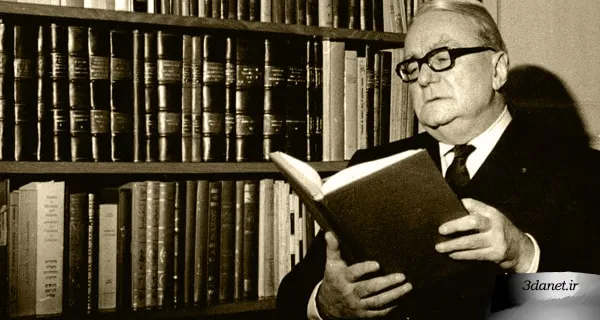

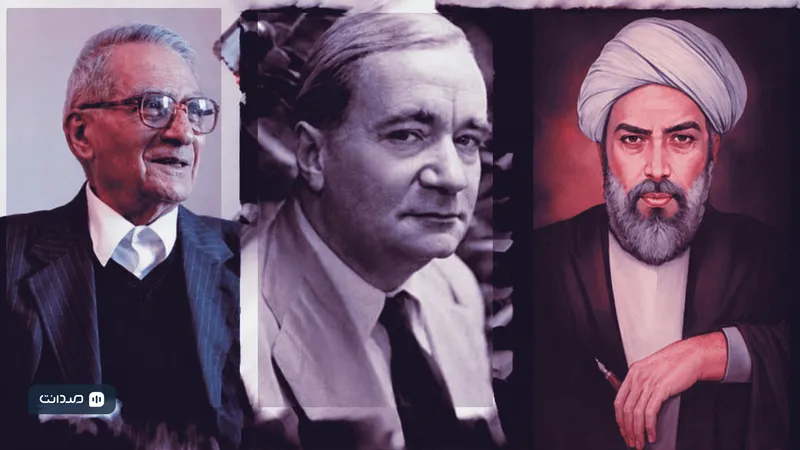
Henry Corbin
Author
Enshaallah Rahmati
TranslatorThe "great thought" of Shaykh al-Ishrāq is precisely the founding of a complete and perfect spiritual culture that encompasses the entirety of philosophical knowledge while simultaneously setting as its goal the complete spiritual realization of the person himself. The path of Ishrāq, the path of "Illuminationist" wisdom revived from [the heart of the wisdom of] ancient Iran, deviates neither to the right nor to the left. The wayfarer who sets foot on this path is tasked neither with becoming a theorist of a philosophy heedless of the true end of philosophy, nor an adventurer in the valley of mysticism, unaware of the dangers that beset those whom philosophy has not yet brought to self-awareness and rendered secure against all manner of mirages.
For this reason, this path can be called the "Royal Road." This term is borrowed from the mystical wisdom of Philo of Alexandria,¹ whose works can be compared in various respects with those of the "Illuminationist" sages, even though his works were unknown to them. These comparisons will merely extend those that others have already made between the thought of the divine "Powers" in Philo's thought and the Aməša Spəntas or the Bounteous Immortals in the Avesta.
The name Royal Road is taken from the Book of Numbers (the Torah): "We will go by the king's high way, we will not turn to the right hand nor to the left, until we have passed thy borders" (20:17 and 21:22). This Royal Road is the Royal Road of gnosis. It brings the wayfarer to knowledge through direct vision; for this Royal Road is the path of the "people of insight."
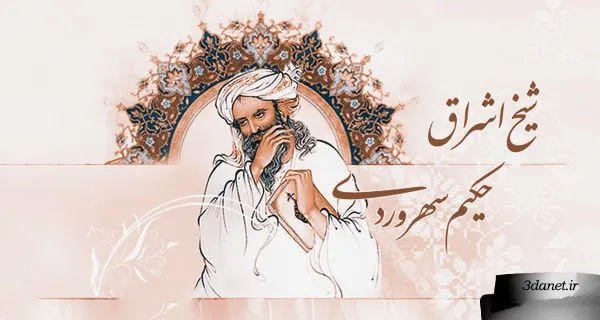
By traversing this path, the people of insight advance to the highest rank, which Suhrawardī terms "ta'alluh" (deification). This is the very path that brought the "Stranger" [in the Tale of the Occidental Exile] to the summit of Mount Sinai, to the place from which he found his way to the "Eighth Clime." Moreover, this Royal Road is the same one that the Muslim Gnostics have termed the "Straight Path" (al-ṣirāṭ al-mustaqīm): the path that deviates neither to the left nor to the right, the path of the mountain ridge where the traces flourishing on both slopes reach their zenith and converge.
Suhrawardī's great thought has exerted a profound influence on the spiritual culture of the Iranian world. Certainly, there have been both theoretical philosophers in this land and Sufis who regarded philosophy with contempt; but neither of these represents this culture in its complete and perfect state. Mulla Sadra of Shiraz has previously borne witness to this meaning: "It is fitting that the traveler on the path of Truth combine the two modes; therefore, his inner purification should not be devoid of reflection, nor his reflection devoid of inner purification. Rather, his mode should be, like the mode of the Illuminationist sages (the Platonists of Persia), an isthmus uniting both modes."
Khosrawānīyūn
Thus, the spiritual order envisioned by Suhrawardī has continued century after century, and the name "Royal Road" (or the Khosrawānī path) is a most fitting title for this mode. For this title is derived from the name of Kay Khosrow;² that wise and mystical sovereign who, by journeying on this path, brought the heroic epic of the Iranian world to its conclusion and perfection in a mystical epic. This title is derived from the name of Kay Khosrow; for all the sages of ancient Iran who followed in his footsteps on this Khosrawānī path are also named after him, that is, they are called "Khosrawānīyūn," and this is a term that in Suhrawardī's thought is synonymous with the term "Ishrāqīyūn."
It now becomes clear what great importance Suhrawardī attaches to this name and to the role of Kay Khosrow. The importance of the exemplar of Kay Khosrow, as well as the importance of the description of the Khosrawānīyūn in Suhrawardī's view, is a confirmation of the more explicit statements he makes regarding his intentions to revive the mystical wisdom of the sages of ancient Iran. If these sages were "Illuminationists," the reason is that they were Khosrawānī. This is the meaning and import of what can be termed Suhrawardī's "Iranocentrism." The entirely spiritual and deified nature of this Iranocentrism is manifest with the utmost clarity.
This is the first time I have used the term Iranocentrism. I imagine that if Suhrawardi's works had been known [in the West], his Iranocentrism could have emerged within a certain grand system of the "philosophy of history" that took shape in the West. In fact, there exists a system of the philosophy of history [in the West] in which this term has been employed and elevated to the rank of a metaphysical principle; however, the philosophical system in which such a term has been used is the achievement of a school that is itself little known in Western Europe, except to specialists. I am referring to the circle known as the "Slavophiles"³ in old Russia, in the first half of the nineteenth century. If the principle of Iranocentrism has borne fruit in this land, in the domain of philosophy, it may not be a mere geographical coincidence.⁴
Most regrettably, it is unlikely that the Iranian philosophers of that era could have obtained any information about it, and since then, conditions have not been favorable enough for their attention to be drawn to this school, which, despite its Iranocentrism, could be of direct interest to us. I have previously noted elsewhere the points of commonality and difference between the Iranocentrism of figures like Alexei Khomiakov⁵ and the Iranocentrism of figures like Suhrawardi. I must acknowledge that a full and comprehensive book needs to be written on this matter; for this subject is among the fields for comparative discussion that has not yet been explored. Here, I will only briefly mention some supplementary points regarding the initial suggestions I have made elsewhere.
Two Types of Civilization
According to that grand philosophy of history founded by Khomiakov, which owes no debt to the Hegelian dialectic, two principles stand in opposition to one another. Two types of civilization have been born from the very entry of humankind into history: one is the "principle of freedom," manifested through creativity, and the other is the "principle of necessity," manifested through reproduction. These two principles are embodied by the names Khomiakov bestowed upon them: Iranocentrism is the creative spiritual principle, the religion of moral freedom; Kushitism (Kush is the name for Ethiopia in the Bible) is the religion of natural necessity and also the religion of logical necessity. Kushitism is solely bound to the necessary sequence of logical reasoning. In this sense, the Hegelian system is its most complete manifestation. Iranocentrism, the Iranian thought, "rests upon tradition and is never based on pure logical deduction; for the concept of creative freedom is not confined by rules and cannot be deduced from rules. This concept can only be discerned through a superior intuition, and this intuition goes far beyond the narrow circle of reasoning, within which circle, in the crucible of the ages, all the stages of negation and denial have tried their luck." Can it not be said that, for Suhrawardi, Kushitism is manifested in the philosophy of the Peripatetics, the sanctuary of logic, the necessity of the laws of discursive understanding? That which, in Khomiakov's view, Hegel epitomizes, is, in Suhrawardi's view, typified by the Peripatetic school—with the exception of Aristotle himself.
Can it not be said that, for Suhrawardi, Kushitism is manifested in the philosophy of the Peripatetics, the sanctuary of logic, the necessity of the laws of discursive understanding? That which, in Khomiakov's view, Hegel epitomizes, is, in Suhrawardi's view, typified by the Peripatetic school—with the exception of Aristotle himself—and the intuitive wisdom of the Khusrawani sages of the land of Iran, with the aid of the free flight of creative intuition, this "superior intuition" that finds its way into the sanctuary of the spiritual worlds beyond the reach of the Hegelian dialectic, shatters this very [sanctuary and] dominion of logical as well as natural necessity. Therefore, positing the mundus imaginalis is a kind of "paradox" that can escape the grip of the limitations of empiricism and the axioms of discursive logic and overcome their contradiction. In Khomiakov's words, "[In this station] all the stages of negation and denial have tried their luck."
Suhrawardi, who is also extraordinarily opposed to the Peripatetic school, nevertheless stipulates that his student must first pass through all the stages of Peripatetic philosophy, the stages of the science of logic (he himself does this throughout the first part of the book "The Philosophy of Illumination," but there, of course, the discussion is inspired by the Stoic school, in which hermeneutics (ta'wil) prevails over dialectics (jadal, argumentation, and reasoning), so that logic is left simplified and compressed, and the book concludes with intuitive metaphysics). One cannot overcome the Kushite [or Abyssinian] principle by ignoring it and by rejecting and negating it. Perhaps Khomyakov's intelligent intuition, when compared with the perspective of Suhrawardi, the "reviver" of the wisdom of ancient Persia, finds an unintended elaboration.
Certainly, what matters for Khomyakov is neither the historical nor the geographical, nor even the ethnic; rather, what is important for him is the religious principle, or better put, the conflict between two principles that constitute the adventure of humanity's spiritual history. At the same time, in his philosophy there is a concern to elevate the hidden character at the foundation of a people's life, in this case the Russian character, to the rank of a universal value. Although he, and likewise the Slavophiles, regard the mission of the Russian people as the exemplar of a fully Orthodox people, there is perhaps a hidden preoccupation with a worldly ideal, something that could be interpreted as an inherent "vulgarization," present in their view. Such a concern is entirely remote from the sphere of Suhrawardi's Iranocentrism.
Suhrawardi shows that the Iranian people, by virtue of being Iranian, are not worthy of the description "Oriental Illuminationist" in the sense he intends by this term. The knowledge of the ancient sages is not considered Oriental Illuminationist knowledge merely because they lived in the geographical East. On the contrary, it is thanks to "Oriental Illuminationist" knowledge that these Iranians became fully-fledged "Oriental Illuminationists." The light of this Orient is the light of Glory (Khvarenah), which is sometimes bestowed upon a being and may at times depart from him. The lineage of the "Oriental Illuminationist" that Suhrawardi claims for himself and his followers is not rooted in a racial principle, but rather emanates from a sacred lineage. This lineage does not fit within the circle of causal relations among nations and states. The documents and records of this lineage belong to a history that shatters what we ordinarily call history.
For this reason, another counterpart must be chosen for comparison with Suhrawardi. The alternative that comes to my mind is the research of Konstantin Leontiev6, who believes not in Russia and the Russian people, but in the sacred and theurgical ideal of the Byzantine world. His concern is in no way to provide a mystical foundation for an earthly theocratic government. To the very extent that the Byzantine theurgists adopted the heritage of the Neoplatonists' sacred wisdom, Suhrawardi's views are comparable to those of Leontiev, which possess a spiritual and ascetic nature.
In the opinion of both, what matters is not a people in itself, but the sacred Idea that dwells within and dominates that people. The place of the sacred Byzantine Idea for Leontiev is exactly the place of the Idea of the wisdom of ancient Persia for Suhrawardi. Moreover, the principle of freedom, of which Iranocentrism is the manifestation in Khomyakov's dramatization based on sacred history, can also be found alive and present in Suhrawardi; for no one is at once more revolutionary and more traditionalist than Suhrawardi; because although he claims to have had no predecessor, the reality is that it is through him and simultaneously with him that the "Illuminationist" tradition, which is the source of the link between the spirituality of ancient Persia and the spirituality of Islamic Persia, steps onto the stage of existence.
Therefore, it is not without irony that I recently encountered objections raised against a colleague of mine for having considered Suhrawardi a Sufi; whereas, according to the critic, Suhrawardi was a Hellenistic philosopher and had no connection whatsoever with any order in "official Sufism." However, the term "Hellenistic philosophers" is generally applied to those philosophers whom Suhrawardi, for being pure philosophers, considers outside the "highway" [or "straight path"]. Thus, it is impossible that he himself could have been among these "Hellenistic philosophers"! As for the claim that belonging to Sufism is contingent upon a person having received a certificate or document in this regard, or having taken a cloak from the hand of a master, I must say that such a notion is a peculiar Western custom and is entirely remote from the realm of the "Illuminationists" Suhrawardi has in mind. But concerning the "systematic" tradition to which Suhrawardi considers himself affiliated, it must be said that Suhrawardi does not merely content himself with proving his affiliation to that tradition, but rather, he gives life to it. The spiritual lineage bears witness to this claim; for this lineage is proven not according to documents and records, but based on that mode of being, that mode of conduct and thought, which is set as a model for humanity.
In Iran, a type of Sufism has existed, and continues to exist, outside the organizations of Sufism, which is not known as Sufism and even shuns being called by this name, preferring the terms "erfan" and "orafa." [In addition to the Sufi orders of the Sunnis,] Shiite Sufi orders also exist "in an organized form"; but there are also orders that have never left, and will never leave, any trace of themselves in any historical archive; yet this in no way prevents their "members" from being Sufis in the true sense of the word. Suhrawardi received the spiritual heritage he left for his followers from an infinitely more exalted station, in the realm of which [belonging to] an "official" order holds no importance. The order of the Illuminationists also lacks an archive. Suhrawardi charged his followers with the task of discovering his spiritual heritage by journeying on the "straight path," and this is the sole condition he set for them; and setting foot on this path is not contingent upon outward formalities, but upon an inner vocation that Suhrawardi, at the end of the book "Hikmat al-Ishraq," in the form of a "testament" addressed to the continuers of his path, explicitly mentions.
The final pages of the book serve as a prelude to this testament. These pages are a confirmation that "Hikmat al-Ishraq" was not composed as a theoretical treatise, but is in reality a treatise in the field of angelology. The book has practical aims and must be employed as an instrument for meditation and spiritual realization. Corresponding to the theological and philosophical "propositions and rules" are psycho-spiritual forces that can aid in this spiritual realization and receive the gift of such a realization. Between angelic theophanies (or angelic apparitions) and the degree of the mystic's spiritual perfection, there exists a correlation that is the source of the uniqueness of his experience. The chapter preceding the "Author's Testament" is a prelude for the confirmation and realization of the preceding articles, in the realm of [the mystic's] experience.
At the beginning of the chapter, two prayers are presented,7 which the author warns must be learned in the presence of a person he refers to as the "Guardian of the Book" in order to understand the secret of these invocations. Their resonance corresponds to the same Manichaean hue evident in Suhrawardi's other supplications: "O God of all gods, exalt the remembrance of Light, aid the people of Light. Guide Light toward the Light."
The opening of the first of the two invocations or two "spiritual influxes" that appear at the end of the book "Hikmat al-Ishraq" is as follows: "The wayfarers who knock on the doors of the chambers of Light with sincerity and patience, the angels draw them toward the Orient of Lights, shower upon them the felicitations of the Malakut, and pour over their heads the water that gushes from the fountain of goodness so that they may be purified." When this ecstatic effusion subsides, the discussion is resumed with a description of the experiences of the people of spiritual meaning (paragraph 272).
The commentators (Qutb al-Din Shirazi and Shahrazuri) duly remind us that not only were all the theoretical issues discussed in this book personally verified by the author [in his own experience], but all the truly illuminative states mentioned here refer to experiences that he himself tested and found within himself, and these are the fifteen lights and illuminations that shine upon the heart of the gnostic after he has passed beyond the stage of beginners, entered the ranks of the intermediate, and advanced to the first degree of the perfect. The secondary phenomena accompanying these lights, their seemingly paradoxical nature, the embodiment of the inner being that has advanced to the stage of dissolution, and so forth—all these matters are described concisely and in very precise terms. These states must be compared with the similar states (contemplations of lights) mentioned by Najm al-Din Kubra (d. 617 AH), Ala al-Dawla Simnani (d. 737 AH), and Sayyid Muhammad Nurbakhsh.
“Whenever divine lights shine abundantly upon a human being, he is clothed in the robe of might and awe, and souls come under his command” (paragraph 277). The word “khvarenah” (glory) is not mentioned here, but these are the very expressions that Suhrawardi uses elsewhere concerning the investiture of the royal khvarenah, an investiture that, in mystical wayfaring, is bestowed upon the wayfarer who, under the onslaught of the Victorious Lights, has become ecstatic and has once again been seated upon the throne of sovereignty. This existential transformation through the illumination of khvarenah (the Light of Majesty) corresponds to an event that the gnostic has personally experienced. Finally, we have the sublime phrases of the spiritual testament which, before concluding in silence, remind us that “Hikmat al-Ishraq” is not a book to be studied like other books; for its aim is not merely to convey information, but to provoke the true event of the soul—the very event that Suhrawardi described in his mystical allegories, and this event is the crossing of Mount Qaf, the arrival at Mount Sinai, in a word, wayfaring upon the “highway” or the “straight path”:
“My brothers, I counsel you to act upon what God has commanded and to abstain from what God has forbidden. I counsel you to direct all your aspiration toward God, the Light of Lights, to abandon every word and deed that is of no benefit to your state, and to detach your hearts from every demonic anxiety. I counsel you to guard this book, to exercise caution regarding it, and to protect it from the unworthy, and God is my judge concerning you. At the end of the month of Jumada al-Thani in the year 582, on a day when the seven stars were gathered in the sign of Libra, at the end of the day, I completed the composition of this book. Do not give this book except to those who are worthy of it, and he is worthy who has thoroughly learned the method of the Peripatetics, is a lover of the Light of God, and before beginning it, undertakes forty days of spiritual discipline, abstains from eating meat, reduces his food, severs himself from all things, and devotes himself to contemplating the Light of God, the Great and Exalted, and to acting upon the instructions of the book. When [after fulfilling these conditions] the appointed time for studying the book arrives, he may delve deeply into its study” (paragraphs 278–280).
The chief concern of the Shaykh al-Ishraq, as he concluded his book, was that this book should only fall into the hands of the seeker of the “straight path”; that is, into the hands of one who has perfectly completed the full course of Peripatetic philosophy and at the same time possesses a soul overflowing with love, so that he can leave this stage behind and become free from the bonds of external and theoretical evidence. According to the commentators of Hikmat al-Ishraq, only the seekers eager to enter the path that ends in the Orient of Lights are worthy of this book.
The commentators explain in detail the program of a kind of forty-day retreat, to which the Shaykh has only alluded in a few words, and this retreat must serve as the groundwork for studying the book Hikmat al-Ishraq: “After cleansing the body of outward impurities, one must take up residence in a small, dark house, far from the clamor of people and their occupations, observe fasting, and after the sunset prayer, break the fast with a small quantity of food of high quality (clean bread and foods obtained from fine grains, suitable vegetables, and appropriate spices, along with almond or walnut oil, or syrup and the like). One must continually anoint the head and body with pure oils and use pleasant fragrances in one’s solitude. Night and day should be occupied with the remembrance of the heart and tongue…” The seeker in seclusion must engage in this for a long period, such that he imagines himself as if he has separated from sensible directions, time, and place, and has recovered the pure abstraction of his own essence…
The convergence between Shiite and Illuminationist terminology is not a matter of chance. Certainly, even non-Shiite Sufism believes in the esoteric chain of “Poles” (aqtab); for example, according to Semnani, the lineage preceding the Prophet of Islam (PBUH) continues in him, then in the Imams up to the Twelfth Imam, and after him in the Pole of Poles (Qutb al-Aqtab). This lineage, although a transformed form of the Shiite idea of the cycle of “Walayah,” differs fundamentally from it; for it does not consider the Twelfth Imam to be always alive and present in this world, nor does it regard him as the permanent “Pole of Poles”; it also differs from the lineage considered by Suhrawardi. Moreover, we know that everyone agrees on this statement: the relation of Illuminationist Wisdom to philosophy is like the relation of Sufism to theology (Kalam). Between Illuminationist Wisdom and Sufism, there is a relation of analogy, not a relation of identity.
*Iranian Islam (with abridgment)
.
Footnotes:
1- Philon d’Alexandrie, a Hellenistic Jewish philosopher, was born around 20 BCE in Alexandria and died around 50 CE.
2- Its eponymous hero is Kay Khosrow.
3- Slavophiles, a movement or movements in nineteenth-century Russia that defended the superiority of Slavic culture over the culture and works of Western Europe.
4- Given the proximity of Russia and Iran, connections may have been established between Iranian and Russian thinkers at certain periods.
5- Alexis Khomiakov
6- Constantin Leontiev
7- Hikmat al-Ishraq, paragraph 262, p. 246.
.
Discussion0 comments
No comments yet; let yours be the first voice.