Foreign thinker
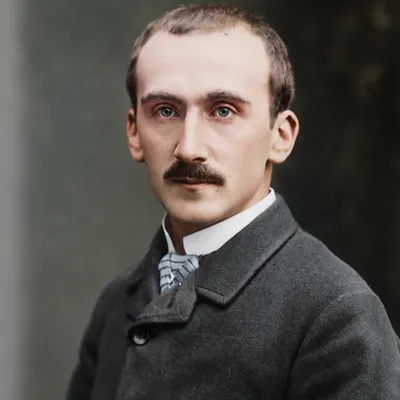
Henri Bergson
Henri BergsonPhilosophy of life, metaphysics, and philosophy of mindFrench1859–1941
“The past is entirely present in every moment of the present.”


Life and Thought
Henri Bergson was a French philosopher and one of the most important thinkers of the late nineteenth and early twentieth centuries, known especially for his theory of “duration” (durée) and the concept of philosophical intuition. He received the 1927 Nobel Prize in Literature for the richness of his thought and writing style, and he had an important influence on philosophy, the humanities, and contemporary thought.
Henri Bergson was born in Paris on October 18, 1859. He studied at the École Normale Supérieure in Paris and later taught philosophy. At the beginning of his intellectual career, Bergson engaged with the analytical and scientific traditions of his time, but gradually developed a philosophical approach emphasizing lived experience, consciousness, and the dynamism of life.
His major work, “Time and Free Will” (1889), examined subjective time and the distinction between scientifically measurable time and human experienced time. In “Matter and Memory” (1896), he explored the relationship between mind, body, and memory, while in “Creative Evolution” (1907), he presented a theory of the development of life centered on creative and dynamic forces.
Bergson introduced the concept of “duration” as the continuous and qualitative flow of time in human experience and argued that some aspects of reality can be understood only through philosophical intuition, not merely through scientific and analytical methods. His ideas influenced philosophers, writers, and theorists such as William James, Maurice Merleau-Ponty, and Gilles Deleuze.
Among his other important works is “The Two Sources of Morality and Religion” (1932), in which he examined static and dynamic sources of morality and religion. In the final years of his life, despite political and social pressures, Bergson remained committed to ethical and human values, and he died in Paris on January 4, 1941.