اندیشهفلسفهخردگفتگوحکمتمعناپرسشفرهنگ
Political Science
What Should Be Done with Reza Shah's Remains?
Mohsen Renani proposes that Reza Shah's remains be entrusted to a museum. Such a move would demonstrate the Islamic Republic's authority and create an opportunity for a national dialogue about the past, thereby strengthening the system's social capital.
What Should Be Done with Reza Shah's Remains?
(Development, by Concealing History or Honoring Capital?)
Mohsen Renani
Introduction:
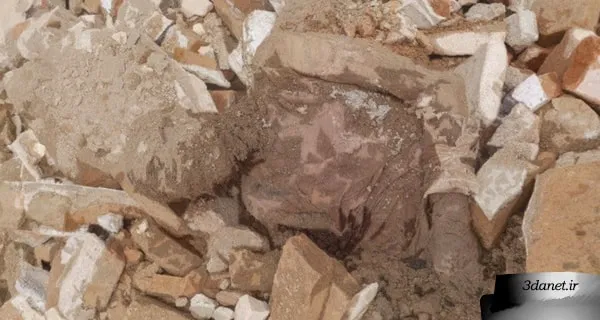
Photographs show that the mummified body discovered these days near the shrine of Hazrat-e Abdolazim is the very corpse of Reza Shah, which, after the destruction of Reza Shah's mausoleum by Mr. Khalkhali and other revolutionaries, was buried under the rubble and has now been revealed through excavation. If I were the head of the Cultural Heritage Organization, even if I were suspicious, I would assume that this is the body of Reza Shah and would fulfill my legal duty to preserve the country's historical heritage until subsequent investigations reveal the truth. And if I were a political official, I would order that this body be entrusted to a museum and carefully guarded. Because Reza Shah's remains do not belong to us; they belong to the history of Iran, and this history must be preserved.
This piece has two parts: the first part is political and emotional and addresses why it is in the interest and benefit of the Islamic Republic to respectfully entrust Reza Shah's remains to a museum. This part is short, and I have placed it at the beginning for impatient readers; and of course, it is serious, but probably those who should, will not take it seriously. But the second part, which I have written for the serious, patient, and deep reader, is an economic and social analysis in which the symbolic role of Reza Shah's remains for the country's future economy is discussed, and on this pretext, we delve into the function of symbolic capitals as development-creating capitals, with the aim of showing that a unique opportunity to save the future of the country's development is to focus on the production, attraction, protection, and accumulation of symbolic capitals.
Although I am certain that I will hear many insults for publishing this piece, I am publishing it out of intellectual duty and for the interests of the Islamic Republic and the future of this land. I hope that those who agree with its content will look at it critically once more; and those who disagree with it will read it fairly once more. And the outcome is for the righteous.
Part One: The Discovery of Reza Shah's Remains as a Political Opportunity
ـــــــــــــــــــــــــــــــــــــــــــــــــــــــــــــــــــــــــــ
I will summarize this part without preamble in five points:
One: The fact that the Republic would reach the determination and courage to transfer Reza Shah's remains to a national museum is a sign of authority and a sense of power within the Islamic Republic. This action means that the Islamic Republic of Iran does not fear the symbols of the Pahlavi era and preserves them as part of Iran's history. Such an action means disarming all the monarchists. That is, if the Islamic Republic does not fear Reza Shah's remains, it also does not fear his grandson or other symbols of the former regime.
Two: This action serves as a kind of healing for the process of past extremism regarding Iran's history and the Pahlavi regime. Therefore, it increases the system's social capital and hope for its prudence. In this way, the Islamic Republic distances itself from the extremism of the likes of the late Khalkhali and implicitly says that I am not that extremist Islamic Republic of Khalkhali. I believe this brings more credibility and higher social capital for the system. In fact, if such determination arises within the system, it will initially be a kind of taboo-breaking, but in reality, it will be the beginning of a process of desensitization and normalization.
Third: This action opens up a space, a context, and a subject for dialogue about Pahlavi history. Keeping this body and transferring it to a museum is, in essence, granting a license to the intellectual community to open a festering abscess that has remained painful and about which no dialogue takes place. The intellectual community and ordinary people will, on the pretext of this body, engage in dialogue, and the dossier of development in Iran will be leafed through once more. To enter the year zero of development, we must initiate a national dialogue on important issues, including our own developmental policies and the previous regime. The fact that the political system unilaterally condemns all the actions of the previous regime has, in reality, given moral license for segments of society on the other side, especially the younger generation, to justify all the actions of the past regime and deem them desirable. We have no choice but to turn to a rational and ethical dialogue about our past so that our future does not repeat the past. This is an opportunity to begin a logical conversation about the past. Sometimes, in certain student gatherings, I do not dare speak of the very numerous errors of the past regime because the presupposition of a part of the new generation is that in that era, everything was just peachy.
Let us not forget that our national intellectuals never permitted themselves to have a serious critique of the late Dr. Mosaddegh, nor our religious intellectuals of Ayatollah Montazeri. Why? Because the attacks by opponents and official media against those two great figures were so reckless and unethical that it caused their companions and admirers to consider criticism from friends as cruelty, disloyalty, and imprudence.
We have done the same regarding the past regime. The official media apparatus has so recklessly driven everything with the cudgel of destruction that it has caused today's young generation to fall off the other side of the roof and evaluate everything about that regime as desirable. Just this past week, in one of the family Telegram groups, I witnessed the aggression of the family's youth toward a former revolutionary, who has now been secluded in a corner of obscurity for years, interrogating him as to firstly, why he participated in overthrowing the previous regime, and secondly, if he now believes this system is not what it was supposed to be, why he does not strive for its overthrow. This atmosphere is the result of closing all avenues of national dialogue on important issues, and it is how, suddenly in Dey 1396 [December 2017/January 2018], these suppressed complexes burst forth.
Fourth: Undoubtedly, in the first months, a large number of people will head to the museum to see Reza Shah's remains. That is fine; this itself is a kind of release of social and political energy, and after a while, the issue becomes completely normal. Does anyone now queue to visit Mosaddegh's tomb? Or is the fact that Ayatollah Montazeri's tomb is accessible to the people a danger to the political system? Not at all. But society breathes with these seemingly small things and feels a sense of freedom and dynamism.
Fifth: The international reflection of this action will, of course, also be good. In the global view, it reflects a kind of capacity, strength, and self-confidence of the Islamic Republic.
Conclusion: Therefore, in my opinion, it is necessary for the country's senior officials to deal with this matter with foresight and, from a position of magnanimity and courage, order that the body be transferred to a museum; an order that will be lasting in the history of Iran. Just yesterday, photos were published of four former US presidents and their wives alongside the First Lady, cheerfully taking pictures together at the funeral of Bush Senior's wife. Our people need these historical scenes to feel hope for the future. Now is the time for the Islamic Republic to stand alongside history and take a picture with it; and, of course, critique it but not destroy it.
Back when Mr. Khalkhali did what he did with Reza Shah's mausoleum, perhaps the dominance of revolutionary fervor over rationality was justifiable. But today, if our social rationality is still pinned to the ground under the trampling of fervor and politics, it will be a sign that with the current system of prudence, there will be no hope for the rational formation of the development process. I hope this sign will not be added to the other previous signs.
Part Two: Reza Shah's Remains as Symbolic Capital
ــــــــــــــــــــــــــــــــــــــــــــــــــــــــــــــــــــــ
A) Introduction
Years ago, in an article titled “Development Means a City with a Statue of Shater Ramazan”, I wrote that I wished we had turned Reza Shah’s mausoleum into a “museum of lessons.” Now I also say that Reza Shah’s remains should be entrusted to a museum, just as the corpse of Stalin, as the dictator of Russia, was entrusted to a museum. Just as we preserved Reza Shah’s Marble Palace, and it is now part of our cultural heritage, his remains also have historical value. Just as if the Marble Palace were to burn, its charred remains would also be a historical attraction, Reza Shah’s remains, even if nothing more than bones are left, will be a historical artifact and a cultural attraction. Many historical artifacts became more famous and turned into attractions when they burned. So, Reza Shah’s remains, regardless of whether he was good or bad, whether we like him or not, are a historical artifact, and we do not have the right to destroy them. Just as today the tomb of Cyrus the Great is a historical artifact and no one has the right to destroy it.
It makes no difference; making Reza Shah’s remains disappear is like ordering that all historical events in which Reza Shah’s name appears be removed from all the country’s books. Making Reza Shah’s remains disappear is the same as erasing Reza Shah’s history, and erasing Reza Shah’s history means erasing a part of Iran’s history. And, of course, it is a vain fantasy for anyone to think they can erase history. In our attempt to erase history, not only do we fail, but those very attempts of ours to erase history also remain in history. Attempts to erase history are attempts that have failed in advance. Just as if the government ordered that all obscene words be removed from Persian language dictionaries, those obscene words would still remain in the Persian language and circulate among the people, the attempt to erase any part of history that is undesirable from the government’s perspective also fails. Just as language is alive and dynamic and is not dependent on the words in a dictionary, history is also alive and dynamic, does not depend on our likes or dislikes, and does not wait for us to conceal parts of it or not. Therefore, instead of trying to erase history, it is better for us to help in explaining history better, more precisely, and more honestly.
Another point is that development itself is a historical process and is the result of the accumulation of historical experiences. The deliberate deletion of parts of history is a kind of obstruction of the accumulation of human experiences and, in fact, creates an obstacle to the natural and historical development of society, and its only result will be to make this historical maturation of society more costly. Therefore, instead of trying to present themselves as pure by deleting or concealing parts of history, governments precisely place themselves under accusation before future history, and future generations will accuse them of having hindered the natural maturation of society. Whereas the government’s effort should be based on ensuring that historical experiences are constantly transformed into insight, tacit knowledge, and lessons, and help our social evolution. Covering up historical experiences slows down and makes the process of society’s historical evolution more costly.
ب) The Concept of Symbolic Capital
Symbolic capital is one of the discoveries of sociologists in the late twentieth century, especially Pierre Bourdieu[1], the French sociologist. Although before that, in the late nineteenth century, Thorstein Veblen[2], the Norwegian-American economist and sociologist, had also spoken of conspicuous consumption, his idea remained hidden for a century.
In brief: any country that cannot produce symbolic capital will not, in the long run, have the ability to produce, attract, retain, and accumulate other economic, social, cultural, and political capitals. That is, a country’s growth is possible when that country can attract, produce, and accumulate symbolic capitals.
What is symbolic capital? Any asset belonging to society that provides fame, attention, respect, and honor for a part of society or for the whole society. A symbolic capital may even be hated by a part of society; this itself is a sign that it is symbolic capital for another part of society, and it is the very symbolic power of that capital that has caused the hatred of another part, who do not like it.
Symbolic capital can be a building (such as Persepolis, Naqsh-e Jahan Square, Si-o-se-pol, etc.), a historical figure (such as the Holy Prophet, Cyrus, or Rumi, etc.), a cultural work (such as the Shahnameh, traditional Iranian music, or Kamal-ol-Molk's paintings, etc.), a social phenomenon (such as Ashura, Nowruz, etc.), a living political, religious, or military figure (such as the Supreme Leader, sources of emulation, Engineer Mousavi, Mr. Khatami, General Soleimani, etc.), or a living scientific, cultural, or artistic figure (such as Professor Samii, Master Farshchian, Master Shajarian, Master Ezzatollah Entezami, etc.).
C) The Formation of Symbolic Capitals
In fact, every symbolic capital was previously one of the economic, social, cultural, political, etc., capitals that, for some reason, became famous, attracted public attention, gradually gained respect, and then reached the threshold of pride. For example, Master Farshchian, as a distinguished artist, was first a human capital who has now become a national symbolic capital for us in the field of art because he has gained worldwide fame. He is not only respected by us but also brings us pride on a global level. Rumi, as a historical cultural figure, and the Masnavi, as a historical literary work, were also initially cultural capitals that the Turks of Turkey turned into a global symbolic capital for themselves, earning billions of dollars annually from tourists who travel to Turkey to see Konya, the Sama ceremony, and Masnavi recitations. Now, the Tajiks are also working on Ferdowsi and the Shahnameh to turn him into a global symbolic capital for themselves.
For a person to become symbolic, there is no need for them to have been a good person; bad people can also be symbolic (like Hitler for the Germans, Genghis Khan for the Mongols, and Stalin for the Russians). Nor does a building need to have been desirable (like the Auschwitz crematorium camp in Poland, which is the legacy of the occupying Nazis), nor does it even need to be something valuable in itself (like the old felt hat of Rais-Ali Delvari or the chewed gum of Ferguson, the Manchester United manager, which is kept in the English sports museum and was priced at about half a million pounds at auction).
D) The Benefits of Symbolic Capital
What is the use of these symbolic capitals? These symbolic capitals become the cause for the association, gathering, and accumulation of other capitals. For example, a source of emulation like Ayatollah Khomeini, as a symbolic capital, caused a large part of the country's human, scientific, cultural, political, and even economic capitals to come together during the Islamic Revolution and cooperate for the revolution's victory.
Or when Master Shajarian, as an artistic symbolic capital, decides to build an art garden in Bam; some people donate land (economic capital); the best designers gather and do its design and drafting work for free (human capital); some supply its materials, and so on. All of this was due to the existence of the symbolic capital of Master Shajarian.
Or when a certain distinguished professor and physician decides to build a super-specialized medical center; one person donates land, the Ministry of Health provides support, major capitalists announce their readiness to provide funding, great physicians announce their readiness for cooperation and participation, etc., then a specialized medical center takes shape.
Therefore, any accumulation and aggregation of capital of whatever kind that takes place in the country, if we do not want it to be done with state financial resources, by the force of oil money, and under legal pressure, is best centered around a symbolic capital. Of course, it is not necessary for a living human symbolic capital to come to the fore to aggregate other capitals. For example, the building of a saqqakhaneh in a neighborhood might be the symbolic capital of that neighborhood, where residents gather in the evenings and chat. These very chats lead to connection, trust, and cooperation among them in the neighborhood (the production of social capital). Then, in these conversations, a few of them decide to start a partnership together (the accumulation of economic capital) or decide to build a good library for the neighborhood (the production of cultural capital), and so on; thus, symbolic capital, of whatever kind, can be productive, attractive, and aggregative of other types of capital. In fact, symbolic capital acts as the thread that strings together other capitals.
C) Levels of Symbolic Capital
Symbolic capital has various levels; for instance, it can be familial (like the presence of a specialist in a clan where the rest are not specialists, or the existence of a matriarch around whom the whole family is united), it can be local (like an artist, an ascetic cleric, or a shrine in a neighborhood), it can be group-based (like a veteran for athletes or industrialists), it can be regional (like a regional figure), it can be national (like national cultural, artistic, religious, and political figures or national historical monuments, etc.). A symbolic capital may be national but not necessarily accepted or respected by all members of a nation; what matters is that it has a national belonging. For example, Molavi Abdolhamid, while being a regional symbolic capital for Sistan and Baluchestan province, is also a national symbolic capital for Sunnis at the national level. Or Mr. Khatami is a symbolic capital for the reformist segments of society. I even believe that Mr. Ahmadinejad was also a symbolic capital for segments of society, but he and his rivals quickly destroyed him.
Regarding Mr. Rouhani, I know that he is a political capital who, in the 2017 election, came to the threshold of becoming symbolic, but his approach after the election pushed him back again toward being a political capital. In fact, Mr. Rouhani was a "political activist" at the time of the Islamic Revolution; after the revolution, he became a "political figure"; when he became president, he became "political capital," but he has not yet become "symbolic capital." Why? Because he has not created "belief" in the people. A political capital becomes a "symbolic capital" when it creates "belief" in the people. Mr. Khatami has done this among a large segment of society, and Mr. Ahmadinejad did so to some extent. And of course, it needs no emphasis that before all of these, Ayatollah Khomeini and Ayatollah Khamenei have demonstrated a unique ability to create "belief" in society. What does belief mean? It means that society believes that this symbolic capital has the ability to create a movement, change, transformation, and motion, or even to create stability in the existing situation. It can summon capitals, mobilize people, fulfill the promises it makes, and whenever it wishes, it can undertake serious actions and create significant changes at national, regional, ethnic, or sectoral and professional levels. When the "belief" created is about someone we love or share views with, this "belief" also brings with it "pride." Therefore, the boundary between being symbolic and not being symbolic is the creation of belief and the power to inspire pride. That is, the more a figure moves from fame toward evoking respect, the higher their capacity for becoming symbolic rises. When they enter the realm of "pride"—meaning their presence becomes a source of pride for others—they have become symbolic.
D) Difference from Charisma
And of course, the difference between symbolic capital and myths or charismatic figures lies in sacredness. Symbolic capitals are not sacred, even if they are highly respectable and a source of pride. But charismatic figures are sacred, meaning they are beyond criticism, and if criticized, the critic may face insult and violence. For example, when we say Ali Daei is the symbolic capital of our sports, it does not mean he is sacred. It means that while we respect and feel proud of Ali Daei, we also criticize him, and we never kiss his hand as a sign of sanctity.
The difference between modern and traditional society lies precisely here. In a traditional society, human symbolic capital quickly falls prey to charisma and sanctity. Whereas in a modern society, a multitude of symbolic capitals can be produced without being sacred. Unfortunately, when symbolic capitals turn into charismatic and sacred figures, a destructive capacity may arise within them. For instance, Saddam Hussein was a symbolic capital for Iraqis, who, due to becoming sacred, was no longer open to criticism, and despite his extensive efforts to shape a modern and powerful Iraq, from a certain point onward, he inflicted irreparable damage on his country and nation.
D) Symbolic Capital, a Necessity for the Future of Development in Iran
Iran is a country that can no longer rely on oil. Our other natural resources are also nearing depletion. We have nearly ten million openly and hiddenly unemployed, and a million people are added to our job seekers annually. Meanwhile, it is predicted that in the best-case scenario, we can create 700,000 new jobs per year. Therefore, if we do not take serious action, we will quickly become impoverished. We have no choice but to rely on the tourism industry for our future development. We are among the top ten countries in terms of possessing ancient and historical monuments and tourist attractions. Of course, knowledge-based industries will also be an inseparable part of future development, but tourism, at least in the short and medium term, can have a more effective share. In my opinion, not only the future of Iranian society but even the future of the political system is tied to our ability to expand the tourism industry. Of course, there are other opportunities. For example, we could become one of the major centers of solar energy production in the world. But any other endeavor for our economic leap requires several decades of heavy investment, which is currently not feasible for us, at least for the next twenty years. After that, oil will probably no longer have much economic value.
Therefore, from now on, we must not allow any potential symbolic capital to slip through our fingers. If we have built a seminary in the middle of Khosrow's hunting ground in Kermanshah, we must demolish it and restore the hunting ground. We must think about turning all the Imamzadehs of the country into tourist attractions. We must restore the tomb of Harun al-Rashid in Mashhad and turn it into a tourist attraction for one billion Sunni Muslims. We must turn the tombs of Khwaja Nizam al-Mulk and Malik-Shah Seljuk in Isfahan into symbolic capital. We can provide the possibility for foreign tourists to visit the shrine of Imam Reza (AS), the mausoleum of Imam Khomeini, and other religious sites. We must create tourist camps in our deserts and attract thousands of enthusiasts of desert nights from around the world; we must restore the neighborhood saqqakhanas; we must bring global fame to the pigeon towers as one of the most unique historical industries of Iran. We must revive the local costumes and traditional ceremonies of various Iranian cultures, especially their music, and many other things.
The United Arab Emirates is one of the countries that has been very successful in producing symbolic capital. The Palm Island or the Burj Al Arab are two symbolic capitals of the UAE, which have strongly attracted economic and human capital towards the Emirates. This country has even, in a way, copied or adapted many of the symbols it has turned into capital. For example, by building an area with the architecture of Yazd's windcatchers and extensively promoting them globally, it has introduced the symbol of windcatchers as a native symbol, and now around the world, anyone unfamiliar with Iranian architecture, upon seeing a poster of Yazd's windcatchers, says this is Dubai.
H) The Necessity of Protecting Symbolic Capital
Unfortunately, both Iranian governments have destroyed symbolic capital and our people, more than being builders, have been destroyers of this capital. For example, a large part of the architectural works from the Safavid period were destroyed by order of local Qajar rulers; or our people not only write graffiti on ancient monuments but also destroy figures who could be symbolic capital by producing jokes and rumors against them. We will not rise in the global community unless we can stop destroying our symbolic capital. We should not destroy even those we dislike but who could potentially play a symbolic role. As someone who has been a critic of Mr. Ahmadinejad's policies from the very beginning and considered them dangerous for Iran's future, I have always been careful not to destroy him. Because symbolic capital is neutral in terms of moral values, meaning whether it is the banquet hall of the Safavid kings in Isfahan's Chehel Sotoun Palace, the shrine of Shah Nematollah Vali in Mahan, or Alexander's Prison in Yazd, they are symbolic capital and must be protected. From a development perspective, neither Khatami nor Ahmadinejad should be destroyed, because each of them can play important roles at a moment in our future history. Let us learn from the events of last Dey and not forget that a society lacking symbolic politicians, or a society whose symbolic figures are passive or tied down, will be a jelly-like society that, at a historical moment, a clown from across the waters could destabilize.
Kh) The Function of Symbolic Capital in Crisis
Figures who are symbolic capital, in times of stability, not only cause the accumulation of other forms of capital but are also the source of calm and reformist transformations. However, the important role of this capital is in times of instability and tension, when they can step in and prevent social and political rupture. I believe that if Syria collapsed, it was due to the inability of Syrian society to produce national symbolic capital. If there had been a number of national symbolic figures within Syrian society, they could have negotiated with the government as representatives of society and prevented Syria from entering a devastating war, and once it entered the war, through negotiation, prevented its prolongation. Now, however, Syria has been burning in the fire of war for over seven years, and the opposition groups to the Syrian government have still not been able to reach a consensus on choosing a leader. That is, Bashar al-Assad, due to his political position, was naturally considered symbolic capital in that part of society that supported the government, but unfortunately, in the other part of society that opposed the government, there was no one in the position of national symbolic capital to negotiate with the government and reach an agreement to stop the conflicts, and for society to respect their agreement.
D) Conclusion
In fact, symbolic capital, like the central pole of a tent, keeps the various parts of society cohesive and rational. Therefore, we must not destroy potential and actual symbolic capital, even if they are our rivals, because we limit the opportunities for society's peaceful coexistence. When the Holy Prophet conquered Mecca, he did not allow Abu Sufyan, as the symbolic capital of the Quraysh, to be destroyed and made his house a place of safety, where anyone who went there would be safe. May I be sacrificed for him, who, while being kind and possessing great moral character, without having attended school or written a line, behaved as if he knew many of today's scientific theories of politics, sociology, and social psychology.
And of course, I have said all this to say that now Reza Shah's remains are not only a part of Iran's history, but can also serve as a symbolic historical asset, creating a global tourist attraction for us in the future; much like what Stalin's tomb does in Russia. Today, obliterating Reza Shah's remains is no different from the nocturnal destruction of Persepolis, and if we do such a thing, history will judge us just as it judged Zell-e Soltan (son of Nasser al-Din Shah and governor of Isfahan), who, out of spite and vindictiveness, ordered the destruction of many Safavid architectural works, especially the Ayeneh Khaneh Palace, which was built by the order of Shah Abbas II on the banks of the Zayandeh Rud.
Mohsen Renani / 25 April 2018

Discussion20 comments
لنین هنوز هم برای حکومت روسیه محترم است . اما استالین نه. جسد استالین مومیایی نشد چون حزب کمونیست پس از مرگ استالین صریحا از جنایاتش اعلام برائت کرد . استالین روسیه را از یک جامعه عقب افتاده که 90 درصد مردمش کاملا بیسواد و در روستاهای کوچک به شیوه ارباب رعیتی با گاوآهن به کشاورزی مشغول بودند ( درست مثل ایران تا 60 سال پیش) تبدیل به بزرگترین قدرت اقتصادی صنعتی سیاسی و نظامی جهان کرد . کشوری که 70 سال پیش اولین بار انسان به فضا فرستاد و هزاران بمب اتمی داشت . اما از بعد از مرگ استالین تا به امروز هیچ کس حتی اعضای حزب کمونیست شوروی از او به نیکی یاد نکرده و نمیکنند. چون نماد دیکتاتوری و ستم بود . رضاخان میرپنج بسیار بیسوادتر از آن بود که بتواند کمکی به توسعه ایران بکند . مهمترین خدمت او سرکوب گردنکشان و حکومتهای محلی و در نتیجه نجات ایران از خطر تجزیه بود. خدماتی هم که انجام شده عمدتا مرهون توانمندیهای وزرای کاردانی مثل علی اکبر داور و فروغی و حکمت بود که رضاخان به بهترین وجهی پاداش خدماتشان را داد . داور را به قتل رساند و فروغی را عزل و خانه نشین کرد.
درود بر ایران جسدی که زمان بودنش ایران را دونیم کرد حالا بعد مرگ هم جسدش پیراهن عثمان عده ای شده. چه راحت بازی میخورند عده ای!!! جسدی که پیدا شده نه در محل قبر شاه مخلوع ایران بوده و نه جسد او مومیایی مانده. جسدش بعد بازگشت به ایران از حالت مومیایی خارج و به سبک مسلمانان با کفن، دفن شد. جماعتی که نگران تمدن و تاریخ و صنعت توریسم ایران هستید چرا وقتی همسر شاه مخلوع به سبک گرایان در نیویورک جان داد و کنار معتادان و گدایان دفن شد ایالات متحده را محکوم نکردید!!!! التماس تفکر.
التماس رضاپهلوی به انگلیس و در خواستهای ملتماسانه محمدرضاپهلوی از سفیر آن کشور خفت بارترین تحقیر در تاریخ ایران است.
لطفا با یک نام کامنت بگذارید
تسلط انگلیس در ایران و رفتار تحقیر آمیز با رئیس حکومت در تبعید!! وی به جزیره موریس بدون مقاومت و به حکومت رساندن فرزندش و بکار گیری شعبان بی مخ در کودتا علیه دکتر محمد مصدق صفحه ای ننگین از تاریخ ایران عزیز است.
در مقاله رضا شاه: شاید منظور جسد مومیایی لنین در میدان سرخ مسکو هست که برای دیدن آن ساعت ها صف هست؟!
درود بر ایران جسد کسی که با بیکفایتیش ایران را به دوبخش شمالی و جنوبی تقسیم بعد شوروی را حاکم بر شمال و حاکم بر زن وفرزند و جان ایرانیان و جنوب و ثروتهای جانی و مالی اش را به ارباب بریتانیاییش تقدیم کرد نزد ایرانیان باشرف ارزشی ندارد {اگر !!!!!! جسد آن خاین باشد}
آقای خسرو معتضد لطفاً با اسم واقعی کامنت بگذارید تا سایرین هم از انبان دانش فوق تاریخی شما مستفیض شوند!
شما اصلا یادداشت را خوانده اید؟ تعجب می کنم چه طور بعد از خواندن یادداشت آقای رنانی یک همچون نظری می توان داد. یا شما با مفهوم موزه آشنایی کامل ندارید...
دوست باکفایت ! شوروی است انگلیس است عراق که نیست هشت سال با او بجنگیم اخرش مساوی شویم همین الان اگر روسیه اراده کند در کمتر از یکماه تمام ایران را اشغال میکند انموقع هرگز زورمان به این قلدرها نمیرسید البته الان هم نمیرسد ولی جهان دیگر ان جهان انموقع نیست دیگر هیچ کشوری نمیتواند سرش را بیاندازد پایین وکشور دیگری را مال خود کند رضا شاه تمام سیاستش را بکار برد ولی از توان او واز توان کشور ایران مقابله با روسیه وانگلیس بر نمیامد کمی منصف باشیم
به کجا چنین شتابان
آقای آرش دوست عزیز اصولاً شاه خواندن رضا خطاست. ایشان فردی بوده مانند ملک عبدالعزیز
کاملاً درست است. مقام ایشون چیزی فراتر از شاه بود که سلسله فاسد قاجار را برانداخت و وجب به وجب این خاک را از ملوکالطوایف جیرهخوار بیگانه پس گرفت.
. در مقطعی که کشور با انقلاب مشروطه به سنت های حکومت گری و کشورداری اعصار پیشین یعنی همان استبداد شرقی نه گفته بود و پادشاه کشور را واداشته بود که به سلطنت قانع باشد و حکومت را بسپارد به متصدیان قانونی اش تا در برابر نهادهای ناظر پاسخگو باشند جناب رضا خان با امحای نهادهای دموکراتیک برآمده از انقلاب مشروطیت، ساختمان یک استبداد مدرن را پایهریزی کرد و ضمن زنده کردن بخشی از بدترین سنن کشورداری گذشته عدم تمکین حاکمان به قانون را به سنتی جزمی تبدیل کرد. سنتی که هنوز گریبان گیر ماست. چرا این جرم عظیم را تاریخ نویس امروز ما نمی بیند؟ ساختن راه آهن و کشیدن جاده را می بیند ولی ساختن سنن حکومتگری فارغ از قانون . مستبدانه. علیل و فاسد را نمی بیند.و پی آمدهای آن را نمی بیند.
جامعه ایی که خیل عظیمی از آدمهاش هم بیسواد بودن وبا سوادانشون هم خیلی اهل تحقیق نبودن رسیدن به فهم درستی از قانون و حکومتگری تحت لوای قانون به سادگی میسر نبود.اونم تو شرایطی که کشور درگیر قحطی و وبا بود ودچار هرج و مرج سیاسی و تا آستانه تجزیه هم پیش رفته بود.میشه این توقع رو از محمد رضا شاه داشت ولی در زمان رضا شاه حکومتگری قانون به این سادگی ها هم که شما فکر میکنید نبوده
آیا تعصّب فقط در شکلی که امروزه روز معمولا از آن سخن گفته می شود مضموم است؟ آیا تعصب ضد افرادی که ما به هر دلیل با آنها همدل نیستیم هم مضّر نیست؟ و جلوگیری از عقلانیت در اندیشه و عمل نمی کند؟ با مطالعه آثار افرادی که با جامعه دیندار (خوب یا بد) به هر دلیل همدل نیستند متوجه می شویم که افکار و مواضع آنان قابل پیش بینی است. یعنی همیشه و ضرورتاً موضع گیریشان بر پایه عقلانیت و انصاف نیست. بلکه همیشه بر ضد موضع حاکمیت است هر چه که باشد. حال چه عقلانی بیاندیشد و چه غیر آن. اکنون سرو صدا کردن و جلب توجه شیوه ای خاص دارد که همه با آن آشنا هستند و برخی از آن بهره می برند.
تعجب فراوان از جناب آقای رنانی ! شما مثلا اقتصاددان هستید . سرمایه ملی ایرانیان میلیاردها دلار گازی است که بخاطر تحریمها بوسیله قطری ها به یغما میرود یا جسد مومیایی رضا قلدر؟ مشکل اساسی دیروز و امروز ایران از بعد از انقلاب 57 تا امروز غرب ستیزی عجیب حاکمان ایران است که اکنون با جدی تر شدن خطر لغو برجام بیش از همیشه خود را نشان میدهد .
فرق یک آدم عامی و یک فرد فرهیخته در این است که فرد عامی فقط به ظاهر امور توجه دارد و یک فرد فرهیخته با تفکر انتقادی روابط بین امور رو کشف میکنه اخه این چه جوابی هست که دادی رنانی میگه که جسد رضا شاه باید که به عنوان اثر تاریخی به نمایش گذاشته بشه در همین مسکو جسد دیکتاتور شوروی یعنی لنین رو به نمایش گذاشتن این به معنای تایید عملکردلنین نیست با نمایش جسد رضا شاه میشه توریسم رونق بگیره خوب حالا این کجاش اشتباه هست همین ترکیه از طریق توریسم درآمدش از ما که نفت داریم بیشتره علاوه بر اون استفاده از سوخت فسیلی باعث تغییرات اقلیمی شده ا که در نهایت فلات خشک ایران از این هم خشک تر میشه
درود آقای دکتر نوشته بسیار مفید و استخوان دار است ازخواندنش لذت بردم و به فکر فرو رفتم .بی شک شما جز سرمایه های مملکت هستید . همیشه سلامت باشید .
باسلام ودرودبردکترمحسن رناني مثل هميشه نوشته شما آگاهي بخش ،دلسوزانه وازسرحکمت بود.ماکه دستي درقدرت وسياست نداريم فقط مي توانيم اميدوارباشيم که حاکمان ومسوولان جمهوري اسلامي گوشي براي شنيدن وچشمي براي ديدن وحداقلي ازعقلانيت و وتدبير رادراين زمينه به کاربگيرند.