Religion
Why Is Sunni-Shia Unity a Failed Project?
Four decades of Unity Week have been a failed project that has not only failed to heal the Shia-Sunni divide but has deepened intra-Shia rifts—an idea in history, religion, and the state that has turned into a spectacle.
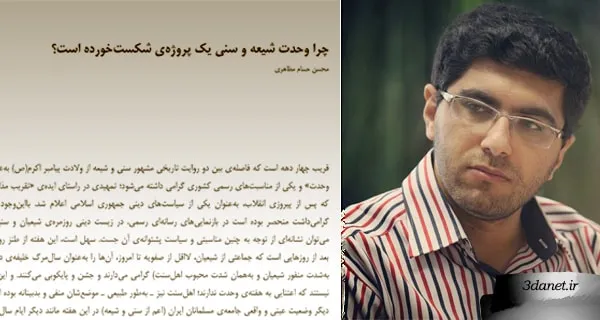
For nearly four decades, the interval between the two well-known historical Sunni and Shia accounts of the birth of the Holy Prophet (PBUH) has been commemorated as “Unity Week” and one of the country’s official observances—a measure in line with the idea of “rapprochement among Islamic schools of thought,” which was declared one of the Islamic Republic’s religious policies after the victory of the revolution. In practice, however, this commemoration has been confined to official media representations. In the everyday religious life of Shias and Sunnis, one can scarcely find a trace of attention to such an observance and the policy behind it. It is easy to see: by the irony of fate, this week falls immediately after days that a group of Shias, at least from the Safavid era to the present, have celebrated with festivities and merrymaking as the anniversary of the death of the second caliph (a figure intensely detested by Shias and just as intensely beloved by Sunnis). And it is not only Shias who pay no heed to Unity Week; Sunnis have also—naturally—held a negative and pessimistic stance. In other words, the objective, actual state of Iran’s Muslim society (both Sunni and Shia) during this week, as throughout the rest of the year, is entirely contrary to what the official media portray. In the media, an annual spectacle is staged during these days: Mamustas and Mawlawis warmly shake hands with Hujjat al-Islams and Ayatollahs, extend the hand of brotherhood, smile before the cameras, speak of the “necessity of unity for the Islamic Ummah,” especially at “this critical juncture,” speak of the need for vigilance against the common enemy, global arrogance, and even takfiri currents, speak of the “many points of commonality between Shia and Sunni” and the “principle of religious brotherhood,” and then a few images of Sunni celebrations for the Prophet’s birth are broadcast, along with perhaps two or three speeches by clerics affiliated with the regime—and that is all. By an unwritten agreement (as in many other areas), everyone, from the media to its audience, knows that these are a commissioned show that should not be taken seriously. A show that even the performers themselves do not believe in. Everyone knows that this ideal image is solely for media consumption and that reality is something else. Reality is what transpires in the heart of the Qom seminary and the Zahedan madrasa. Reality is what transpires in the back rooms of the jurists’ houses, the students’ cells, the mosques, and even the homes of Shias and Sunnis. Reality is the endless, repetitive, and sometimes childish disputes of satellite religious channel presenters over matters of the past. Reality is the intense, not-so-friendly, and fear-laden rivalry that, parallel to the fading of the idea of unity, has been and continues to be underway each year between the official clergy of these two schools and their followers. Its manifestation can be seen, on the one hand, in the increasingly elaborate growth of Shia rituals and the demographic anxiety of Shia sources of emulation, and on the other, in the wave of mosque-building and seminary student recruitment by Sunnis. Now, after nearly four decades, it can be said that the idea of unity is one of the Islamic Republic’s failed religious projects. The Islamic Republic has not only been largely unsuccessful in establishing this union, but by insisting—even if only for show—on this idea, it has unwittingly created a new religious opposition faction among traditional Shias. Shias who find no pleasant scent in the government’s reformist projects (such as managing and purifying mourning rituals, this very idea of unity, and the propagandistic and political campaigns against rival Shia currents under labels like “English Shiism”) and assess the sum of these as aimed at restricting and threatening Shiism. The emergence of certain confrontational behaviors, especially in recent years (such as the insistence on performing rituals that have been declared forbidden, like qameh-zani), is among the signs of such distrust. Given these circumstances, it is not far-fetched for someone to claim that the idea of unity has not only failed to solve the Shia/Sunni divide, but has even exacerbated the Shia/Shia divide (if we do not say it was fundamentally one of the factors that created it).
Where does the problem lie? Why has the remedy, as it happens, only increased the bile? Why have we arrived at this point? In my view, the main problem is that the idea of unity was an idealistic and unrealistic notion that was mistakenly proposed and pursued in three arenas: “history,” “religion,” and “the state.”
One. The Arena of History
It must be accepted that, for better or worse, the Shia/Sunni issue has never been resolved in the arena of history, nor will it be. The historical differences between these two denominations—which mainly relate to events following the passing of the Holy Prophet (PBUH)—may seem minor and trivial from the perspective of an external observer, but the history of Islamic denominations has shown that they hold extraordinary importance from an intra-religious perspective; especially as, over time, a theological aura has enveloped and reinforced them. The efforts of some Shia unity advocates to resolve these differences (such as the stance of the late Fadlallah) have not only failed to help resolve the crisis in practice, but have, on the contrary, fueled a greater distancing of traditional Shias from the ideas of unity and rapprochement, and increased their fear of the consequences of such ideas. Therefore, the first reality that must be accepted, and denying it is fruitless, is that the historical differences between Shia and Sunni firstly exist, and secondly are serious. Any attempt to negate or belittle them is like pounding water in a mortar, and due to the reaction it provokes, it will make the differences more prominent and significant. So, in the arena of history, the idea of unity stands little chance.
Two. The Arena of Religion
Another unrealistic aspect of the unity project has been that, in its first step, it sought to create unity among the official clergy of the two denominations. Oblivious to the fact that [at least a significant part of] the clergy (both Shia and Sunni) is itself the primary source of preserving religious division and schism. The prerequisite for the unity of the scholars of the two denominations is the removal of religious differences; differences that have historically been linked to the very raison d'être of the clergy. And this applies even more so to the Shia clergy (due to their being a minority). From this perspective, the fear of the sources of emulation and the clergy belonging to the discourse of "Traditional Shiism" regarding the unity project, and their lack of cooperation with it, is entirely logical and understandable. They have rightly realized that accepting such a thing means negating themselves. It is no wonder that Traditional Shiism feels its Shia entity is threatened by the unity project. The special and extraordinary emphasis on holding Shia rituals, particularly mourning ceremonies, and the will to expand them increasingly, is a defensive mechanism that Traditional Shiism has—intelligently—designed for its own survival; especially if we accept that (according to my hypothesis) the social basis of Shia rituals has fundamentally been based on opposition to and boundary-making with the Sunnis. That being said, if, with excessive optimism, one could harbor a shred of hope for resolving historical religious differences, no hope can be held for resolving religious differences. Because the clergy of the two denominations, their conventional raison d'être, is the safeguarding of these very boundaries. This is why, throughout history, dialogue and interaction between Sunni or Shia scholars and the scholars of other religions has typically been far easier than with the scholars of other Islamic denominations. Because they did not feel threatened by them.
Three. The Arena of the State
Another factor in the failure of the unity project is that this concern is not an endogenous concern within the fabric of Islamic society; rather, like many other religious policies, it has been a state project. The "state" in modern Iran (Pahlavi Iran and the Islamic Republic) has always appeared in the role of the intellectual and superior reason. A reason that understands better than the subjects (citizens) and claims to be several steps ahead. In the Islamic Republic era, this superior reason also acquired religious prestige and sanctity. Therefore, one of its concerns has been the religious reform of society. The product of this approach has been a wide range of religious policies, encompassing everything from reforming the seminary and the university to reforming religious rituals and customs, and controlling and managing religious literature and art. The record of nearly four decades shows that, at least in some cases (including the unity project), the ruling establishment has failed in advancing its religious policies. One of the obstacles to this success has been that the superior reason did not want to, or did not deem it necessary to, "persuade" society before taking action. This very lack of persuasion has prevented these policies from being accompanied by the empathy of the body of society. The result of insisting on a matter without paying attention to the lack of a receptive context is that today, not only traditional Shiites, but also a significant portion of the body of supporters of "political Islam" and the religious devotees of the Islamic Republic are not empathetic to policies such as unity; although, if forced, they may feign empathy. The rift that has emerged, particularly in recent years, on religious issues between some "hey'ati" members and Hezbollahi "religious youth" and the system is a product of this very distance. The Islamic Republic's religious taste has diverged from the religious taste of the body of Shiite society and even from the religious taste of the body of its own supporters (at least in some cases). And for this reason, advancing religious policies is more difficult for the system than any other policy. *
Given this situation, what is to be done?
It seems that resolving the Shia-Sunni issue requires a new formulation. A formulation that takes into account the set of real and objective propositions of the lives of Shiites and Sunnis, firstly on a national scale, secondly on the scale of the Islamic world, and thirdly on the scale of the international system. For a new formulation, the following can be considered as suggestions:
1. Replacing the practical ideal of "coexistence of Sunnis and Shiites" with the idealistic slogan of "Shia-Sunni unity." As was said, the Sunni-Shia issue cannot be resolved in the field of history and religion. Just as it has not been resolved in these one thousand four hundred years, nor in these thirty-eight years. If this predicament has a solution, it must be sought in society. The historical and political religious problems, distances, and rifts between these two branches of the Islamic world are, at least for a vast portion of their believers, too serious to be negotiable. But social problems are not of that seriousness. In many secular domains unrelated to religion, Iranian Shiites and Sunnis have common interests; such as the social harms that have afflicted the Iranian family (regardless of religion). And many other political, economic, and cultural categories that require dialogue and exchange of views among the various elites of society. Instead of a fruitless conflict over a past that cannot be changed, one must think together about a present and a future that can be planned for. Instead of focusing on religious commonalities, one must point to shared social opportunities and threats. In pursuit of achieving peaceful social coexistence while recognizing and respecting religious differences.
2. Dialogue and interaction among intermediate layers and non-religious elites: Until now, the primary carriers of the discourse of rapprochement have been the clerics of both denominations. And perhaps this has been one of the reasons for the failure of the aforementioned project. It seems the time has come for clerics to hand over the arena of dialogue in this field to other elites of society. A dialogue outside the control and management of the state, aimed first at mutual understanding and precise knowledge of one another, and second at arriving at a list of implicit agreements, specifically in secular (and not religious) matters. If religious commonalities had the power to prevent violence, we would not have this dark history of religious other-antagonism behind us today. The outcome of the path that the two denominations, guided by Shia and Sunni clerics, are pursuing is excommunication and violence. In the end, it is either Seljuk-style Shia-killing or Safavid-style Sunni-killing. What might distance us from such a bitter outcome is commonality over the interests that bind us together. Naturally, such a thing is possible only when a bond of interests exists in the first place. And a bond of interests will exist when opportunities are equal. Therefore, one of the first steps is a joint effort by elites and social activists, especially Shias, to demand all the citizenship rights of Sunnis from the governing authority.
3. Highlighting other identity facets of Sunnis, parallel to the religious facet: It seems that one of the obstacles to Iranian Sunnis attaining all their citizenship and legal rights has been precisely this emphasis on their distinct religious character; whether from their own side or from society and the government. In other words, the representation of Sunnis in the country's public opinion has always been as the religious other of Shia society. The representatives and spokespersons of Iran's Sunni community have mostly been clerical figures and their religious elites. This very fact has paved the way for the emergence of religious sensitivities among the Shia clergy. Whereas the religious facet of ordinary Sunni citizens, just like that of Shia citizens, while important, is only one of their identity facets, and an excessive focus on it has overshadowed their other identity facets. Iranian society needs to hear other voices from its Sunni citizens, parallel to the religious voice.
.
.
PDF file of this article
.
.
Why Is Sunni-Shia Unity a Failed Project?
Author: Mohsen Hesam Mazaheri
.
.

Discussion7 comments
باتشکرنویسنده مقاله حقیر چند نکته بیان کنم اولا تمامی مستندات و ادله جماعت وحدتی پوشالی و پوچ است چنانچه به قرآن استناد کنند ما از حدیث ثابت میکنیم و عمدتا هم به دو آیه واعتصمو بحبل الله جمیعا و لا تفرقوا و آیه شریفه انماالمومنون الاخوه احتجاج میکنن به لطف خدا اهل بیت علیهم السلام مصداق واقعی آیه شأن نزول آنهارا بیان فرموده اند آیه اول منظور از حبل الله امیرالمومنین علی علیه السلام میباشند و آیه بعدی منظور از مومنون شیعیان امیرالمومنین علی علیه السلام میباشند لذا اگر شخص یا گروهی دیگر چنانچه که اهل وحدت مدعی هستند مصداق آیات بودند اهل بیت علیهم السلام میفرمودندپس ادله جماعت وحدتی از قرآن کاملا بی پایه و بی اساس است حال اگر گناه تحریف تفسیر هم به گردن وحدتیون باشند اوضاع بدترمیشود اما از باب حدیث ولله ما هربار از جماعت اهل وحدت خواستیم برای اثبات ادعای خود از حدیث و روایت برای ما بیاورند مارا متهم به نفاق کردن حال آنکه ما راضی شدیم حتی ضعیف ترین روایت با مجهول ترین روات هم باشد ما قبول میکنیم و مخالف وحدت را منافق حتی کافر میدانیم اما متاسفانه یا خوشبختانه این جماعت دستشان خالی بود و این نشان دهنده اینست که حتی این ادعای وحدتیون به حدی نزد اهل بیت علیهم السلام شنیع و قبیح و بعید بوده حتی جاعلان حدیث هم جرات جعل چنین حدیثی و نسبت دادن به اهل بیت علیهم السلام نداشته اند دغدغه نویسنده دغدغه همه شیعیان است که اهل وحدت با ادعای خود موجب تفرقه بین شیعیان شدند و اتهامات و اهانات ایشان به مخالفین وحدت هم عذر بدتر از گناه است اگه منهج و مرجع ما اهل بیت علیهم السلام هستند ایشان در احادیثشان عموما برای اهل سنت از لفظ مخالفین و اعدائنا و عدو استفاده کرده اند بهتر است ماهم از ایشان علیهم السلام تبعیت کنیم و از آنها جلو نزنیم و آیات و احادیث هم بر اساس میل و هدف و انگیزه خود تحریف و جعل نکنیم والسلام علی من اتبع الهدی
م. شریف گویی نویسنده محترم اصل معنای وحدت را متوجه نشده اید. راستی از خود پرسیده اید: 1. چرا شیعه کشی و سنی کشی امروزه در کشور ما نیست یا به ندرت دیده می شود؟؟ 2. چگونه است که تا 30 سال پیش خانواده های شیعه و اهل سنت به راحتی با هم وصلت می کردند؟البته امروزه بخاطر تفکر تکفیری اخیر دیگر کمتر چنین اتفاقی می افتد. 3. درباره تاریخ اهل بیت و نحوه تعامل خوب آنان با اهل سنت چه می گویید؛ اگر شیعه و سنی به همان روش با هم سلوک می کردند به نظر میرسید دیگر مشکلی ایجاد نمیشد ولی افراط ها و تفریط ها باعث رشد اختلافات در برخی مقاطع شد.
به نظر بنده نویسنده مقاله مطالب نسبتا درستی را مطرح کرده است مخصوصا که به راه حل هم اشاره کرده است البته منظور از وحدت شیعه و سنی هیچگاه این نبوده که طرفین یکی کوتاه بیاید و معتقدات طرف دیگر را بپذیرد! بلکه منظور همین زندگی مسالمت آمیز درکنارهم است با حفظ هر گروه به اعتقادات خود. مهمترین چیز و تنهاترین چیز در وحدت شیعه و سنی این است که برای حفظ منافع مشترک خود وحدت داشته باشند تا دشمنان این سرزمین برای غلبه برآنها از راه مذهب بر آنها سلطه نیابند. و این تا کنون در ایران خوب پیش رفته است و در عراق نیز اخیرا وحدت خوبی حاصل شده است و نتایج خوبی هم داده است که در این چند سال اخیر ازحضور آمریکائیان به بعد و مخصوصا حمله داعش وحدت شیعه و سنی خود را خوب نشان داد و اگر این وحدت نبود هرگز عراق موفقیت کنونی را نداشت. همینطور سوریه. پس طرح وحدت بین شیعه و سنی تا کنون چیزی جز زندگی مسالمت آمیز همراه با همکاری در راستای تامین منافع مشترک ملی و فرا ملی چیز دیگری نبوده است . اگر چه بعضی کج فهمهای دو طرف به دنبال القای وحدت عقیدتی هستند تا به این وحدت ضربه بزنند. من هم اکنون در ایرانشهر هستم که شیعه و سنی در کناهم زندگی می کنیم حتی ازدواج می کنیم و هیچ مشکلی با هم نداریم حتی بسیاری از اهل سنت در عزاداریهای ما شرکت میکنند چرا بعضی میخواهند موضوع را پیچیده و ناموفق جلوه دهند نمیدانم احتمالا از دور دستی برآتش دارند والله اعلم
وحدت یعنی ما باهم سر جنگ نداریم همین وگرنه اختلاف عقاید همه جا هست سنی ها انتظار نداشته باشند که پستهای مهم حکومت هم بهشون بدن هرچند که در عمل اونم داده شده برخی جاها
با سلام مخالف نگارش مقالات تند با نگاه تند و احیانا افراطی نیستم، چرا که عکس العمل علمی درست در مقابل همین مقالات زمینه ساز رشد و تعالی حق خواهد بود اما نسبت به مقوله وحدت شیعه و سنی باید تامل نمود، مثل در مقوله دیگری که در مقام عمل احیانا دچار مشکلاتی می شود توجه به سه نکته ضروری است؛ الف) بایستگی و شایستگی ذاتی: آیا مقوله وحدت شیعه و سنی ذاتا امری شایسته است که برای تحقق آن باید دست به کار شد یا نه؟ ب) توجه به مشکلات و کوتاهی های پیش آمده: بالتبع در امری در مقام عمل با مشکلاتی مواجه است ، شناخت و تحلیل صحیح این مشکلات ما را در تصمیم سازی کمک خواهد کرد. ج)اصلاح مشکلات به جای حذف صورت مسأله: افرادی که نگاه راهبردی ندارند بدون دقت به موارد فوق در مواجه با مشکلات، در اولین قدم دست به حذف صورت مسأله می زنند و این اشتباه رایج است و بهترین سفارش به این اشخاص ، عدم اظهار نظر و ورود به حوزه های استراتژیک است. بدور از تمام مشکلات و کوتاهی هایی که مقوله وحدت با آن مواجه است( اموری که طبیعی و قابل برنامه ریزی برای حل است) مقایسه ایران با کشور های منطقه نشان از زندگی مسالمت آمیزتر شیعه و اهل سنت است، هرچند قدرت نیروهای امنیتی در این مورد قابل انکار نیست، امادر کنار این مسأله، اثر فعالیت های فرهنگی صورت گرفته در مورد وحدت شیعه و سنی بسیار مشهود است. وجای تأسف دارد، افرادی که آشنابه موضوع و آگاه به نتایج بدست آمده نیستند، به خاطر مشکلات طبیعی پیش آمده بر طبل تخریب می کوبند.البته بحث در این باره بسیار است که بنده را وقت و حوصله لفاظی نیست.
واعتصموا بحبل الله و لا تفرقوا. خوب بود نویسنده محترم که دیدگاه منفی نسبت به وحدت مسلمین دارد، یک مقایسه ای بین اقلیت های شیعه در همین نزدیکی های ما، مانند عربستان و بحرین با اقلیت های اهل سنت ایران داشته باشد.متوجه خواهد شدتفاوت بین دولت شیعه و دولت تکفیری چیست. درگذشته علمای تکفیری مانند قرضاوی و سلطان الواعظین حکومت سعودی وقتی با موضوع وحدت مسلمین مواجه می شدند، بجای استقبال و فراهم آوری زمینه، به دنبال بهانه می گشتند تا از آن فرار کنند. مثلا می گفتند شما اگر دنبال وحت هستید چرا در کاشان شما قبر ابولولو مورد احترام مردم است ؟ تا آن جا بسته نشود امکان وحدت نیست. ولیکن همه می دانند این ها بهانه ای بیش نبود. زیرا منافع آنان و دست های پشت پرده که آنان را هدایت می کنند، وحدت نیست. بلکه اختلاف و جنگ و خون ریزی بین امت است تا اسرائیل در منطقه به ترکتازی خویش ادامه دهد.نتیجه اعتقاد و گفتار علمای تکفیری همان است که در سوریه و عراق مشاهده می کنید. همین کار را در لبنان نیز توسط یک روحانی نمای خود فروخته می خواستند انجام دهند که بیداری حزب الله، نقشه آنان را بر آب کرد. این برادر عزیز نویسنده مقاله که تحت تاثیر افکار تکفیری است، به مانند عالم نمایان تکفیری به خاطر فرار از وحدت و دمیدن باد در تنور اختلاف و درگیری و جنگ، که آگاهانه و یا ناآگانه از جای دیگر شارژ می گردد، بحث تعایش اهل سنت و شیعیان و موضوعات دیگر منحرف کننده از بحث وحدت را مطرح می کند. خوب است نگاهی به بخش های ترکمن نشین و کردنشین ایران بفرمایید آیا تعایش نیست؟ بیایید همین حالت را در بلوچستان هم به وجود آورید. قسمت اعظم این کار دست علما و نخبگان بلوچ است. وحدت یک شعار توخالی نیست، بلکه راهبرد نظام مقدس جمهوری اسلامی و سیره پیشوایان معصوم(ع) و تنها راه گریز از دسیسه های دشمنان اسلام و اهریمنان است. البته در بحث وحدت، طرف ما تمام فرقه های اصیل اهل سنت(مانند شافعیان، مالکیان، حنفیان و حنبلیان)و شیعیان غیر امامی(مانند زیدیان، اسماعیلیان و دروزیان) است و طبیعی است حساب تکفیری ها، وهابیان و بهاییان از بقیه جدا است.با آنان هیچ وحدت و حتی هم زیستی امکان پذیر نیست. چون معتقَدآنان مذهب نیستند تا قابل وحدت باشند، آنان گروههای تبهکارند که دشمنان اسلام برای ایجاد تفرقه بین مسلمانان و ابزار فشاربر دولت های مخالفشان به وجود آوردند.
با سلام به نظر من به نتیجه نرسیدن پروژه هفته وحدت، کنار گذاشته شدن مبدع و طراح آن بود. به نظر می رسد به غیر از آیت الله منتظری که این پیشنهاد را داد و بقیه طوعا یا کرها به خاطر مصالح نظام پذیرفتند، هیچ کس به این موضوع اعتقاد راسخ نداشت. به همین خاطر با کنار گذاشتن ایشان و نبود حامی اصلی، کم کم موضوع از دور خارج شد و به نتیجه نرسید.