Religion
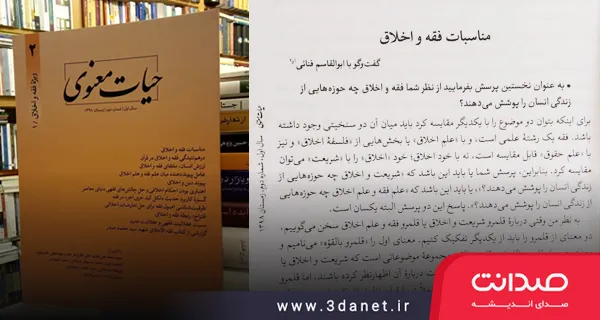
A Conversation between Asghar Zare’ Kahnemoui and Abolghasem Fanaei
Fanaei considers the division of intellectualism into religious and secular to be incorrect, and the division based on theism to be correct. He calls definitions lacking religious commitment hypocrisy and abuse, and emphasizes the authenticity of religious belief in the identity of the religious intellectual.
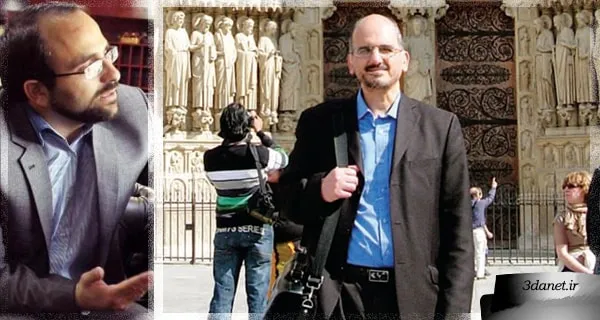
Asghar Zare’ Kahnemoui: One cannot be indifferent to the standing and credibility of religious intellectualism, with all the tribulations and issues surrounding it. It could perhaps be said that religious intellectualism is the most vital socio-political entity in our entire contemporary history. An opportunity is needed to precisely evaluate and critique the record of this school of thought. How defensible is this record? Why does the political identity of religious intellectualism outweigh its other aspects? What is the specific function of religious intellectualism, and what has this function achieved in the realm of human rights? Why does religious intellectualism not address the rights of ethnic groups? How are the paradoxes of religious intellectualism in the sphere of women's rights to be weighed? To answer these questions, we have turned to Dr. Abolghasem Fanaei. He is one of the most modernist seminary-trained scholars residing in the cloister, and also one of the most seminary-grounded intellectuals residing in London. Perhaps his greatest effort is devoted to resolving the paradoxes of religion and modernism from the perspective of ethics. In this conversation, while lamenting the division of intellectualism into religious and secular, he proposes another division of intellectualism based on theism. He goes on to defend the record of religious intellectuals in the domain of human rights, and in a question seeking an answer about the relationship between national interests and human rights, he gives priority to human rights. Regarding the rights of ethnicities, he says: oppressing ethnic groups harms national security and endangers territorial integrity more than granting them their rights does.
Although perhaps the most important specific function of the intellectual is the precise explication and elucidation of concepts, this very term is more ambiguous than any other concept. In the meantime, religious intellectualism carries even greater ambiguity. It would be good to begin our conversation, which evaluates the record of religious intellectualism, with a definition of this concept. What is your definition of religious intellectualism?
In the name of God. Let me say from the outset that I am neither a “representative” of religious intellectuals nor their “spokesperson.” The answers I will give to your questions are my own, and their merits or flaws, truth or falsehood, should not be attributed to others. Other thinkers known as religious intellectuals or new religious thinkers may agree with some of these answers, but even in that case, I have no right to speak on behalf of others or to attribute my claims to them. In other words, I am not dealing with the history of ideas here, and my perspective on your questions is not a second-order one, but rather a first-order one. I prefer to use the term “religious intellectual” rather than the abstract title “religious intellectualism.” In my view, instead of linguistic and marginal discussions that yield little benefit, it is better to point out some characteristics that are components of a religious intellectual and distinguish him from other intellectuals. The religious intellectual has a two-dimensional yet integrated identity. He is someone who strives to reconcile intellectualism and religiosity, not just for others, but primarily for himself; that is, reconciling intellectualism and religiosity is not merely a prescription such a person writes for others, but is also his own personal concern. Furthermore, in my opinion, the dichotomy of religious intellectualism/secular intellectualism is incorrect, meaning it is not logically defensible, because “minimal secularism” is a constituent or essential element of any kind of intellectualism, and in this sense, religious intellectuals are also secular. Secularism is not equivalent to atheism. By minimal secularism, I mean a theory that posits the existence of certain extra-religious matters and their precedence over religious matters. There is also much disagreement about the meanings, dimensions, and various layers of the concept of secular, and in my view, using this word in this dichotomy creates more ambiguity than clarity. The correct and reality-faithful division is the following: (1) theist intellectual, (2) atheist intellectual, (3) agnostic intellectual. In my view, intellectualism is inherently unconditional regarding religiosity and irreligiosity, and necessarily leads neither to theism, nor to atheism, nor to agnosticism. For this reason, it is in principle compatible with all three categories.
In any case, religious intellectualism, whether we accept it or not, is an accepted term in our political and civil society and cannot be avoided.
There are ambiguities in the term “religious intellectualism” that have, for instance, recently led some to propose a new definition of religious intellectualism, according to which religiosity or religious commitment is not a component of religious intellectualism—meaning that to call someone a religious intellectual, that person need not believe in or be committed to a religion; it suffices merely that they are not hostile to religion. I have no quarrel with the motives of those who offer such a definition of religious intellectualism. It is everyone’s right to have their own definition of words and to propose that definition to others. The problem, however, is that alongside their proposal to redefine religious intellectualism, these individuals also explicitly or implicitly point out that in religious societies, such as Iranian society, religious intellectuals have an audience, and anyone who wishes to attract this audience is compelled to call themselves a religious intellectual. The reasoning behind these statements is not hidden. The argument is that pragmatic considerations allow an intellectual, despite having no belief in religion or religious doctrines and merely because they are not hostile to religion, to call themselves a religious intellectual. But as is clear, such an approach faces fundamental criticisms.
What criticisms?
Firstly, the public’s embrace of past generations of religious intellectuals was not merely due to the “label” of religious intellectual, but because of the meaning/truth to which this title referred. Most religious intellectuals did not even use such a name. The religious community’s embrace of these individuals was due both to the “teachings” that resulted from these intellectuals’ theoretical efforts to reconcile intellectualism and religiosity, and to the theoretical and practical commitment these intellectuals demonstrated to religion in their personal and social lives. Secondly, this act is a kind of abuse of the legacy of religious intellectuals; a legacy that was not cheaply earned to be cheaply lost. The faith-oriented character of earlier religious intellectuals is so prominent and vivid that they are accused by a group of their opponents of devoting their efforts to reconciling things that are irreconcilable. A religious intellectual is someone who, because of the truth they see in religion, is attached to it and sees religion as necessary and beneficial both for themselves and for their audience. A religious intellectual is not someone whose goal is to help the audience transition from religiosity to irreligiosity and who, to achieve this goal, uses religion and the title of religious intellectual instrumentally. Thirdly, this act is a form of hypocrisy and demagoguery that is compatible neither with the ethics of intellectualism nor with the ethics of religiosity. Someone who does not believe in religion/is not truly religious, but wraps their wares in the foil of religion to sell them to a religious audience and calls themselves a religious intellectual, is neither an intellectual nor religious. The first component of intellectualism and religiosity is honesty with one’s audience and refraining from deceiving them. An intellectual does not trade on their work and does not seek to attract customers. In this respect, the stature of religious intellectuals is the stature of prophets. Such abuse of the title of religious intellectual occurs when a person holds a particular definition of religious intellectualism in their mind, knowing that this definition is completely different from the definition their audience holds of this term in their minds. Thus, they use a title to name themselves, knowing that the audience has a different understanding of that title. The secret of the religious public’s embrace of and attention to religious intellectuals is not that these intellectuals invoke religion, or speak about religion, or are merely not hostile to religion, but because these intellectuals are truly religious; that is, they both have faith in religious beliefs and, in practice, follow a religious path. A religious/believing intellectual is someone who does not build the ceiling of their livelihood/fame upon the pillar of piety and does not auction off the reputation and brilliant record of previous generations of religious intellectuals. A religious intellectual is not someone who distorts the truth to attract an audience and speaks on subjects they themselves do not believe in, or opines in domains where they lack the competence to comment, or comments on topics related to religious sciences such as mysticism, jurisprudence, and exegesis without acquiring the necessary preliminaries, competence, and experience.
It seems you posit separate identities for intellectualism and religiosity?
Intellectualism and religiosity are two distinct identities among others that may coexist in a single individual. I believe that dividing the types of religiosity/the religious into “identity-oriented,” “knowledge-oriented,” and “experience-oriented,” while illuminating, instructive, and insight-enhancing, is ambiguous in that it fosters the notion that the opposition among these three types is a “logical” one, whereas in reality it is not; for knowledge-oriented religiosity and experience-oriented religiosity are not devoid of “religious identity” and concern for this identity, just as identity-oriented religiosity is not devoid of a certain kind of knowledge and experience. Therefore, even if we equate religious intellectuals with knowledge-oriented believers, we still cannot consider them free from possessing a religious identity. The identity of the intellectual and the identity of the religious are no different from other identities in that each is the subject/addressee of a set of ethical values and norms, which we respectively call “the ethics of intellectualism” and “the ethics of religiosity.” Thus, one can say that a religious intellectual is someone who, theoretically/in the realm of theorizing and practically/in the activities they undertake as a religious intellectual, adheres to these two ethics and follows the oughts and ought-nots of both. What those oughts and ought-nots are and how they can be discovered, formulated, and justified is an important question that, due to the constraints of space, cannot be addressed here. But the very existence of these two ethics, which are sometimes referred to as the responsibility of intellectuals qua intellectuals and the responsibility of the religious qua religious, is clear. I am not in a position to dictate to others. The claim is that someone who considers themselves a religious intellectual is, above all, obliged to recognize the normative requirements of these two identities and to adhere to those requirements in their intellectual activities. In any case, the definition I have of religious intellectualism is the very definition that emerges in the minds of the general Persian-speaking audience upon hearing this expression. According to this definition, a religious intellectual means a religiously committed intellectual, that is, someone who both has intellectual pains and concerns and shares these pains and concerns with other intellectuals (this is what distinguishes them from other religious people who are not intellectuals), and also has religious pains and concerns and shares these pains and concerns with other religious people, and this is what distinguishes them from other intellectuals. Of course, merely having pains and concerns is not sufficient. In fact, the only sign of the existence of such pains and concerns is that the person strives sincerely and seriously in line with these pains and concerns.
For some time now, some have spoken of the lethargy of religious intellectualism and, while criticizing the political dimensions of religious intellectualism, have emphasized the necessity of redefining this type of intellectualism. Arash Naraghi has said: “The time has now come for our religious intellectuals to devote their intellectual efforts more to ethics than to politics.” Has this happened? How do you assess the record of ethical reflection within religious intellectualism? Has religious intellectualism been able to move beyond being a political force—something certain currents also fueled—to expound and formulate its own ethical school?
The criticisms leveled at religious intellectuals are very diverse and are made with various intentions. Malicious criticisms arising from spite and envy or commissioned by specific political institutions are not worth addressing. However, scholarly criticisms must be taken seriously. Naturally, every intellectual, by virtue of the mission they bear as an intellectual, will also have to deal with politics; this is something imposed on them by external circumstances. Even an intellectual's silence in the face of the political turmoil unfolding in their society is a form of political stance, and religious intellectuals are no exception to this rule. What matters is the manner of engaging with the category of politics and how intellectuals enter and exit this domain. I believe it is the right of religious intellectuals to critique the current politics of their society and the ruling politicians, or to support a particular individual or political current, and so on. I mentioned earlier that minimal secularism is one of the constituents of being an intellectual. Part of this secularism is what is referred to as political secularism, meaning the separation of the "institution" of religion from the "institution" of politics. Of course, the separation of the institution of religion from the institution of politics does not mean the separation of religion from politics, nor does it mean prohibiting religious people from engaging in politics or political activity. But the point is that both political critique and political action, if they are to be fruitful and compatible with the ethics of intellectualism and the ethics of religiosity, require, among other things, a clear, well-considered, and defensible "value" and "normative" foundation. This value and normative foundation can be borrowed from both ethics and religion. In fact, someone who is dissatisfied with the "status quo" and critiques it is dissatisfied and critical of this situation because they have an image of a "desirable situation" / "ideal situation" / "virtuous city" / "utopia" in their mind, and they consider reaching and realizing that desirable situation to be both their right and something possible and within reach. The difference between an intellectual and someone who is not an intellectual does not fundamentally lie in having such an image of a desirable situation; rather, it lies in its clarity, well-considered nature, and defensibility. This desirable situation can be derived primarily from ethics and secondarily from religion. The empirical sciences can tell us, for example, what to do to achieve an economic situation with lower inflation, but they cannot tell us whether lower inflation is "better" or "worse." The political situation of society is no exception to this rule. Therefore, while critiquing the political situation of society and striving to bring society closer to the desirable situation is both the right and the duty of intellectuals, it is the manner of exercising this right or fulfilling this duty that is of particular importance. In other words, if exercising this right or fulfilling this duty depends on acquiring certain prerequisites, a person who engages in such work without acquiring those prerequisites has, in fact, neither exercised their right nor fulfilled their duty; worse still, the result of their efforts may be a kind of regression, making the status quo worse than it already is. Considering these observations, it can be said that the theoretical record of the previous generation of religious intellectuals in this area is not without flaws. I believe this record suffers from two fundamental weaknesses: First, they have critiqued the status quo without refining their own ethical and religious foundations. I particularly wish to point out that an ethical critique of the status quo is incompatible with accepting ethical relativism (and the separation of the ethics of the rulers from the ethics of the ruled), or considering ethical values as conventional, or accepting the postmodernist view on the status of reason and cultural relativism. Second, the negative aspect of these intellectuals' theorizing, both in the realm of politics and in other realms, outweighs its positive aspect. They have been successful in articulating what they do not want and why they do not want it, but they have not been very successful in articulating, explaining, and elaborating on what they do want, why they want it, and what alternative theory they have at hand to replace the existing theory. I believe the precise interpretation of Dr. Arash Naraghi's statement that you quoted is exactly what I have just presented to you. He does not mean to say that religious intellectuals should not engage in politics. Rather, his point is that even to reform politics, one must start with reforming ethics, because as long as the ethics governing social relations and interactions remain the same, the door will keep turning on the same hinge, and politics and other aspects of social life will remain in the same shape and form. Individuals come and go, but the procedures and methods persist. Nevertheless, I believe that although religious intellecy in formulating their own accepted ethical school are still at the beginning of the road, they are far ahead of other Iranian intellectual currents in this field.
Religious intellectualism, it seems, must, insofar as it is intellectualism, approach a secular ethical disposition, and insofar as it is religious, approach a religion-oriented ethical disposition. With which ethical school is religious intellectualism fundamentally most compatible?
I prefer to use the term "extra-religious" instead of "secular." As I have explained in detail elsewhere, ethics is primarily and essentially an extra-religious category; meaning that the fundamental principles of ethics are independent of religion and, in one sense, prior to religion. However, these principles combine both with religious beliefs and with religious rulings. The combination of these principles with religious beliefs and rulings leads to an expansion of the domain of ethics, not its constriction, meaning that the fundamental ethical principles find new applications as a result of this combination. Therefore, secondarily and accidentally, one can also have "religious ethics," but this ethics is situated along or under "extra-religious ethics." The religious intellectual, insofar as they are an intellectual, is committed to "ethical secularism," that is, they believe that ethics is an extra-religious category. But insofar as they are religious, they are also committed to religious ethics; an ethics that is the result of combining extra-religious ethics with religious beliefs and rulings. The religious intellectual derives the principles of ethics from outside religion/beyond religion, but this does not entail their disregard for religious ethics.
In this context, what role does human rights play in the various readings of religious intellectualism? Human rights now sits at the forefront as a grand discourse for all different types of intellectualism. But it seems that religious intellectualism has not provided fundamental answers to certain dimensions of human rights, such as women's rights, and in other areas, like the rights of ethnic groups, it has essentially remained silent. Except for a few, like Arash Naraghi, none of the representatives of religious intellectualism have addressed this issue. Serious criticisms are leveled at this evasion by religious intellectualism.
I do not consider this criticism of yours to be fair. Firstly, I believe the record of religious intellectuals in this area is not weaker than that of non-religious intellectuals. Of course, from a broad perspective, one can say that Iranian intellectuals, whether religious or non-religious, could have and should have worked more in these two areas, namely women's rights and the rights of ethnic minorities, but one must also note that transformation and progress in the field of human rights is a gradual matter and is not achieved overnight. It has been the same in other countries. The expectation from intellectuals in general, including religious intellectuals, is that they pay attention to the existing priorities in this field. When we still have difficulty in recognizing and establishing human rights insofar as one is human, naturally, the ground and platform for addressing women's rights and minority rights is less readily available. I am not saying that men or those who are not in the minority have priority in this regard. Religious intellectuals have primarily striven to establish rights that both women and men, and both minorities and non-minorities, enjoy insofar as they are human. The realization of women's rights and the rights of ethnic and non-ethnic minorities are the subsequent steps that must be taken in this field. Of course, Dr. Naraghi is a pioneer in this area as well.
You, as one of the serious representatives of religious intellectualism or religious new-thinking, say: "How can and should one reconcile 'God's right' and 'human rights'?" Shabestari says: "Human rights were formulated to regulate relations between humans and are not in conflict with God's rights." But secular philosophers like Mohammad Reza Nikfar essentially deem the reconciliation of these two impossible because they consider their arenas and ends to be very different. How do you reconcile these two? Is your method for reconciling these two, like that of Kadivar and Qabel, intra-religious and reliant on modern styles of ijtihad, or, like Mujtahid Shabestari, extra-religious and reliant on new hermeneutical discussions? Or do you fundamentally take a different path?
This is a very large question, and it is not possible to address all its aspects in this conversation. I will try to explain the view I find acceptable. In my opinion, the most important challenge we have faced since becoming acquainted with modern culture and entering the modern world is the challenge between religion and ethics, or the challenge between the rights of God and human rights. I think it is no exaggeration to claim that many of the other political, social, economic, and cultural challenges we grapple with are branches of this very central challenge. To resolve this fundamental challenge, we need a clear and defensible theory about the relationship between religion and ethics. However, this theory is obtained from outside religion, that is, from moral philosophy, not from religion and religious texts, although intra-religious evidence can also be provided for it. The understanding and interpretation of religious texts have presuppositions, one of the most important of which is precisely this relationship between religion and ethics. In my books and articles, I have tried to show that the conflict between religion and ethics is an epistemological conflict that originates from the method of interpreting religious texts, or more precisely, from the extra-religious/meta-religious methodological presuppositions of the interpreters; presuppositions that a person has assumed about the relationship between religion and ethics before referring to religion and religious texts. Attempting to resolve this conflict from within religion, without criticizing and correcting those methodological presuppositions, is ineffective and does not lead to a defensible result. Therefore, the path and method that, in my view, we are compelled to take to resolve this challenge or conflict is an extra-religious or meta-religious path and method, because this issue itself is an extra-religious or meta-religious issue and relates to the foundations of religious studies, not to religion itself or even religious studies. Naturally, when we refine and correct our extra-religious presuppositions about the relationship between religion and ethics, we have refined and corrected both the style or method of our ijtihad and inference, and the method of interpreting religious texts. Because the theory that a person adopts about the relationship between religion and ethics before referring to religion is both a part of the method of ijtihad and a part of the method of interpretation; this theory tells them, firstly, "What is the nature of the conflict between religion and ethics?" and secondly, "How should this conflict be resolved?"
Many religious intellectuals believe that living ethically is an exceedingly difficult task. One aspect of ethical living is respecting women's rights. In this area as well, religious intellectualism does not have a justifiable record in explaining the issue. Given that religious intellectualism is firmly committed and bound to upholding religious beliefs, how does it analyze the equal rights of men and women as stated in the Universal Declaration of Human Rights? As mentioned in the previous question, in this clear example, do you believe in reconciling the sometimes contradictory rulings between the sacred text and the text of human rights, or do you, like the mujtahid Shabestari, turn to a hermeneutical explanation of the text? Shabestari speaks precisely of the impossibility of the first type and emphasizes a change in attitude and emotional connection to religion. What do you say?
Religious intellectuals have taken different paths regarding this very important issue. Firstly, many of them lack a clear and consistent position on the matter. I do not have detailed knowledge of Professor Shabestari's views and will not comment on them. But I believe that to properly resolve this conflict, we must take certain steps and lay some groundwork. The first step is to acknowledge the very existence of this conflict. I believe Dr. Kadivar, in some of his works, has meticulously and thoroughly demonstrated the instances of conflict between traditional jurisprudence and human rights, including women's rights. The second step is to address the philosophical foundations of human rights and, by critiquing cultural relativism, show that these rights are universal. Dr. Arash Naraghi has accomplished this task admirably in his works. The third step is to address the relationship between religion and ethics and demonstrate the primacy of ethics over religion. And the fourth step is to address the relationship between jurisprudence and ethics and demonstrate the primacy of ethics over religious studies, or the science of ethics over the science of jurisprudence. These last two steps constitute the area I have been engaged with in recent years. By bringing together these foundations and preliminaries, we will be able to properly resolve not only the conflict between human rights and the apparent meaning of religious texts concerning women's rights, but also the conflict between the apparent meaning of these texts and human rights in general. However, to reach such a conclusion, we cannot proceed without providing those preliminaries and merely by relying on hermeneutics. Hermeneutics is only part of the story, not the whole of it. In any case, I accept that there is a great deal of unfinished work in this and similar areas, but I believe that when comparing religious intellectualism with other intellectual currents, it can be shown that religious intellectuals have a richer record in this field as well.
In a very important discussion, Arash Naraghi has addressed the rejection of "cultural relativism" in the practical commitment to the Universal Declaration of Human Rights. It seems that a large part of the Iranian intellectual current, which includes religious intellectualism as well, is precisely caught in this same cultural relativism in interpreting human rights. Why? As a philosopher, why does intellectualism in Iran fundamentally attempt to interpret human rights in favor of the cultural current dominating intellectual and linguistic relations? Does this interpretation stem from a misunderstanding or miscomprehension of the philosophy of human rights, or from the accumulated fear in the mind and soul of this traditional person lest they create danger, or, in the worst speculation, is it rooted in their delusion of superiority?
As far as I know, among our thinkers, two groups believe in or resort to “cultural relativism.” The first is a group of traditional thinkers whose refuge in this theory is a way to evade the acceptance of human rights. And the second is a group of intellectuals. The first group, in fact, considers cultural relativism as a vehicle or justification in whose light one can defend a traditional understanding of religion that is incompatible with human rights. Of course, they do not deny human rights outright and explicitly; rather, they constrain it with jurisprudential rulings, and their claim is that Islamic human rights differ from Western human rights. Whereas human rights are “the rights of human beings qua human beings” and are neither Islamic nor Western. The problem that these thinkers neglect or ignore is that recognizing cultural relativism is like sitting on a branch and sawing it off. Cultural relativism not only calls into question the universality of human rights and the ethics based on human rights, but it also calls into question the universality of religious claims and jurisprudential rulings. Someone who accepts such a basis cannot justify the inclusion and extension of the jurisprudential rulings of the simple, rural society of Arabia fourteen hundred years ago to another village with a different language and culture, let alone wanting to propagate and implement those rulings throughout the world. But the second group, that is, the intellectuals, among whom are also some prominent figures of religious intellectualism, base their belief in cultural/moral relativism on their belief in postmodernism and the separation of subjective constructs (iʿtibāriyyāt) from objective truths. They do not do this, of course, to the benefit of the dominant cultural current, although the benefit of such a position is deposited into the account of the dominant cultural current. I doubt that the proponents of this way of thinking intend to seek superiority or have adopted such a position out of fear of creating danger. I think the main reason is theoretical; that is, a lack of proper understanding of rationality and ethics, and that postmodernism is not a defensible position, the failure to separate descriptive ethics from normative ethics, the assertion that moral values are subjective constructs, and also the failure to separate sociology from philosophy are among the reasons that play a role in adopting such a position. Another problem this group faces is the problem of speaking in contradictions. By accepting cultural relativism regarding human rights, which is a specific instance of moral relativism, one cannot critique the ethics of rulers and their behavior toward citizens. That is, these thinkers also unravel in the philosophy of ethics the threads they have spun in ethics.
In your reading of human rights as a religious intellectual, are human rights a moral recommendation and discourse, or a binding right? In any case, what is the relationship between right and expediency? Does expediency (of any kind) outweigh right (of the human rights type)? Or under any circumstances, do human rights take priority over any kind of expediency?
Human rights are both the basis of social ethics discourse and are binding. In this ethical discourse, right takes precedence over expediency, in the sense that considerations of expediency are permissible only within the framework of observing human rights, and one cannot ignore someone's right under the pretext of expediency. Essentially, the introduction of a category called human rights was for the purpose of defending the rights and human dignity of individuals against the expediency calculations of rulers and statesmen.
One clear and, of course, complex example of this is the relationship between human rights and national interests. In the event of a conflict between human rights and national interests, which takes priority? Given this assumption, which way would you lean? I have asked this question of many representatives of various schools of religious intellectualism, thinkers in the philosophy of law, and experts in the sociology of nationalism and ethnicity; the opinion of the overwhelming majority of them, including Mostafa Malekian, Naser Katouzian, Mohammad Rasekh, Kazem Motamednejad, Hamidreza Jalaeipour, Kavous Seyed-Emami, Mohsen Kadivar, and others, is on the absolute priority of human rights over democracy.
I think two issues have been conflated in this question; the relationship between human rights and national interests is different from the relationship between human rights and democracy. Regarding the relationship between human rights and national interests, we must distinguish between domestic and foreign policy. No government has the right, in its domestic policy, to disregard the human rights of its citizens under the pretext of national interests or national security. But in foreign policy, whether we consider it right or wrong, the majority of governments, in managing their foreign relations with other states, are concerned with protecting their own national interests, and the rights of the citizens of other states either do not matter to them at all or matter only within the framework of their own national interests. In this case, the question is whether, under such circumstances, a government has the right to disregard its own country's national interests for the sake of the rights of another state's citizens? It seems that minimal social ethics, that is, justice-based ethics, morally permits reciprocity; meaning that as long as other states, in managing their foreign relations with other states, pursue the interests of their own country and citizens and prioritize these interests, other states also have the right to do the same. Of course, if the citizens of other states demand of their governments and compel them not to sacrifice the rights of foreigners for their national interests, then we too will be obliged to demand that our government not do so. Let us not forget that human rights are a form of mutual obligation. Morally, I have no right to oppress another, but when another disregards one of my rights, I will also be permitted to disregard that same right of theirs to the same extent.
And the relationship between human rights and democracy?
In my view, human rights are the theoretical foundation of democracy, meaning that democracy is the practical realization of the right to self-determination, which is one of the fundamental human rights. Therefore, I cannot conceive of the priority of human rights over democracy. These two are not in conflict with each other so that one could ask which takes priority over the other in the event of a conflict. Personally, I prefer to use and defend the notion of the primacy of ethics over national interests. To put it more simply, I believe that even national interests should only be pursued within the framework of ethics. Ethics is not only prior to religion; it is also prior to law and national interests. But the primacy of ethics over national interests in the realm of foreign policy means the primacy of minimal social ethics over national interests.
Dr. Jalaeipour, along with several other social science thinkers, in response to my question of whether conceding to the rights of ethnic groups, including mother tongue education, harms national security or not, have answered that implementing these rights and principles not only does not harm national interests and territorial integrity but actually strengthens them. What is your opinion? What is your response to those who fear danger if such rights are implemented? Many of these individuals may not fall within a paternalistic reading of nationalism, but the fear in their hearts is very substantial.
This question has two aspects: one sociological and the other ethical or philosophical. I am not qualified to comment on the first aspect, as I am not a sociologist. But regarding the ethical/philosophical aspect of this matter, I must say that it is the indisputable right of different ethnic groups to speak and receive education in their mother tongue and to strive to promote and keep this language alive among their children and to teach it. In terms of other rights as well, these ethnic groups enjoy rights equal to those of other ethnic groups. Fear is not a good reason for disregarding rights. Firstly, even if we look at the issue from a religious perspective, the diversity of languages is recognized in the Quran and is referred to as one of God's signs, and secondly, oppressing these groups harms national security and endangers territorial integrity more than fulfilling their rights does. At the same time, it is worth noting that it would be good for the minorities themselves to also take steps to alleviate these concerns, including not allowing separatist groups that are in contact with foreigners to speak in their name and pursue the interests of foreigners under the guise of ethnic demands.
You speak of two kinds of God: the God of jurisprudence and the God of ethics. Dr. Kadivar criticizes the frailty of the science of ethics in the lived history of religious science and the obesity of jurisprudence. Dr. Naraghi speaks of the lack of distinction between the ethical matter and the religious matter in Shi‘i jurisprudence. Fundamentally, why are ethical scrutinies expected from the jurisprudential tradition? Why should jurisprudence concern itself with ethics? Is such a complaint and expectation of the seminary essentially idle and contradictory to the jurisprudential identity of this intellectual system?
First, I must say that I have not claimed that there are two Gods. What I have said is that we can have two different conceptions of the nature of God. Secondly, these are not ethical scrutinies, but rather pertain to the “philosophy of ethics” and the “philosophy of jurisprudence.” In this case, it can be said that one of the duties of jurists and mujtahids is, before engaging in the derivation of religious rulings from the relevant sources, to refine and correct their foundations in the philosophy of jurisprudence, and one of the most important of these foundations is precisely the relationship between religion and ethics, and how to resolve the conflict when the apparent meaning of religious texts contradicts ethical values. A jurist who engages in deriving religious rulings without refining and correcting his theory regarding the relationship between religion and ethics has, in fact, both fallen short in fulfilling his duty, and the result of his ijtihad and derivation, if incompatible with ethics, is invalid. I thank you and those involved in this special issue.
.
.
A Conversation between Asghar Zare’ Kahnemoui and Abolghasem Fanaei
National Interests within the Framework of Ethics and Human Rights
Source: First publication: Special Issue on Religious Intellectualism, the political-cultural monthly Nasim-e Bidari, Nowruz 1392, Issues 33 & 34, pp. 46-51.
.
.



Discussion0 comments
No comments yet; let yours be the first voice.