Philosophy
A Critique Examined (A Response to a Deplorable Translation of a Delightful Book)
A response by the translators of Religious Thought in the Twentieth Century to a critique by Mostafa Malekian published in the journal Naqd va Nazar. Drawing on dictionary evidence, the translators defend their lexical choices against the objections raised.
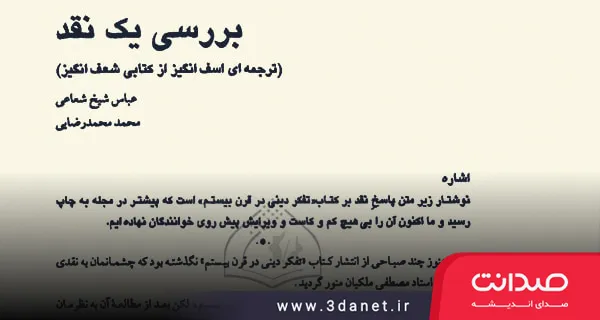
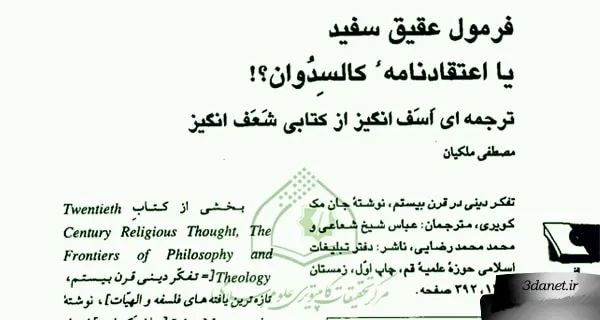
The story began when, in the winter of 1996, Mostafa Malekian wrote an article critiquing the translation of the book Religious Thought in the Twentieth Century, and the journal Naqd va Nazar published this article. The title of this critique was itself quite telling: "The Formula of White Agate or the Chalcedonian Creed?! A Deplorable Translation of a Delightful Book" The publication of this translation critique had a particular resonance in the philosophical and religious studies circles of that era. The translators of that book (Messrs. Mohammad Mohammadrezaei and Abbas Sheikh Shoaei) published a response in the next issue of the same journal (Spring and Summer 1997) titled "A Critique Examined (A Deplorable Translation of a Delightful Book)" and addressed some of the problems and criticisms. But this response of theirs led to a subsequent critical article by Mostafa Malekian. In a later issue of the same journal, in an article titled "A Response to a Pseudo-Response", Malekian tried to show that the translators' response was not convincing.
.
In this post, the translators' response to Mostafa Malekian's critique is presented.
.
.
The following text is the response to the critique of the book Religious Thought in the Twentieth Century, which was previously published in the journal, and we now present it to the readers without any omissions, additions, or editing. It was not long after the publication of the book Religious Thought in the Twentieth Century that our eyes were illuminated by a critique adorned by Professor Mostafa Malekian. Initially, we did not intend to write anything regarding that critique, but after studying it, it seemed fitting to us, in the spirit of "He who does not thank the creature has not thanked the Creator," to offer a few lines to the readers as a gesture of gratitude to the esteemed critic. Therefore, with the utmost humility and appreciation for him, who undertook the trouble of comparing this translation with its original text and devoted his time to it, we offer our sincere thanks and gratitude, and we beseech long life for that dear one and God-pleasing success in his pen and steps from the threshold of the Benevolent God.
پس از تقدیر و تشکر، در مورد این نقد که در مجله نقد و نظر سال سوم شماره اول زمستان 1375 به چاپ رسیده است، یادآوری نکاتی چند را خالی از فائده نمی دانیم: اشکالاتی را که ناقد محترم در نقد خود آورده اند می توان به سه دسته تقسیم کرد: الف) برخی جاافتادگی ها که از باب سهوالقلم از آنها غفلت شده است. در خصوص این گونه موارد باید گفت: هرچند این مساله از کم دقتی مترجمان در این موارد حکایت می کند، لکن هیچ مترجمی از جمله ناقد محترم در ترجمه های خود از این گونه غفلتها مصون نیستند، و شایسته آن است که سعی شود تا این موارد به حداقل برسد. البته بعضی از جاافتادگی ها بر اثر حذف ویراستاران صورت گرفته که در متن اصلی ترجمه موجود بوده است. ب) بعضی از اشکالات به ادعای ناقد محترم این است که مترجمان برای برخی واژه ها معنایی را برگزیده اند که در زبان انگلیسی نیامده است. و حال آنکه وقتی به فرهنگهای انگلیسی مراجعه می کنیم آنها را با همان معانی که در ترجمه ذکر شده است، می یابیم از قبیل موارد زیر 1. اصطلاح Chalcedonian: ناقد محترم این عبارت را در مقاله به طور برجسته و با عنوان فرمول عقیق سفید یا اعتقادنامه کالسدوان آورده اند و چنین به نظر می رسد که آن را گناهی نابخشودنی دانسته اند. ایشان در آن اشکال می فرمایند: مترجمان این واژه را با Chalcedony اشتباه گرفته اند. کافی بود توجه کنند حرف C در Chalcedonian بزرگ نوشته شده است و بنابراین، این صفت، صفت خاص است و نمی تواند با عقیق سفید ربط و نسبتی داشته باشد. (ص 393 مجله) اگر ایشان به فرهنگهای انگلیسی فارسی از جمله فرهنگ انگلیسی فارسی آریانپور (دو جلدی) ص 353 مراجعه می کردند، همین واژه Chalcedonian را به همین صورت و با C بزرگ به معنای عقیق سفید یا سنگ یمانی می یافتند. البته ممکن است فرهنگها واژه ای را به غلط معنا کرده باشند ولی این احتمال در بدو نظر بعید به نظر می رسد و ما تاکنون مؤلفان این فرهنگها را اهل خبره می دانستیم، بنابراین مراجعه به آنان ملامت انگیز نیست; زیرا اگر بنا باشد هرکسی برای خود واژه ایی را جعل کند، ارتباط فرهنگی به سختی میسر می شود. البته باید از جانب فرهنگستان نظارت بیشتری بر این فرهنگ، شود تا رهزن نباشند. 2. اصطلاح revolve: ناقد محترم مدعی است که این واژه هیچ گاه به معنای «تغییر کردن » به کار نرفته است، بنابراین برگردان این عبارت انگلیسی مترجمان my though continually revolve افکار من دائما تغییر می کند، صحیح نیست. در صورتی که اگر ایشان به فرهنگ انگلیسی فارسی حیم ص 1057 تک جلدی مراجعه می کردند، این واژه را به معانی گردش کردن، سیر کردن، دور زدن، تغییر کردن (ص 384 مجله) می یافتند. 3. واژه sub: ناقد محترم مدعی است که این واژه در زبان انگلیسی به معنای شبه نیامده است (ص 383 مجله) خواهشمند است به فرهنگهای ذیل که sub در آنها به معنای شبه آمده، مراجعه شود: الف) فرهنگ معاصر انگلیسی فارسی تالیف محمدرضا باطنی (ص 859) sub Continent: شبه قاره ب) فرهنگ دو جلدی آریانپور (ص 2210) sub Continent را شبه قاره معنا کرده است. و نیز همین فرهنگ sub Saturation شبه اشباع (ص 2214) sub space شبه فضا (ص 2216) معنا شده است. ج) و نیز به معنای شبه در فرهنگ المورد قاموس عربی انگلیسی (ص 661) مراجعه شود که یکی از معانی شبه را Sub برگزیده است. 4. واژه Rather: ناقد محترم می فرمایند: «اساسا معلوم نیست که مترجمان محترم با استناد به کدام فرهنگ لغت Rather را به «به علاوه » برگردانده اند.» (ص 386 مجله) یکی از معانی Rather «بیشتر» است و «بیشتر» مترادف با معنای «به علاوه » است. برای آگاهی بر صحت این مطلب به فرهنگهای ذیل مراجعه شود: الف) فرهنگ انگلیسی فارسی حیم [(یک جلدی) ص 1015] این واژه را «بیشتر» معنا کرده است. ب) فرهنگ معاصر انگلیسی فارسی باطنی (ص 762) یکی از معانی این واژه را بیشتر برگزیده است. 5. عبارت To come to a halt: ناقد محترم می فرمایند که این تعبیر هیچ گاه به معنای تامل کردن به کار نرفته است (ص 387 مجله) در حالی که یکی از معانی halt تامل کردن است. برای آگاهی بر صحت این مطلب به فرهنگهای ذیل مراجعه شود: الف) فرهنگ انگلیسی فارسی حیم (ص 470) این واژه را به معنای «تامل کردن » به کار برده است. ب) فرهنگ انگلیسی فارسی آریانپور (دو جلدی ص 971) نیز این واژه را به معنای «تامل کردن » به کار برده است.
Meanwhile, the idiom to come to a halt appears in the Longman English Dictionary and the Oxford Dictionary of Idioms as follows: halt: Stop or Pause (esp in the phr come to a halt(the care come to a halt just in time to prevent an accident We observe that this idiom has been translated as "to stop" or "to pause," and in the context of a scholarly matter, stopping and pausing means nothing other than to reflect. 6. The esteemed critic has preferred to use the word "فصل" (chapter) for [Chapter], which denotes the main divisions of the book, and the word "بخش" (section) for Section, which indicates the sub-divisions; that is, contrary to what we have done in translating the book. But for the information of him and the readers, we submit that, firstly: in dictionaries, including Hayyim and Aryanpur, both the equivalent "فصل" (chapter) and "بخش" (section) are mentioned for this word, and the preference for either rests with the translator. Secondly: the translator's duty is to see which word is used in his own culture for the main divisions of a book to place in opposition to chapter, and which word is used for sub-divisions to place in opposition to section. So that esteemed readers may discover that the translators are in the right, let them cast a glance at the books Discourse on Metaphysics translated by Dr. Mahdavi; A Critique of Western Philosophical Thought translated by Dr. Ahmadi; Metaphysics translated by Dr. Sharaf al-Din Khorasani; A History of Greek and Roman Philosophy translated by Dr. Mojtabavi; and The Origin and the Return authored by Ayatollah Javadi Amoli, and numerous other books. C) Sentences that, according to the esteemed critic's claim, have not been correctly rendered, whereas we consider them nothing but a difference of taste in selecting the meanings of words, and for the sake of clarity, we quote some of them here: 1. He has proposed the meaning of The sole ground as "the sole basis" and claims that the translators' rendering, i.e., "the sole context," is wrong. (p. 385 of the journal) It is truly unclear to us how fundamental the difference between basis and context is!? It should be noted that neither the Contemporary English-Persian Dictionary (compiled by Mohammad Reza Bateni) nor the Hayyim English-Persian Dictionary has proposed "basis" for the meaning of ground, whereas they have proposed "context." 2. Consider the following phrase: The translators' translation (henceforth: Translation). God is both personal and absolute, comprehensive and all-encompassing. The esteemed critic's proposed translation (henceforth: Critic's Translation): God both possesses personhood and is the very Absolute in which all are subsumed. (p. 383 of the journal) In the Translation phrase, two attributes are mentioned for the Absolute: one is comprehensive and the other all-encompassing. All-encompassing means to embrace and surround, and since it is an attribute of the Absolute, it has encompassed all. Compare this phrase with the esteemed critic's phrase that God... is the very Absolute in which all are subsumed. Do you observe a glaring difference between the two? It seems there is no glaring difference such that one is wrong and the other correct. 3. Translation: The God of Harnack and Ritschl cannot be praised.... Critic's Translation: The God of Harnack, like the God of Ritschl, cannot be worshipped.... He goes on to say: worship means پرستش (worship) and not ستایش (praise). Therefore, the meaning of the first sentence is wrong and the second is correct. (p. 388 of the journal) If we consult the Mo'in Persian Dictionary, it defines پرستش کردن (to worship) as ستایش کردن (to praise) and عبادت کردن (to adore). In the Dehkhoda Lexicon, پرستش (worship) is given as meaning ستایش (praise), and ستایش (praise) is defined as مدح کردن (to eulogize), شکر نعمت خدا به جاآوردن (to give thanks for God's blessings), دعا (prayer), and ثناء (encomium). Now, is ستایش (praise) truly so far from the real meaning that it can be cited as an error? 4 Translation: Can one move from value judgments to the proof of a transcendent reality as simply as they suppose? Critic's Translation: Can one, as easily as they supposed, move from value judgments to a definitive statement about the existence of an immaterial reality? (p. 390 of the journal) Firstly: Is much difference imagined between these two phrases? Does the displacement of the phrase "as simply as they suppose" hinder understanding the author's intent? Secondly: The phrase The assertion of a Transcendent reality has been rendered in the translation as "the proof of a transcendent reality," but the esteemed critic has proposed "a definitive statement about the existence of an immaterial reality." The Hayyim English-Persian Dictionary lists three meanings for assertion: positive statement, claim, proof. Is there a fundamental difference between "proof" and "definitive statement"? And meanwhile, the Contemporary Dictionary has proposed the following meaning for the word Transcendent: متعالی (transcendent), فرارونده (transcending), فوق طبیعی (supernatural), غیر تجربی (non-empirical), غیرمادی (immaterial), ایده آلیست (idealist), اشراقی (illuminationist), and شهودی (intuitive). Is there much difference between transcendent and immaterial? 5. Translation: The Gospel of Saint Mark presents an image of Jesus that has taken on a theological coloring. Critic’s translation: The Gospel of Mark presents an image of Jesus that has a theological hue. (p. 391 of the journal) He states: The translation makes it seem as though Jesus has taken on a theological coloring, whereas it is the image of Jesus that has such a hue. In a possessive construction (modifier and modified), if an adjective is mentioned for them, this adjective initially pertains to the modifier, not the modified, and we never imagined that “has taken on a theological coloring” is an attribute of Jesus and not of the image of Jesus. Moreover, in many of the criticisms he has mentioned, he says: “It is as though…” Why should we interpret these “as thoughs” as applying to incorrect instances rather than correct ones? 6. Translation: The strange and bizarre combination of skepticism and faith with which the followers of Ritschl ultimately began their experience (as was predictable) is a weak and unstable foundation for religion. Critic’s translation: The strange and bizarre mixture of skepticism and faith with which the followers of Ritschl began their work ultimately (as was predictable) proved to be a shaky foundation for religion. (p. 392 of the journal) We do not observe much difference between these two phrases, and the esteemed critic has also not stated where in this phrase the error lies. 7. Translation: For natural science is also considered a type of thinking and has always existed in a historical situation. Critic’s translation: The natural sciences exist as a mode of thought within a historical context and have always existed. (p. 394 of the journal) What difference is there between his statement “exists within a historical context and has always existed” and “has always existed in a historical situation”? We do not see any difference between them. 8. Translation: But his main task is to consider himself in this act in order to grasp the thought of its agent. Critic’s translation: Rather, his main task is to imagine himself in the act of committing the act in order to discern the thought of the agent of the act. (p. 394 of the journal) We really do not observe a fundamental difference between these two phrases; the only difference is that in the translation the phrase is “this act” and in the critic’s translation it is “in the act of committing the act”; but with “the,” the definite article, the intended meaning is the act that was discussed above, so “this act” is preferable. 9. Translation: This event must be re-enacted (re-lived) in the historian’s mind. Critic’s translation: The event must be carried out anew in the historian’s mind. (p. 394 of the journal) Again, not much difference is observed in the phrases; the only difference is that the esteemed critic has translated it as “the event,” whereas in the translation it is “this event,” but considering that the English phrase is “The event,” the intended meaning is a specific event previously described; therefore, the translated phrase seems more accurate. 10. Translation: There may be affinities among some of them. Critic’s translation: There may be connections among some of them. (p. 395 of the journal) He has raised the point that the translators’ rendering is wrong because “affiliation” should have been translated as “connection” (پیوستگی), whereas it has been translated as “affinity” (قرابت). “Connection” (پیوستگی) means attachment, union, and establishing a link, which is the opposite of separation; “affinity” (قرابت) also means kinship and relationship, which also signifies establishing a link and attachment; therefore, there is not much difference between “affinity” (قرابت) and “connection” (پیوستگی), and both mean having a relation and attachment. 11. Translation: Possesses a timeless quality. Critic’s translation: Is undatable. (p. 9398 of the journal) The word “dateless” in the Contemporary Dictionary has these meanings: 1. eternal, everlasting, perpetual, enduring 2. undatable. We have chosen the word “timeless” (جاودانه), and when we say “possesses a timeless quality,” the meaning is that it never perishes and does not become obsolete, but is eternal and permanent; the meaning of “undatable” (کهنه ناشدنی) also signifies permanent and eternal. Furthermore, the word “undatable” (کهنه ناشدنی) does not appear in the Dehkhoda Dictionary or the Mo’in Dictionary, whereas “timeless” (جاودانه) does. 12. Translation: Has been prevalent in human history. (p. 399) Critic’s translation: Have always been at work in human history. We do not find much difference between “prevalent” (رایج) and “at work” (دست اندرکار). 13. Translation: The primary argument is an argument that moves from the human being as the bearer of values to God as the source and ground of values. Critic’s translation: The main argument is an argument that moves from the human being, insofar as they are the bearer of value, to God, insofar as He is the source of value. (p. 398 of the journal) The difference between these two phrases lies in the rendering of “the primary argument.” Firstly: He has raised the point that “argument” means “reason” (دلیل) and not “proof” (برهان); we do not accept this distinction. Secondly: The Contemporary Dictionary defines “primary” as follows: 1. first, initial, elementary 2. major, main, principal 3.مربوط به دوره ابتدایی ابتدایی. و سپس تعابیر ذیل را چنین معنا کرده است: رنگهای اصلی رنگهای نخستین primary colours تکیه نخستین تکیه اصلی primary stress «ابتدایی » از آن نظر که بقیه موارد بر آن تکیه دارد، اصلی و عمده است و به معنای بی ارزش نیست، لذا فرق چندانی بین ابتدایی و اصلی وجود ندارد و همیشه در هر کاری موارد ابتدایی اصلی و مهم هستند. 14. ترجمه: این که این مطلب درست تر نیست که ترجمه ناقد: یا آیا چنین نیست که (ص 390 مجله) باز ما فرق چندانی را بین این دو عبارت مشاهده نمی کنیم. 15. ترجمه: این تصاویر ترسیمهای ذهنی و خیالی اند. ترجمه ناقد: این تصاویر برداشتهای آرمانگرایانه اند. این عبارت برگردان عبارت انگلیسی These picture are Idealized construction است. فرهنگ انگلیسی فارسی حیم Construction را به معانی: ساختمان، بنا، ترکیب، ترسیم و رسم معنا کرده است. و Idealize رابه کمال مطلوب رسانیدن، تصور کردن، حالت خیالی دادن به، ترجمه شده است. با این وصف، آیا عبارت ترجمه غلط است!؟ 16. ترجمه: در حالی که متکلمان ریتشلی از چنین چیزی ناخشنودند. ترجمه ناقد: پیروان ریچل از آن بسیار بدشان می آمد. (ص 393 مجله) باز اختلاف فاحشی که سبب غلط بودن ترجمه باشد نمی یابیم. 17 ترجمه: نام دین را ممکن است بتوان حفظ کرد اما مشکل، آن واقعیتی است که بیشتر مردم هنگام اندیشیدن به دین در ذهن دارند. ترجمه ناقد: نام دین را می توان حفظ کرد اما واقعیتی را که بیشتر مردم به هنگام تصور دین در مد نظر دارند نمی توان. (ص 387 مجله) هنگامی که در ترجمه عبارت «اما مشکل » آمده است از سیاق عبارت استفاده می شود که لفظ مشکل به این معناست که آن واقعیتی را که بیشتر مردم هنگام اندیشیدن به دین در ذهن دارند، مشکل است حفظ کرد، یعنی نمی توان در این صورت اختلافی بین ترجمه و ترجمه ناقد مشاهده نمی شود بلکه دو تعبیر به یک معنا هستند. 18. ترجمه: اما چنان که ویندلباند بیان می کرد اگر یکی از محرکهای مکتب نوکانتی ایجاد سازگاری میان فهم علمی جهان و خواسته های قلبی است، به هیچ وجه معلوم نیست که این غرض حاصل شود. ترجمه ناقد: اما اگر چنانکه ویندلباند گفته است یکی از انگیزه های کانتی اندیشی نوین تلفیق فهم علمی از جهان با خواسته های دل بوده است به هیچ وجه معلوم نیست که این غایت حاصل آمده باشد. (ص 386 مجله) واقعا ما در زبان فارسی فرقی بین دو عبارت فوق مشاهده نمی کنیم و با جابجایی «اگر» تغییری در معنا حاصل نمی شود. 19. ترجمه: بنابراین ما در اندیشه کالینگوود با تاثیرگذاری دو جریان فکری مختلف که در گذشته بررسی کردیم، مواجهیم. ترجمه ناقد: بطوری که در آثار کالینگ وود گویی، محل تلاقی دو جریان فکری متفاوتی را که قبلا بررسی کردیم، می یابیم. (ص 394 مجله) ناقد محترم به جای «تاثیرگذاری دو جریان فکری مختلف »، «محل تلاقی دو جریان فکری متفاوتی » را پیشنهاد کرده اند. ولی این نکته قابل ذکر است که اگر دو جریان فکری بخواهند در اندیشه ای تلاقی کنند، بدین معناست که آن دو جریان در آن اندیشه تاثیر گذاشته اند. پس در واقع فرقی بین تاثیرگذاری دو اندیشه و تلاقی دو اندیشه وجود ندارد و در امور معنوی تلاقی به معنای تاثیرگذاری است. 20. ترجمه: از بررسی محروم مانده است. ترجمه ناقد: مورد تغافل واقع شده است. (ص 389 مجله) همان طور که از عبارات فوق هویداست، دو عبارت، تعابیر مختلفی از یک حقیقت است و ما به ویراستاران محترم این حق را داده ایم که در جایی که مخل به معنا نباشد، دست به تغییراتی بزنند. 21. ترجمه: متکلمی توانا و استثنایی. ترجمه ناقد: متکلمی فوق العاده توانا (ص 281 مجله) آیا واقعا تعبیر اول معنایی کاملا متغایر از تعبیر دوم افاده می کند، به نحوی که تعبیر اول کاملا اشتباه و تعبیر دوم صحیح باشد!؟ به نظر ما فرق فاحشی بین این دو تعبیر وجود ندارد. هر دو عبارت چنین تفهیم می کند که متکلم،متکلم برجسته ای بوده است. 22. ترجمه: در معتدلترین تقریرش ترجمه ناقد: در تقریرهای معتدلترش آیا واقعا اختلاف فاحشی بین دو تعبیر وجود دارد!؟ البته این فرق بین آنها وجود دارد که یکی صفت تفصیلی و دیگری صفت عالی است ولی مصداق مشترکی بین آنها وجود دارد. و موارد دیگری از این دست نیز وجود دارد که برای اجتناب از اطاله کلام از ذکر آنها خودداری می کنیم البته از این جهت که انسانهای معمولی از درجه عصمت برخوردار نیستند و ممکن است دچار اشتباه شوند که این امری طبیعی است و امیدواریم که اگر اشتباهی رخ داده باشد در چاپهای بعدی اصلاح کنیم. و در پایان یک بار دیگر از زحمات ناقد محترم تشکر نموده و همواره از نظراتشان استفاده کرده و می کنیم. و در این مورد نیز سبک و سلیقه ایشان در ترجمه را ارج می نهیم و یادآوری می کنیم که در این زمینه سبکها و سلیقه های دیگری نیز وجود دارد (وکل یعمل علی شاکلته) و در پایان از خداوند منان می خواهیم که نیتمان را خالص گرداند و به کارهایمان صبغه ای الهی عنایت فرماید که: «انما یتقبل الله من المتقین ».Amen, O Lord of the Worlds / The Translators
.
Authors: Abbas Sheikh Shoaei, Mohammad Mohammad Rezaei
Source: Naqd va Nazar Quarterly, Spring and Summer 1997 - Issues 10 and 11 (9 pages - from 528 to 536)
.
.


Discussion0 comments
No comments yet; let yours be the first voice.