Philosophy
Self-Compassion
Does self-acceptance hinder progress and livelihood? Distinguishing between external and internal needs shows that one can choose the right path for each. Self-acceptance is not stagnation, but unconditional kindness toward oneself—the foundation of mental health and growth.
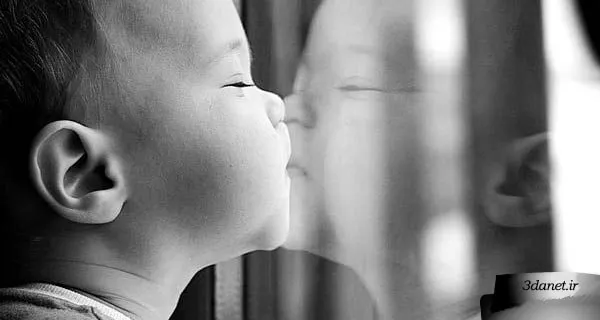
Some ask: if a person attains self-sufficiency, will they still strive for progress? If one relinquishes attachment and craving and turns toward detachment and desirelessness, will their motivations for action and effort not be extinguished? Is a spirituality-oriented life, filled entirely with love, not a cause for neglecting one's livelihood, work, and material needs? Should one not strike a balance between a mystical, loving life and the work, income, and construction of the external world? So, what is the place of livelihood and material concerns? Another question is this: what motivation will someone who has accepted themselves as they are, and is at peace and reconciled with themselves, have for developing their character and advancing their abilities?
The answer is that (without wishing to draw a definitive boundary between the material and the spiritual, or the physical and the mental—a boundary I believe cannot be drawn) we have two kinds of wanting, and consequently, two kinds of work and effort: material and physical wants, and spiritual or emotional wants. Among the wants of the first group are the desires for food, clothing, and shelter. Everyone likes for themselves and their loved ones to eat desirable food, wear quality clothing, have a peaceful and safe shelter, and enjoy physical health. These types of wants, which are more physical and corporeal in nature, can be called "external needs." External needs are generally related to a person's "welfare." Without a doubt, the need for welfare is a natural need, and wanting it is a reasonable and appropriate desire. Without welfare, a person will suffer the pains of hunger, illness, and homelessness, and even the grounds for their intellectual, emotional, and human growth and flourishing will be disrupted. Therefore, striving to secure welfare for oneself and one's community is a necessary and rational effort.
But the second group consists of spiritual, psychological, and emotional wants. The need for popularity, self-confidence, and inner peace, as well as the need to feel good, great, and worthy, are among these. Striving to meet these needs is, of course, also appropriate and necessary. If you suffer from weak self-confidence, if you are tormented by inner conflicts, and if you are afflicted with feelings of inadequacy and anxiety, you must undoubtedly find the roots of these issues and effectively address them. This category of needs can be called "inner needs," needs that are related to a person's psychological and emotional feelings. Meeting this category of needs provides us with peace and happiness and gifts us intellectual and moral growth and inner flourishing.
Now, in response to the question raised, there are two points:
The first point is that resolving each of these two kinds of needs has a different path and requires its own appropriate tools. Furthermore, addressing one of these two types of needs does not necessarily mean the other is resolved, although it may help provide the groundwork for it. For example, even if your knowledge, self-belief, and inner peace increase a thousandfold, you still need work, income, and money to buy food and clothing. For instance, if your tooth has decayed, no matter how much your perspective, cognition, and knowledge have improved, as long as you do not go to a dentist, your tooth decay will not be resolved and your pain will not be remedied. In short, if a person only attends to spiritual needs and neglects material necessities, poverty, illness, hunger, and even laziness and lethargy will befall them.
On the other hand, no matter how much you strive to meet material needs, you will not necessarily progress on the path of your spiritual and psychological needs. For example, if you suffer from feelings of inferiority and jealousy, or ignorance and prejudice, acquiring more money, attaining a position of leadership, buying a luxurious house, or obtaining a higher academic degree will not transform you into a profound, self-confident, and peaceful person. In other words, meeting material needs or advancing in "external" arenas and fields will not quench your thirst for feeling good, great, and inherently worthy; and if you expect it to do so, you have gone astray and will reap nothing but bewilderment and disillusionment.
Why? Because your activity is not proportionate to your need, and you are unaware of this incongruity. You want to achieve inner happiness and freedom through "welfare," whereas welfare, though necessary, does not necessarily bring self-confidence and joy. Chasing a mirage means exactly this: that a person strives in one direction and expects success in another. Thus, the answer to the first question is that inner self-sufficiency does not mean denying external needs. Rather, it means responding to each need in a manner proportionate to it. We should not expect welfare and health from renouncing the world, idleness, and comfort-seeking, nor should we expect a sense of worth and inner richness from career advancement and getting ahead of others. For every goal, we must choose the appropriate means and the correct path.
The second point is that the notion that loving oneself and accepting oneself means stagnation and lack of progress stems from a misunderstanding of these two concepts. For a person to accept their weaknesses and not blame themselves—which I call "self-acceptance"—does not mean abandoning the desire for perfection or giving up on inner and outer progress. The meaning of self-acceptance is, firstly, that a person loves themselves with all their weaknesses and strengths and does not torment themselves in longing for a "better" self. If compassion for oneself were conditional upon acquiring more perfections, such compassion would never occur, because growth and perfection are not a definitive destination or an attainable goal, but rather a road and a perpetual path, and their beauty and allure lie precisely in this continuous and everlasting nature. At every station along the path of progress, there are perfections that a person has not yet attained. Self-acceptance means that a person's love for themselves is not deferred or conditional upon being flawless, but is a constant and unconditional approach. Self-love is not a conditional or postponable matter; it is a natural and permanent state. Happiness is health itself and cannot be deferred by any condition.
Likewise, the meaning of the term self-worth is that a person, in any state and with any flaw or perfection, accords themselves a great and valuable status. In other words, self-worth means that a person's being valuable in their own eyes does not require the acquisition of all values and perfections—which is an impossibility—but is an inseparable part of their view of themselves. The truth is that self-love is the foundation and essence of mental and psychological health, and those who blame themselves for any flaw or mistake, or who do not see themselves as deserving of love and worth, have forgotten that a wounded and battered psyche lacks the capacity to flourish and cultivate itself. With a rejecting and violent gaze toward oneself, a person will not be able to address their weaknesses and nurture goodness within themselves from a joyful and secure standpoint. Let us not forget that fear of blame and rejection is not a good motivation for progress. When a human being is inherently a lover of perfection and enamored with beauty, goodness, and virtue, what need is there for mental and psychological torture? For progress and improvement, blame is not necessary; love is sufficient!
Moreover, without a doubt, self-love is a prerequisite for "love of others," and affection and compassion for oneself are the basis for loving others. As long as a person does not love themselves and does not show affection to themselves, they will not have a correct understanding of loving and showing affection, and this inner lack of love will inevitably be reflected in their outward behavior and speech. If the fountain of love does not exist, it does not exist, but if it does, its source is within the human being. It always emanates from within to the outside. In this sense, a "self-hating" person will inevitably live in conflict, contradiction, and tension with others as well. Self-acceptance is a prerequisite for accepting others, and peace and tolerance with oneself are the basis for peace and friendship with others. One who does not reject themselves with all their shortcomings and areas for improvement, and instead of the whip of reproach, bestows the kiss of affection upon their own being, will also have magnanimity and forbearance in accepting the thoughts of others and tolerating their human weaknesses. Looking at the people around us, we will see that a person who is internally afflicted with anger and self-hatred reflects this turmoil and agitation onto other people as well.
But how are self-acceptance and self-compassion compatible with the inevitable and permanent weaknesses of the human being? How is it possible for a person to be aware of their flaws and shortcomings and yet accept themselves and embrace themselves as they are? The answer is that, firstly, having a weakness or flaw does not mean that people are guilty or bad; rather, it is a natural part of the process of improvement and progress. The wise person has understood well that a flawless and ideal being does not exist; therefore, our task in this world is not to be ideal or flawless, but to move towards perfection. In the view of the aware person, weakness or flaw is not a sin or fault, but a challenge on the path of progress, a challenge without which perfection and improvement would be meaningless. Another important point is that self-compassion and kindness are prerequisites for striving for self-improvement and progress. The question is, if a person does not consider a being beloved and valuable and does not love them, why should they take the trouble of improving and flourishing them? With what motivation would they compassionately and patiently nurture them?
Another reality is that tormenting oneself in order to achieve peace is a ridiculous contradiction! If a person desires flourishing and happiness, they must begin with the very self that is the basis of such an effort, the self for whom and because of whom all this effort and movement is undertaken. And in this context, seeing oneself as bad, flawed, and guilty is an instance of contradicting one's own purpose and misunderstanding the issue!
Self-love and self-acceptance do not mean self-conceit and avoiding criticism either. In fact, fleeing from criticism and correction is a sign of a lack of interest in progress and perfection, because it shows that the person sacrifices their growth and perfection to escape criticism. The self-loving person is constantly seeking self-correction, progress, and flourishing, and on the path to such a goal, criticisms and opposing viewpoints are valuable opportunities that help them identify their errors and weaknesses. The wise person knows well that no matter how eager a person is for progress and perfection, some of the problems in their attitude or behavior still remain hidden from their own view, and they are not able to detect and identify them by themselves. In other words, a person is often too close to themselves to correctly recognize all their own characteristics. Therefore, the criticism and opposition of another is a valuable opportunity and a welcome gift in this regard. The aware person well recognizes this value and uses it for their own improvement and perfection. And this is the correct and true meaning of self-love and self-worth.
Thank you for reading
(For a detailed discussion on self-knowledge and the philosophy of life, please refer to my works: “The Tightrope Walker” (a novel) and “From Suffering to Liberation” (a collection of discourses), introductions to which you will find on the Sedanet website.)
.
.
Self-Compassion
Author: Sasan Habibvand
.
.






Discussion3 comments
سلام. خیلی متن خوبی بود!مطالب در این موضوع زیاد هستن توی دنیای مجازی.ولی اینکی خیلی جاافتاده تر و کاملتر و کمک کننده تر بود.
عالی بود
عالی بود؛ ممنونم