Philosophy
The More One Sees the End, the Happier One Is: Hossein Moeini
The law of conservation of energy holds true in human life as well: every choice deprives us of something, and life is like a short blanket that can never cover the whole body. This principle applies equally to ethics, psychology, and politics.
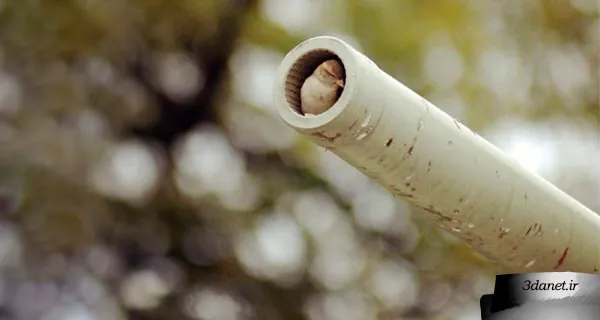
We all face many choices in our lives. Choosing one path or method distances or deprives us of many things. It is as if one cannot have everything together in this world. In a sense, life is like a short blanket. No matter what we do, we cannot completely cover our bodies.
Hossein Moeini:
The subject that will be raised in the following writing may seem obvious, but it has received less attention.
1 The science of thermodynamics is founded upon several important principles. Its first law is often called the law of the conservation of energy or the principle of equilibrium. The first law of thermodynamics states that the amount of heat a system expends will be equal to the amount of work done. In other words, whenever a quantity of energy is used for a task, its effect will manifest at another point in the system.
As I understand it, this principle also flows and permeates throughout all of human life. But how?
We all face many choices in our lives. Choosing one path or method distances or deprives us of many things. It is as if one cannot have everything together in this world. In a sense, life is like a short blanket. No matter what we do, we cannot completely cover our bodies.
For whatever you set your heart upon, they will take something from you in secret.
2 This issue encompasses the macro levels of life as well as ethics, the unconscious, and political and social activities.
In the stories related to Bohlool, it is said that once a king asked him for advice. Bohlool went towards a very long wooden plank. First, he lifted one end of the plank—the other side remained on the ground—he did the same with the other side. Finally, he tried to lift the middle of the plank, but this time both ends remained on the ground in turn. Then, addressing the king, he said: whenever you take the side of this world, the hereafter will remain fallen, and vice versa. Being in the middle will also be practically impossible.
3 Such a principle also prevails in ethical choices. For example, sometimes social efforts and activities prevent us from attending to family matters. Or we know people whose scrutiny and analysis of others' faults has prevented them from seeing their own faults.
Greed is blind, it sees the faults of people hair by hair, and recounts them alley by alley.
Its own fault, a single mote, the blind eye does not see, even though it is a fault-finder.
4 Such choices also constantly take place in the human psyche and unconscious. The principle of the conservation of energy and equilibrium was first applied by Jung to psychic functions and personality dynamics. That is, whenever a value is weakened in a person, the energy belonging to it does not disappear but appears in another form. A child who is dissatisfied with their parents directs their attention to others. Or a person who has lived excessively contentedly and ascetically might take a human life for a piece of bread.
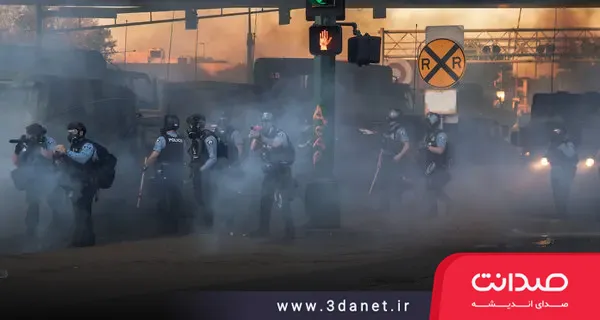
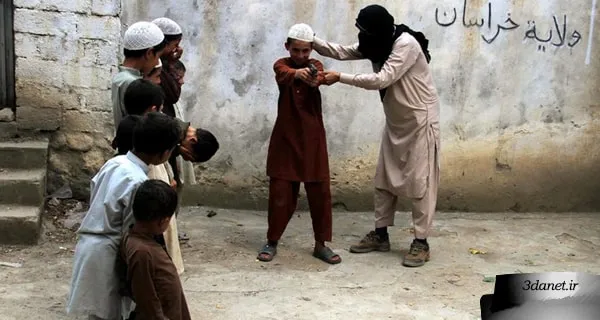
5 Socio-political activities are no exception to this rule. Individuals who strive to quickly overthrow a government, pit the people against the government, and establish a new state. Much violence and even the setting aside of ethics and civility accompany such a decision. Love for their ideals will bring with it hatred and dogmatisms. Hatred towards all those who oppose that method.
Ideological organizations no longer tolerate diversity of opinions... they act like military commanders... they consider any question of their character and method a great sin... the prominent figures of these groups place themselves above ethics and law... the lives of individuals hold little value for them... all these issues will occur so that the paradise desired by such organizations can be established and the goal they deem correct can be implemented. And of course, nothing is worse than this illusion of perfection.
There is no cause worse than the illusion of perfection within your soul, O possessor of majesty (Rumi)
Leaving Rumi aside, we come to Imam Ali, who in a wise saying declared: “He who prevails through evil is already defeated”—one who resorts to a reprehensible method to bring down his opponent has been defeated from the very outset. (For the very choice of a reprehensible method, apart from the undesirable consequences it entails, is, in terms of human worth, a sign of one’s own initial downfall and defeat.)
6 Indeed, if we accept that a human being is the sum of all the choices they make, and that choosing a path or method brings with it consequences and results—that the heightened importance of one value entails the weakening of another—we will be very careful in choosing our ends and even the means of attaining them (for the spirit of the means is breathed into the ends as well). And if someone appears who subjects a method to the scales of criticism and enumerates its harms, we will not find fault with them. Rather, we will use it for our own elevation and that of society, so that the events of history do not repeat themselves, neither in their tragic nor in their comic form!!
That day I had seen those tumults that arose / When, out of rebelliousness, you would not sit with us for a time
.
.
Author: Hossein Moeini
.
.

Discussion3 comments
سبک نوشتاری صد در صد به روش سروش(هر چند خام تر) بود. اول فکر کردم مقاله از سروش بوده !! به هر حال ممنون
مطلب کوتاه، مفید و خوبی بود...فقط یک اشتباه در بیت مثنوی بود.چشم کو باید به چشم کور اصلاح شود.
دوست عزیز ندیدهام جناب حسین معینی، سلام علیکم ورحمة الله. هرچند برایم روشن نشد که آن قواعد لحافیک ترمودینامیک چه ارتباطی با خشونت سلطنتگزاران و ارباب ایدئولوژی داشت, اما از اینکه برخی رذائل اخلاقی را تلویحاً مذمت میکنید به دوستی آن جناب مباهات میکنم. در أین روزگار بی اخلاق و سیاه و تباه آنچه ضرورت است حد اقل همین اشارات اخلاقی است. أعاذنا الله من شرور أنفسنا. ایام به کام و دولت عالی مستدام.