اندیشهفلسفهخردگفتگوحکمتمعناپرسشفرهنگ
Philosophy
The Violence of Maternal Absence
Today's terrorist violence is not Benjamin's divine violence, but violence against the 'big Other'; behind it lies the gods' fear of losing control over the discourse of religious fundamentalism, and its analysis requires an examination of the fear of the stranger within the symbolic order.
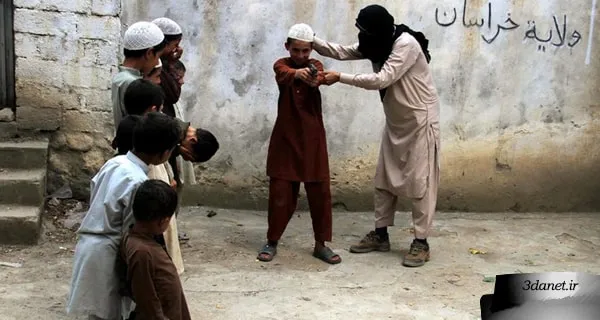
On the day the bloody "Dehmazang" terrorist incident perpetrated by ISIS occurred in Kabul, during which a peaceful public demonstration was gunned down and bloodied by three suicide bombers, I was a few hundred meters from the scene, introducing the book Violence: Six Sideways Reflections by Slavoj Žižek to my students. For all of us, this simultaneity was strange. Hours after that sorrowful incident, one of the students asked sarcastically: What use are such books for analyzing events like these? For the book is a scene of the consonance of Walter Benjamin's and Slavoj Žižek's thoughts on violence. A violence that finds a more philosophical and legal definition and seeks an analysis of the conditions that create the groundwork for violence. But it seems to have little application for the dramatized terrorist violence of recent years in the world, especially by ISIS.
1- Against the Big Other?
On the day the bloody "Dehmazang" terrorist incident perpetrated by ISIS occurred in Kabul, during which a peaceful public demonstration was gunned down and bloodied by three suicide bombers, I was a few hundred meters from the scene, introducing the book Violence: Six Sideways Reflections by Slavoj Žižek to my students. For all of us, this simultaneity was strange. Hours after that sorrowful incident, one of the students asked sarcastically: What use are such books for analyzing events like these? For the book is a scene of the consonance of Walter Benjamin's and Slavoj Žižek's thoughts on violence. A violence that finds a more philosophical and legal definition and seeks an analysis of the conditions that create the groundwork for violence. But it seems to have little application for the dramatized terrorist violence of recent years in the world, especially by ISIS.
At present, the minds of the world's people are more focused on a kind of "thrill-tinged fear" that is proliferated in the media by terrorist groups. In such a situation, the type of violence and, consequently, the type of desire for destructive acts have also undergone a transformation. The more destructive, the more spectacular and entertaining. Natural death drives have been revealed and reinforced. Therefore, Walter Benjamin's analysis can no longer be considered for the new methods of violence in today's world. Another path must be chosen. One must move beyond Benjamin's "divine violence" and Žižek's "sovereign violence" and speak of violence "against the sovereign."
Giorgio Agamben, in his book State of Exception, explains that Benjamin's aim in analyzing violence is to show the possibility of a form of violence that is entirely outside the sphere of "law" and beyond it, capable of shattering the revolving dialectic between law-making and law-preserving violence. This is another face of violence, which the law perceives as a threat to its own existence because it is fundamentally a violence outside the sphere of law. Benjamin calls it "pure" or "divine" violence, and in the human realm, "revolutionary violence."
But is the current violence in the world like this? Is violence that occurs with the authorization of religious agents and the endorsement of Sharia laws of the type Benjamin speaks of? Does beheading people with the slogan "Allahu Akbar" signify that the "big Other" behind the curtain of this violence has hidden its face? Slavoj Žižek, borrowing from Walter Benjamin, has called his "pure violence" "sovereign violence" and writes: "Do you want to know what sovereign violence resembles? Look at the revolutionary Terror of 1792-94. This revolutionary terror was sovereign violence [...] There is no criterion that enables us to recognize a violent act as sovereign; a single act that for an outside observer is merely an outburst of violence can be sovereign for those involved in it. There is no big Other guaranteeing its sovereign nature; the risk of interpreting and assuming it as sovereign violence falls entirely on the actor themselves [...] Sovereign violence is precisely not the direct intervention of an omnipotent and omnipotent God seeking to punish humankind for its excesses, not a kind of foretaste or small corner of the final judgment of the Day of Resurrection: the difference between sovereign violence and the helpless, involuntary, violent action of us humans is that sovereign violence is in no way a manifestation of God's omnipotence but a sign of the impotence of God, or the big Other" (Žižek, Violence: Six Sideways Reflections, 2008: 172).
This judgment must be the correct one, so that we know that behind the curtain of today's terrorist and violent acts, the mysterious face of that "big Other" or his smile of satisfaction at the behavior of compassionate agents is not hidden; rather, on the contrary, on this curtain, his fear in controlling the violent discourse of religious fundamentalism is evident. The "big Other" is now in a state of fear, and today's global violence is not violence beyond the "Law," not "divine" and "pure" violence, but in a way non-sovereign violence and against the "sovereign"; because these violent terrorist spectacles, although carried out in "His" name and using "His" religious laws, seem to be entirely performed in fear of "Him." Now He, alongside humankind, has come under the relentless assault of the constructs of His own laws. And perhaps now it is "we" who want to give "Him" refuge.
2- Against the Symbolic Order
Even if it appears that the terrorist group ISIS in Iraq and Syria is nearing its organizational end, we must know that it has not reached its ideological end. They have arisen from a context that has comprehensively risen up against any kind of order in the world and has blown away the dream of a unified world free of violence. They operate in a centrifugal or anti-center manner, and even if their capital has been destroyed, they now transfer their center to other locations, and this transfer is carried out with such quality that it takes on a centrifugal property, and over time, the mind of every ISIS force becomes a center of operations at the discretion of the black-clad terrorists. Because their behavior is based on a fundamental fear, and the system of domination also uses this fear to intensify it.
We think terrorists are the true agents of violence, but it seems these acts have a justified cause for them: "fear of strangers." ISIS and the terrorists have developed a phobia of the stranger, which is why they have changed the form of terror and the tools of terror to defend something that seemingly did not exist before.
The story of Robinson Crusoe is a good example of this type of "fear." The novel's main character, Robinson, who imagines himself to be the sole inhabitant of the island, after 15 years of living alone, suddenly observes the footprint of another person in his territory. Not only is he not happy about this situation, but he is also terrified by it. This footprint in the story is not even the footprint of "Friday," the story's other character, but rather a device to pave the way for the presence of the "savages" in the narrative. Robinson fears that his island, after all these years, will be invaded by "strangers."
The terrorist groups constructed within the dominant global order are currently in such a situation. For this reason, there is a kind of centrifugal tendency in carrying out terrorist operations in the behavior of these groups, which can cover any scattered operation and violent murder and plunder. Such a method can also be inspiring for any violence-seeking individual in the world. The strategy of wandering suicide attacks and linking it with incoherent methods of killing has specifically expanded the umbrella of the ISIS terrorist group's operations so widely that it aligns any psychopathic individual with any bloodthirsty motive. Such a thing has certainly changed the motives as well. The distance between radicalism and the normal state has disappeared.
From another perspective, such a rebellion against the new world order and any other system can be likened to the individual's rebellion against the "symbolic order" in the thought of Jacques Lacan. This situation can be explained in another way using the allegory of Freud's Oedipus and then a reading from Lacan; because it seems we are in the triangular era of "child, mother, and father," and a bloody and deep conflict has erupted between the father (the laws governing countries, world systems) and the son (fundamentalist terrorist groups) over domination of the mother (religious beliefs and the necessity of returning to them).
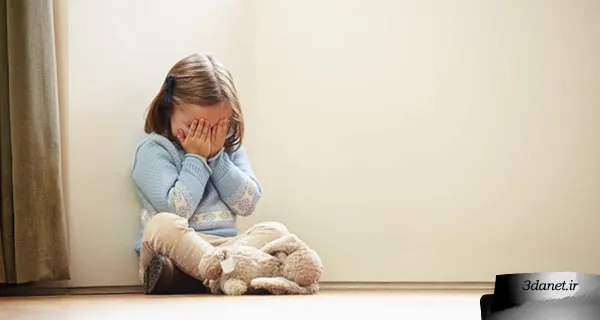
According to Freud, the Oedipus complex arises because the son loves his mother and feels a sense of total possession and attachment toward her, but in the midst of this, the father is perceived as a rival and a threat. When this intensifies in the child, it creates "castration anxiety." Through the father's intervention, the child is hurled from the beautiful imaginary world of childhood into the symbolic world of lack and absence. The transition from the Imaginary to the Symbolic, or what Freud called the transition from nature to culture, takes shape. The closed circuit of mutual desire between mother and child is ruptured by the intervention of a third element, the "Name-of-the-Father," and a space is created in which the child can recognize itself as a being separate from the mother. Jacques Lacan calls this third element the "Name-of-the-Father" because, in his view, it need not be the real father or even a male individual; rather, it is a symbolic position that draws the child away from the mother's safe embrace.
Now it can be observed that in our present age, the new world order or any law that shapes independent nations (as the father, the big Other, or the capitalist and secular system) has generated terror in the heart of the frightened child (fundamentalist terrorist groups), because in the child's view, this symbolic order, this propagated alien system, has distanced and deprived him of his safe home, from the mother's embrace (his religion and true beliefs). For this reason, it can be said that our age is the age of fear of the "Symbolic Order." In Jacques Lacan's perspective, the stage of the Symbolic Order (the presence of the name and law of the father and the big Other) is the stage of absence and lack. Such a condition consequently leads to submitting to or engaging in a kind of insane and uncontrollable violence. Whereas the preceding stage, called the Imaginary stage, is the period of the child's unity with the mother, and in this period, unity and oneness provide comfort and peace of mind for both child and mother.
Now the "Oedipuses," angry at the father, want to kill him by any means necessary and destroy this new order, this symbolic order, in order to once again achieve unity and oneness, to attain union with the mother, and by dominating the singular maternal world of their religious beliefs, reconstruct a world in accordance with its utopian principles. On the path to achieving such an ideal, they do not refrain from any violence, and anyone, any opponent as the "infidel Other" who intends to oppose this deep psychological desire, is eliminated in the most savage manner possible. In fact, they are not only the threateners of the existing order, but the cancers of the existing order. Pieces of this order that have begun to grow uncontrollably against its logic, and just as cancer is a fatal thing, they too are fatal and tragic. Sinister cells from the body of the existing order that have attacked all other cells and defy the rules of the single body. Now they have also become excessive in reproduction and multiply needlessly.
These individuals have shattered the cliché of individual perceptions, and despite each having a personal history, at a timeless stage, with a different morality and a different method, they have begun a new life. Among themselves, they try to get along. Their lives have no flashbacks; instead, everything in them has been transferred to an abstract and utopian future. The transfer of the mind to the future turns the human being into an object. We know these manipulated subjects by the name of father-killers. They constantly resort to astonishing acts that can be called the "violence of absence" or the "violence of maternal lack."
3- Violence in Suspension
But an important point that must be mentioned is that ISIS's strategy in violence is a "mysterious" strategy. They have kept their strategy as a "secret." It seems that, in their view, the only way to escape the intelligent system of "global infidel" capitalism is to keep the "strategy" hidden. Intelligent systems easily absorb any strategy and then turn any terrorist act into merely an ornament on their tedious stream of news, and over time move towards its naturalization. Because in this way, the world's minds become focused on things that are simultaneously terrifying, entertaining, and exciting. This naturalization and stereotyping are processes through which social, cultural, and historical constructs are presented as natural matters. Therefore, such acts have a completely ideological function and assume the task of reinforcing the dominant discourse.
Michel Foucault calls stereotyping a kind of power/knowledge game that classifies the world according to norms and posits individuals excluded from these norms and standards as the alien Other. This world is so good for the ruling groups that they make it seem natural and inevitable for everyone, just as it appears to them.
If we pay attention to the space that exists in this context, we see that there is a media conflict between these intelligent systems and terrorist groups. The ruling media try to portray the prevalent violence as a continuation of the classic terrorist acts of militant groups, gradually rendering it ineffective and using it for their subsequent goals, but on the other hand, ISIS and its followers engage in a different confrontation. Against the existing stereotypes of terror, they have turned to killing and creating terror in unpredictable ways (killing with trucks, blowing up and frying people alive in fire). It is as if the world is a horrifying theater stage, with the responsibility for its bloody special effects resting on the shoulders of ISIS.
They give violence an aesthetic dimension. In each operation, they employ a specific, non-classical method so that, through the apocalypse of form, they defer the overt violence in their act and make it more impactful. Even if we do not necessarily consider their work artistic, we must regard it as a kind of "sinister aesthetic manipulation" in the presentation of the violent matter. This sinister aesthetic is something from which a strategy like a "secret" emerges, bewildering and terrifying the intelligent systems of capitalism. Virtual and domestic media have also contributed to the mysteriousness of this destructive strategy, accepting it as an astonishing element and facilitating the ground for its production and reproduction.
In fact, it can be said that the expansion of virtual media has a significant correlation with the expansion of terrorism. A major part of the terrorists are actually constructs of these virtual networks and the astonishing proliferation of the acts they commit, because the authority of the dominant media has become much less than in the past with these public networks. When it comes to this, the form and methods of carrying out acts also change for the terrorists. In order to be "on the shelf," that is, to be available to the demand of the audience (customers), they reciprocally resort to certain bewildering acts whose definability is not simple for us: something that might be called "violence in deferral."
4- The World War of Terror
We still do not know for certain whether we are living at the end of the era of nation-states or the United Nations. But in a situation where terrorist groups have simultaneously endangered the security of the entire world, it is not far-fetched to take this theory seriously. The dark threshold of humankind is now displaying another kind of its destructive genius, unprecedented in the dark currents of its thought. We are in a state of producing and proliferating "invisible weapons." Weapons made entirely from the materials of the traditional world, mocking the technology of the contemporary world and modernity as a whole. They attack capitalism and are at the same time its construct. They act far more bloodily and destructively than any guided and controllable bomb, mocking the relations and values of the contemporary world.
The history of war and violence never recalls such weapons, but now they have been produced and are proliferating; with a combination of the desire for destruction and the scent of blood to satisfy their fundamental psychological and ideological needs.
A suicide terrorist carries their weapon of mass destruction in their mind and can, at any moment, draw it from its sheath in the safest corners of the world and deploy it. The "Trojan horse" of terrorism can now easily infiltrate any fortified stronghold and disembark its forces to create chaos and terror there. In the briefest moment, with the fewest difficulties, they can shake the foundations of the mightiest armies and governments. Under such conditions, one can no longer speak of prevention and necessary preparedness, for the "invisible weapon" is always at the closest point to the safest places. Europe and America, as the utopias of the 20th and early 21st centuries, have now become delightful targets for destruction and terror. With their novel and indiscernible methods, terrorists create a new upheaval every day in their presumed safe space, paving the way for a global fireworks display.
Thus, the central question under such conditions is: has the era of the United Nations and united states truly come to an end? Has the "invisible enemy" destroyed the classical tradition of war between states? And, most importantly, are we on the threshold of a "World War of Terror"? Will the next world war be a war of terror?
5- The Ultimate Violence
According to what has been said, fundamentalist violence has so far arisen based on a kind of fear, dread, or rather, based on a kind of "symbolic violence." Symbolic violence is primarily exercised by ruling systems and their media and attempts to reshape the "lifestyle" of other cultures, through serious manipulations, into the image of its own lifestyle. The ideas, beliefs, and customs of other cultures undergo change in the face of such an atmosphere. These forms of violence are, in fact, proactive violences and provoke violent reactions among "marginalized" cultures. Regarding fundamentalist religious terrorist groups and their dread of the current world-dominating system, the conditions follow this pattern.
Therefore, it seems that to prevent further upheaval, one must cease exercising such symbolic violences in the current world situation, refrain from insisting upon them further, and even attempt to rectify them; for their fruit will be nothing but the production and multiplication of hatred and violence. Conversely, however, in confronting the ever-increasing spread of terrorist acts by fundamentalist groups, one must employ a "violent confrontation" against a "violent confrontation." Just as in Jacques Lacan's theory, the child, after passing through the imaginary stage, is compelled by the authority of the prevailing conditions in the subsequent stage to submit to the "symbolic order," these violent and savagely bloodthirsty groups must also be tamed and pacified with authority and comprehensive confrontation, so that under pressure, they cease their rebellion and indiscriminate killing and slaughter, and as a piece of the existing order (a psychotic piece of the existing order, nonetheless), submit to its acceptance, even if by force, and choose a path other than "endless violence" to achieve their demands.
Iran's action in launching a missile attack against the ISIS terrorist group can be considered from this angle: the ultimate violence against the violent. The relative satisfaction of various individuals with different beliefs regarding this Iranian missile strike indicates a general discursive consensus on this matter. Even among opponents of the political system in Iran, this satisfaction and inclination to exercise violence against terrorists can be observed.
Nevertheless, this is also a general opinion, and we do not know for certain whether, in the era of the end of united states, exercising "the ultimate violence" against religious fundamentalist terrorism will be the best possible method or not.
.
.
The Violence of Maternal Absence
Dr. Yaman Hekmat (Hamid Taghiabadi)
.
.

Discussion1 comments
نویسنده متن بالا مفاهیم کاملا ضد و نقیض را در هم امیخته و هیچ نتیجه ای نگرفته.