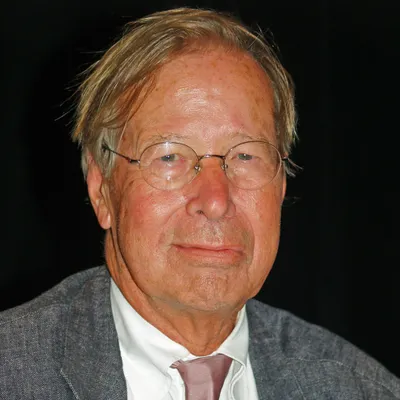
Foreign thinker
Ronald Dworkin
Ronald DworkinPhilosophy of law and political philosophyAmerican1931–2013
Individual rights are political trumps held by individuals.


Life and Thought
Ronald Dworkin (1931–2013) was an American legal and political philosopher. He succeeded H. L. A. Hart in the Chair of Jurisprudence at Oxford and became known for his critique of legal positivism and for the theories of rights as trumps and of law as integrity. In works such as Taking Rights Seriously, Law's Empire and Justice for Hedgehogs, he defended equality, human dignity and the unity of moral and political values.
Ronald Myles Dworkin was born on 11 December 1931 in Providence, Rhode Island. He studied philosophy at Harvard and then read law at Magdalen College, Oxford, as a Rhodes Scholar. He went on to Harvard Law School, clerked for Judge Learned Hand, and worked for several years at a major New York law firm. From 1962 he taught at Yale Law School, and in 1969 he took the Chair of Jurisprudence at Oxford, which had previously been held by H. L. A. Hart. He later also taught at New York University and at University College London. Alongside his academic work, he wrote for decades in The New York Review of Books on the controversies of the day, including civil rights, freedom of speech, affirmative action, abortion and war. Dworkin died in London on 14 February 2013 of leukaemia.
Dworkin began his intellectual career with a critique of Hart's legal positivism. In his view, law is not merely a system of rules: moral principles are also part of the law, and judges inevitably turn to them in hard cases. In Taking Rights Seriously (1977) he argued that individual rights are "trumps" against the will of the majority and against utilitarian calculation. In Law's Empire (1986) he developed the theory of law as integrity: judges should interpret past legal practice so as to show it in its best moral light, like a novelist adding a chapter to a chain novel. On this view he defended the possibility of a right answer in hard cases.
In political philosophy, Dworkin set out the theory of equality of resources in Sovereign Virtue (2000). According to it, the state must treat all citizens with equal concern and respect, and the distribution of resources should be sensitive to people's choices and ambitions but insensitive to unchosen luck, such as talent and family background. In Life's Dominion (1993) he took up abortion and euthanasia, analysing them in light of the sanctity of life and freedom of conscience. In Is Democracy Possible Here? (2006) he addressed the crisis of American politics.
His last major theoretical work is Justice for Hedgehogs (2011). Drawing on Isaiah Berlin's distinction between the fox and the hedgehog, Dworkin tries to show that moral, political and legal values form an interconnected whole, and that living well is bound up with dignity and justice. Religion Without God (2013), published posthumously and based on his Einstein Lectures in Bern, argues that the religious attitude does not necessarily depend on belief in God and that the defence of religious freedom should rest on moral independence.