Religion
What Is the “Holy Book”?
The Bible is a collection of texts that Christians regard as the Word of God, divided into the Old Testament and the New Testament. Its structure, the number of books, the original languages of composition, the differences among the four Gospels, and the non-canonical books are among the defining features of this collection.
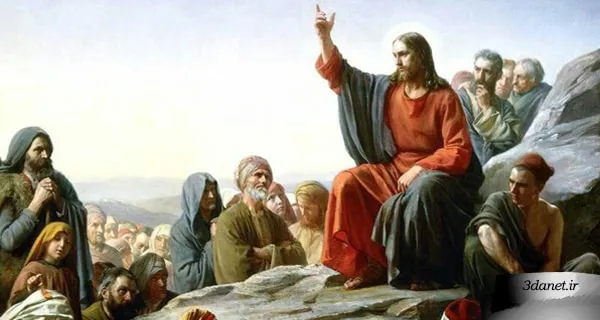
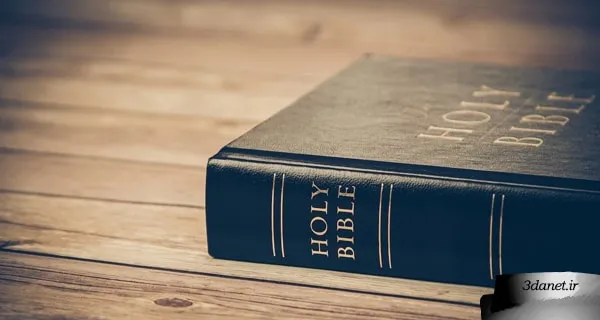
The “Holy Book” is a collection of documents and records that Christians regard as manifesting the Word of God and consider sacred. In most European languages, the Greek word Biblia, meaning “books,” is used to name the Holy Book. The Holy Book is divided into two sections: the “Old Testament” and the “New Testament.”
The Old Testament
The Old Testament can also be considered the Holy Book of the Jews, containing 46 books. Among Jews and Protestant Christians, however, only 39 of these books are recognized as canonical. The New Testament belongs specifically to Christians and contains 27 books. Thus, the Holy Book is a collection of 73 (66) books that were composed and compiled in various languages—Hebrew, Aramaic, and Greek—over a period of 1,500 years. The dispute over the number of books in the Old Testament among early Jews—which also occurred among Christians—led to the authentic and correct writings of the Old Testament (39 books) being called the “Canonical Books” (official), and the rest being termed “Apocrypha,” meaning “hidden,” and in usage, “non-canonical / spurious.” The Apocryphal books are present in the Holy Book of Catholic and Orthodox Christians, but, as mentioned, Jews and most Protestant denominations do not accept them. In many Protestant translations and international Christian translations, the Apocryphal books are printed together in a special section at the end of the Old Testament. All Christians agree on the authenticity of the 27 books of the New Testament.
The “Old Testament,” excluding the Apocryphal books (7), is divided into three sections: the “Torah” and appendices (12), the “Wisdom Books” and Writings (10), and the “Books of the Prophets” (17). The Torah consists of the five books of Moses (the Pentateuch), which is the holiest book of the Jews. The five books of the Torah are: “Genesis,” “Exodus,” “Leviticus,” “Numbers,” and “Deuteronomy.” In ancient times, people believed that Moses wrote the Torah, but modern research shows that the question of the Torah’s origin and source is more difficult than initially imagined. The Torah emerged over generations and was finally compiled into a single book in the fifth century BCE.
The New Testament
The “New Testament” is divided into five sections: the “Gospels” (4), the “Acts of the Apostles” (1), the “Epistles of Saint Paul” (13), the “Other Epistles” (8), and “Revelation and Vision” (1). All the books of the New Testament were written in Greek. The first four books of the New Testament are called “Gospels.” The word Gospel is derived from the Greek word euangelion and means “good news or glad tidings.” The four Gospels in the New Testament, like the five books (the Torah) in the Old Testament, are central, and Christians place them all at almost the same level of importance. The four Gospels are: the “Gospel of Matthew,” the “Gospel of Mark,” the “Gospel of Luke,” and the “Gospel of John.” Each of the Gospels contains sayings of Jesus and accounts of his life and works that are found in the other Gospels. In addition, each Gospel contains interpretations of Jesus’s life that are not seen in the other three. The four Gospels were probably written in the last decades of the first century CE, although the oldest relatively substantial manuscript of them dates to the fourth century.
The Gospels:
The “Gospel of Matthew” occupies the first position in the order of introducing the books of the New Testament. This Gospel can be seen in a way as a continuation of the Old Testament because Matthew constantly appeals to passages from the Old Testament to show that Jesus is the awaited savior of the Jews. Matthew begins his account with the lineage of Jesus and his complete genealogy, and then mentions the sayings and deeds of Jesus in order of thematic importance, not in chronological order. In the past, some people believed that this Gospel was written in “Aramaic,” the language spoken by Jesus Christ and his disciples. It seems that Matthew wrote his Gospel shortly after 70 CE.
The “Gospel of Mark” is the most concise and, according to most scholars, the oldest Gospel, which also serves as the basis for the other two Gospels (Matthew and Luke). Mark pays more attention to the deeds of Jesus than to his sayings; thus, the sufferings of Jesus and his death hold a very important place in his Gospel. The composition of the Gospel of Mark dates back to around 60 CE.
The Gospel of Luke is somewhat enigmatic, sometimes taking on a literary character and at other times drawing boldly close to Mark and Matthew, only to diverge sharply from them. Biblical scholars say that Luke's learning and culture surpassed that of the other evangelists, for he wrote his Gospel in a firm and beautiful Greek. This Gospel must have been committed to writing in the years 80–90 CE.
The Gospel of John begins, in its prologue, with these luminous words: "In the beginning was the Word, and the Word was with God, and the Word was God," and then reaches its climax with stirring vocabulary: "And the Word became flesh and dwelt among us." This Gospel is a completely distinct fabric, for the sayings of Jesus in it differ markedly from his speech in the other three Gospels. The passion and excitement of Jesus, and moreover many of his principal ideas found in the first three Gospels, are not seen in this Gospel. The Gospel of John traverses a mystical atmosphere more than the other Gospels, and it is therefore generally imagined that this work is more the product of spiritual meditations than a reliable historiography. The Gospel of John considers Jesus's mission to have lasted two years, whereas the others consider it one year. The writing of this Gospel is estimated to have occurred between the years 65 and 90 CE.
Most Christians do not believe in the verbal inspiration of the Gospels, but they do believe that God composed it through the inspirations of the Holy Spirit, and for this purpose raised up human authors to write them and assisted them in writing in such a way that they wrote only what He wanted. It is worth mentioning that, regarding the New Testament, there is also talk of "spurious books" or "Apocrypha." These books include other gospels, epistles, and books of acts and revelations that early Christians wrote, but the Church did not recognize them. In some of them, Gnostic (esoteric) teachings are seen, and in others, stories about Jesus and Mary similar to the Quranic stories on this subject are observed.
It is now appropriate to say a word about the book known as the "Gospel of Barnabas." When this book was translated from Italian into English at the beginning of the twentieth century, it became the subject of detailed and heated discussions. Based on textual and historical evidence, scholars place the time of its composition at the end of the sixteenth century CE. There are also differences of opinion regarding the author of the said Gospel, but many indications show that he was "Fra Marino," a Spanish Christian who converted to Islam in the sixteenth century and undertook this task to prepare a Gospel in accordance with his new religion. The content of this book is not in complete agreement with either conventional Islamic teachings or conventional Christian teachings.
.
.
Sources:
1. Humphrey Carpenter, Jesus, translated by Hassan Kamshad, Tarh-e No. 2. Thomas Michel, Christian Theology, translated by Hossein Tawfiqi, Center for the Study and Research of Religions and Denominations.
.
.
What Is the "Holy Book"? (On the occasion of the new Christian year)
Author: Masoud Zanjani
.
.

Discussion0 comments
No comments yet; let yours be the first voice.