Literature
Masoud Zanjani's Essay “Spiritual Paradoxes in Rumi’s Thought”
True self-interest lies in selflessness, real peace in accepting suffering, and genuine fulfillment in letting go and giving—a reflection on the spiritual paradoxes of Rumi’s ghazal that articulate the dialectical dimensions of human life and happiness.
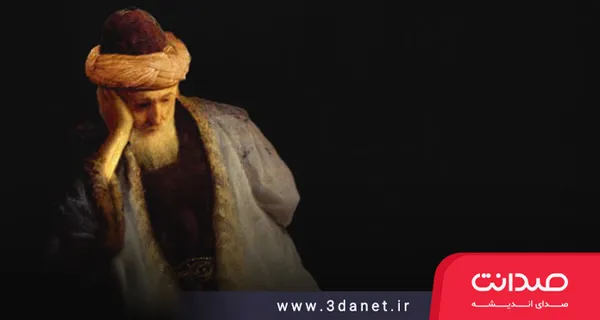
That breath when you are with yourself, the beloved comes to you like a thorn
And that breath when you are selfless, what use is the beloved to you?
That breath when you are with yourself, you yourself are prey to a gnat
And that breath when you are selfless, an elephant becomes prey to you
That breath when you are with yourself, you are captive to a cloud of sorrow
And that breath when you are selfless, the moon comes into your embrace
That breath when you are with yourself, the beloved keeps away
And that breath when you are selfless, the beloved's wine comes to you
That breath when you are with yourself, you are frozen like autumn
And that breath when you are selfless, December comes to you like spring
All your restlessness is from seeking rest
Become a restless seeker, so that rest may come to you
All your unpleasantness is from seeking pleasure
If you abandon seeking pleasure, poison becomes pleasant to you
All your disappointment is from seeking your desire
Otherwise, all desires would come to you like scattered offerings
Fall in love with the beloved's cruelty, not with the beloved's kindness
So that the coy idol may fall in love with you, wretched
When the Khosrow of the East, Shams-e Din, arrives from Tabriz
By God, you will feel shame before the moon and the stars
Perhaps the most striking feature of this exquisite and profound ghazal by Rumi is its paradoxical speech, which confronts us with paradoxes that are, at once, thought-consuming and thought-generating:
1- The Paradox of Selfishness: In Rumi's view, true selfishness is conditional upon a kind of self-contradiction, or "being against oneself." This knowing and deliberate self-contradiction can be called "beneficial self-contradiction." Conversely, the opposite is also true: self-conceit is not greater selfishness, but rather greater self-contradiction. Of course, the selfish person typically remains unaware of this enmity with themselves, because self-conceit is usually accompanied by self-deception. This ignorant and heedless selfishness can be called "destructive selfishness," because it ultimately leads to self-ruin. Therefore, it can be said that to be selfish, one must not be selfish, but rather must be "altruistic" (a lover); one must desire and seek the other (the beloved). Understanding the self is, continuously, the result of abandoning the self, and the self can only be sought in selflessness.
2- The Paradox of Comfort-Seeking: In Rumi's view, the condition for true peace is restlessness. To gain comfort, one must not be a comfort-seeker, but rather must abandon ease, go forth to meet danger, and not fear journeying and caution. One must fall in love with the beloved's cruelty and, for their sake, take on all the sorrows of the world, because these sorrows, in the words of Iqbal Lahori, are "sorrows that care for you," whose abundance is still too little. One who, like Shams-e Tabrizi, is a knower of this secret, no matter how much the cloud of such sorrows rains upon them, their cry of "Hal min mazid" (desire for more) will not cease: "O soul and world! How pleasant it is, the sword from You and the neck from me! The pleasures of the world have been priced, each at a certain amount. O soul! What is the price of displeasure?"
The comfort-seeker will, in the end, reap not comfort and ease, but hardship. The highest pleasures are the result of the highest sufferings, and a pleasure that has not passed through the corridor of suffering will necessarily transform into a great suffering and, in Iqbal's terms, will create "man-eating sorrows," whose scarcity is still too much. Rumi says the blood of such sorrows is lawful upon us, and he reminds listening ears and unconscious consciousnesses, like Iqbal, that the blood of man-eating sorrows will only be shed by sorrows that care for you. In this world, joy is born only from the heart of sorrow and should not be sought elsewhere. Salvation is only granted to those alchemists who, from their own sufferings and displeasures, create joy for others, and in doing so, make themselves joyful as well.
3- The Paradox of Utilitarianism: In Rumi's view, the condition for true enjoyment and success is not having and not wanting. The highest benefits of life come to us when we are not benefit-seekers. A person's expediency and benefit lie in not being expedient-minded and benefit-seeking. Just as Rumi's perceived expediency for people is nothing but love, that is, a farewell to all expedient-thinking. The more we are able to lose and give away, the fuller our hands will be and the richer we will become. By having and keeping more, we are more had (carried away) and lost; we become diminished and dependent. But by giving and releasing more, we receive more; we become wealthier (free) and more exalted.
"All kings are slaves to their own slave
All people are dead to their own dead"
In any case, in Rumi's view, selfishness, comfort-seeking, and utilitarianism always backfire and lead to the defeat of their own purpose. In fact, spiritual paradoxes express the dialectical aspects of life in relation to human felicity. A more abstract form of these paradoxes can be found in Iqbal's hemistich: "I am if I go, if I go not, I am not" or in Nietzsche's doctrine, who constantly quotes the ancient Greek poet Pindar: "Become what you are!"*
* Iqbal says that in order to "be" (to remain), we must "not be"; we must "go." Nietzsche says that in order to "be" (to flourish), we must "not be"; we must "become."
.
.
Spiritual Paradoxes in Rumi's Thought (A Reflection on a Ghazal by Rumi on the Occasion of the Eighth of Mehr, His Commemoration Day)
Author: Masoud Zanjani
.
.


Discussion4 comments
تحلیل زیبایی بود.سپاس
نان پاره ز من بستان، جان پاره نخواهد شد ماه ارچه شود لاغر، استاره نخواهد شد پارادوکس در ذات عرفان ست ظاهرا. از هزاران تن یکی زین صوفی اند، مابقی در ظل سلطان میزیند
ممنون از استاد زنجانی بسیار استفاده کردم
مطلب بسیار خوبی بود. مختصر و مفید. تشکر از آقای زنجانی و سایت وزین صدانت.