Philosophy
Naraghi, the Metaphysical Interpretation of Religion, and Epistemological Scientism
In this article, Amir Maziar critiques Arash Naraghi's account of the relation between religion and metaphysical naturalism. He argues that, while Naraghi criticizes scientism and metaphysical naturalism, he himself relies on metaphysical presuppositions and a kind of epistemological scientism in understanding religious texts, presuppositions that do not necessarily arise from the language and worldview of the Quran.
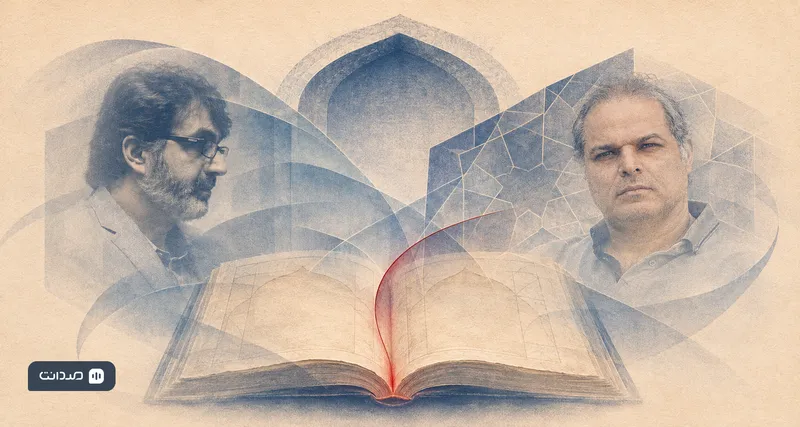

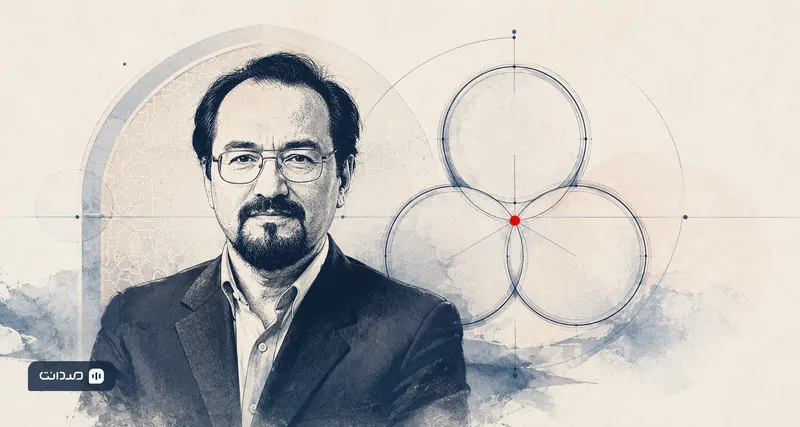
Amir Maziar
نویسنده
Arash Naraghi
اندیشمند مورد بررسیIn his recent lecture "The Impact of Metaphysical Naturalism on Post-Revolutionary Religious Thought,"[1] Arash Naraghi argues that in contemporary religious thought metaphysical naturalism has generally been regarded as an essential component of modern rationality, and that among religious intellectuals, who have been concerned to reconcile religion with modern rationality, it has served as the basis for naturalistic interpretations of religion. Having documented this claim, Naraghi criticizes the whole project on the grounds that, first, metaphysical naturalism is not a secure position; second, it should not be regarded as an intrinsic part of modern rationality; and third, applying metaphysical naturalism, which can ultimately be considered a kind of scientism, effectively leads to the "distortion of religion." This undesirable outcome, he holds, can be avoided by setting metaphysical naturalism aside, which would even open up new horizons for reconciling religion with modern rationality.
In this article I try to show that, setting aside the truth or falsity of Naraghi's claim about religious intellectuals, which I do not address here, his own position is deeply grounded in a kind of metaphysicalism in the understanding of religion and a scientism in the theory of knowledge. That is, Naraghi's own position in this critique (and especially the interpretation of religious texts he offers) suffers, to a large extent and even in a more fundamental way, from the very problem he attributes to other religious intellectuals.
Naraghi's Main Claim
Naraghi regards metaphysical naturalism, in its maximal and minimal versions, as a position holding either that supernatural entities do not exist at all (the maximal version) or that, if they do exist, they exert no causal influence on the natural world and cannot do so (the minimal version). In Naraghi's view, contemporary religious intellectuals, from Sir Syed Ahmad Khan of India to Iqbal, Abduh and Bazargan in earlier decades, and Soroush and Mojtahed Shabestari, accepted metaphysical naturalism, at least in its minimal version, as an intrinsic component of modern rationality and on that basis set about reinterpreting religion[2]:
"This is the project that a large part of religious intellectuals and religious reformers took up: first, they accepted modern science as the criterion of modern rationality; second, they concluded that modern science teaches us that metaphysical naturalism is an acceptable and secure position; and third, they came to believe that, in order to find a place for religion in this scheme, religion must inevitably be naturalized, that is, a naturalistic interpretation must be given of the supernatural elements of religion."
Naraghi then tries to document this claim, showing that many of the religious intellectuals' views on revelation, prayer, miracles, God and the afterlife are thoroughly naturalistic interpretations of religion, and that they arose because these intellectuals cannot accept the causal influence of the supernatural on nature, or, put simply, God's intervention and agency in the natural world.
Naraghi is a critic of this entire project: of the scientism embedded in it, of the view that metaphysical naturalism is secure and necessary, and, most important of all, of the naturalistic interpretation of religion. In this lecture Naraghi offers no serious argument against metaphysical naturalism itself, merely noting that this theory is neither secure nor an essential part of modern rationality. But on the naturalistic interpretation of religion he speaks at greater length. In his view, the path to naturalistic interpretation in this movement was opened by a kind of esoteric interpretation that denies the "representational status of religious propositions" and "at best offers a psychological or sociological interpretation of them." From Naraghi's perspective such an interpretation is mistaken and leads to the "distortion of religion," because one of the important components of religious texts is "belief in supernatural entities and their agency in the natural world," and "as soon as you deny the supernatural dimensions of existence, you have cut yourself off from the core and essence of religion as it has been experienced throughout history."
My critique is aimed precisely at this last claim of Naraghi's about religious texts. This conception of religious texts is deeply metaphysicalist and scientistic, even though it apparently sees itself as opposed to them. More importantly, there is a kind of epistemological scientism at the root of this conception. I will explain these two claims under two separate headings.
Naraghi's Metaphysical Interpretation of Religious Texts
Naraghi says: "Among the most important elements promoted and encouraged in religions are, first, belief in supernatural entities, and second, belief in the agency of these supernatural entities in natural affairs. This seems to be one of the fundamental and central teachings, indeed the most fundamental and central teaching, of religion. It is as if religion as such rests on the belief that supernatural entities exist and, more importantly, can affect the phenomena of this natural world."
Naraghi explains this view in more detail in connection with the doctrines of revelation, prayer and miracles: "In the Quranic idea, revelation means that the Prophet comes into contact, through angels or in some unmediated way, with God, who is a supernatural entity... That is, the metaphysical foundation of the Quranic conception of revelation is the communication of us human beings, captives of the natural world, with a supernatural being."
And on prayer: "The Quranic conception of prayer is that we initiate this relationship with God and ask Him, by His power of providence, to bring about a change in the natural order of things in favor of a need we have... The concept of the answering of prayer is exactly this: answering means that God, who is a supernatural being, enters the natural world and either alters the order of the natural world in some way through natural laws or fundamentally bypasses the laws of nature."
Repeatedly in this lecture Naraghi speaks of a "causal" relation of the supernatural to nature and regards it as the "foundation of Quranic metaphysics." But is what Naraghi says really the content of the Quran and of religious texts? It must be said decisively: no. What Naraghi describes is a metaphysical Quran, not Quranic metaphysics, even though at first we might suppose that at least the surface of the Quranic wording supports Naraghi's claim. But Naraghi's words deploy metaphysical concepts and frameworks so openly, and attribute them so simply and directly to the religious and Quranic text, that it is not hard to show that this is wrong.
Let us turn directly to the main categories. Where in the Quran, precisely in the Quran, is there talk of "supernatural entities" and of things opposed to them called "natural entities"? Where in the Quran is God precisely introduced as a "supernatural being"? And what is the concept of nature here, and what is the Quranic conception of it? Where in the Quran is there talk of the "relationship of a human being, captive of the natural world, with a supernatural being"? Where in the Quran is there a concept precisely synonymous with the "natural order of things," or, more formidable still, with "natural laws," and where is the answering of prayer or the occurrence of miracles called "breaking the laws of nature," "the entry of a supernatural entity into nature," or "bypassing the laws of nature"? What, fundamentally, is the Quranic wording equivalent to this kind of expression, such that we can present them as the Quran's idea or Quranic metaphysics? Do not say that, if such terms are not in the Quran, these are nonetheless the explicit and clear meaning or content of Quranic verses and statements. They are by no means so. These are understandings of the Quran that arose only after Aristotelian philosophy and metaphysical thought, and, in their wake, the modern scientific view of the world. The general division of the world into two realms, nature and the supernatural, in the form current in the popular mind and found in Naraghi's text, and the very concept of nature contained in this division, derive from Greek philosophy and its extension in later metaphysical and scientific thought, as becomes clear in Naraghi's own text through its references to Aristotle, the Islamic philosophers, Descartes and Galileo. A dualistic, two-substance understanding of the world is not clearly stated in the text of the Quran and does not arise from it; it was also absent from the early commentaries and traditions, and spread and became widespread only after the penetration of theological and philosophical thought into the Islamic world. The same is true of the conception of the human being as a compound of an immaterial soul and a material body, and likewise of the conception of "the laws of nature," and especially of the notion of "causality and causal relation and agency" among beings. None of these are Quranic terms or concepts, and none has an explicit, direct equivalent in Quranic wording; on the contrary, they are clearly and demonstrably philosophical, metaphysical and scientific terms, with a history of emergence and a path of diffusion in human thought, including Quranic interpretation. All the disputes and contention that arose in the Islamic world between philosophers and theologians of various schools over the interpretation of Quranic expressions were precisely because these divisions of Aristotelian, Greek and Peripatetic metaphysics did not fit the text of the Quran. [3] So Naraghi speaks not of Quranic metaphysics but of a Quran that is being interpreted on the basis of a metaphysical outlook, and he calls this the content of the Quran itself. In fact, "metaphysics" and the "metaphysical outlook" that divides the world into this duality and speaks of causality and scientific laws is so intrinsic, presupposed and ahistorical for Naraghi that it is as if we could entirely regard the division of the world's entities into natural and supernatural, or material and immaterial, or corporeal and psychic, as intrinsic concepts or natural divisions of the world's entities themselves, which are therefore bound to be applicable to the Quran as well, with the interpreter merely reporting the relation established between the two. Quranic scholars who have examined Quranic cosmology and its contexts in detail have warned us against presupposing such an outlook, and in particular have judged the equation of the notions of Aristotelian metaphysics with Quranic notions to be mistaken.
Not to mention that formulating the duality of nature and the supernatural is today very difficult, and nearly all the features that the ancients regarded as distinguishing the two conceptions are today vague and doubtful, which makes attributing this division to the Quran and religious texts all the more difficult.
Perhaps Naraghi's claim can be reconstructed in a way that avoids this problem. If we strip metaphysical and scientific concepts from Naraghi's words and return to an account closer to the text, we can say that in the Quran God, angels, devils and jinn are at work throughout the world: they speak with human beings, deceive them or guide them. God hears prayers and answers them, and miracles occur in the world in the true sense of the word. Now, if we deny, for instance, God's verbal speech with human beings, or deny God's direct answering of prayers, have we not said something contrary to "Quranic metaphysics"? On this reading too Naraghi's claim is not correct, and it is even entangled in a broader and more fundamental scientism, which I will now explain.
Naraghi's Epistemological Scientism
Attend to the use of the word "metaphysics" in the text of Naraghi's talk. Again, it seems perfectly natural that the Quran should contain a kind of "metaphysics." In this metaphysics, as in all metaphysical schools, the world's beings, their kinds, and their relations to one another are spoken of; that is, a metaphysical or scientific report about the world has been given, which, in the view of those who believe in religious texts, corresponds to the realities of the world. According to Naraghi's account, "Muslim naturalists" regard this picture, report and metaphysical or scientific account of the world as opposed to the naturalistic account of the world, and by denying the "representational status of religious propositions" they resort to naturalistic interpretations and reinterpretations of religion. The "representational status" of religious texts, in Naraghi's conception, must be the same as what we see in philosophical or scientific texts, and Naraghi here, and of course elsewhere, takes for granted that religious propositions are likewise of this kind, which is why he speaks so easily of Quranic metaphysics and recounts its explicit correspondence-based content: God speaks to human beings through linguistic communication, or God bypasses and breaks the laws of nature, or God and other supernatural entities exert causal agency in the world. But how do we know that religious propositions are "representational propositions" of the same kind as scientific and philosophical ones? Naturally, no such presupposition exists in religious texts themselves, nor can it exist[4]. Perhaps the main reason for Naraghi and others who hold such an understanding of the language of religious texts is that we, and those who have "throughout history" experienced religious texts, regard these texts as knowledge-giving and open to truth and falsity, and a text can be knowledge-giving only if its propositions are representational in this sense. I have no objection to regarding religious texts as knowledge-giving, but linking the knowledge-giving character of religious texts to a scientific and metaphysical realism about the language of religion is not a necessary and unavoidable link. The presupposition of realism about the language of religion, in the sense that it can be seen as on a par with scientific and metaphysical propositions, is both historically mistaken and ultimately has its theoretical basis in epistemological scientism, which Naraghi naturally does not accept; rather, he shuns it and regards it as a great problem in contemporary religious thought that ultimately leads to the distortion of religion.
Scientific and philosophical realism about language, or correspondence realism, and especially its fundamental extension as the basic language of knowing the world, that is, the only language that makes knowledge of the world possible, accompanies and runs in step with the emergence of Greek metaphysics and its later elaborations, and especially with the universalization of empirical science as the most authoritative way of knowing the world. In pre-metaphysical or non-metaphysical cultures or outlooks on the world, which were pushed to the margins after the astonishing spread of Greek philosophy and, in the next stage, the worldwide spread of empirical science (though they never disappeared in East or West), the authoritative language of discovering truth was not regarded as such a "representational" language. In most cultures the foundational and sacred texts, which were regarded as the most important channels for knowing the truth, were poetic and narrative texts. Their essential part was formed not by representational propositions of the scientific and philosophical kind but by narrative, story, metaphor and imagination. These are texts that today are sometimes called "mythical" in a dismissive tone. In these texts individuals and persons (and personified gods) are the heroes of the text, not concepts, and in place of scientific and philosophical theories there are narrative and mimesis. The concept of causal relations in the modern sense of the term is usually absent in them, and the laws or rules governing the world are set out and depicted in an altogether different way. Reality and correspondence, where they are raised in these languages, do not have the same meaning as scientific and philosophical correspondence and reality. Many thinkers in our time have set out to discover the structures and features of these languages, and this is not the place to recount them. [5] In the first instance the Quran belongs to a pre-metaphysical or at least non-metaphysical culture and must be seen as a text of the kind common in those cultures; hence the claim of a realist language for these texts, in a form that would allow them to be placed on a par with scientific and metaphysical propositions, is an entirely anachronistic presupposition.
Within this anachronistic error lies a more important epistemic error, which supposes that the only cognitive language is one with scientific representational power, and that other languages can merely be motivational, subjective, existential and the like. This error must be called cognitive scientism. Apparently many modern religious thinkers, under the hidden influence of the epistemological scientism that spread generally from the seventeenth century onward, suppose that if a religious text is to disclose reality and connect believers to truth, it must have a language like that of science and metaphysics. Interestingly, the thinkers and philosophers of old were more attentive to this difference than our contemporaries. From Plato and Aristotle to Farabi and Avicenna, and on to Spinoza, Kant and Hegel, there has been an awareness that the language of poetic (ritual), mythical and religious texts is not a scientific and metaphysical language. [6]
Let us finally return to the text of the Quran, outside the metaphysical and science-laden conception, to see what the Quran says. In the Quran we read that God speaks to human beings, directly or through angels. What does such a thing mean in a religious text? Does it mean that a personal being, possessing mind and language, who is one being alongside the other beings of the world, or angels, who are likewise personal beings with mind and language, spoke to human beings, in the manner of a real communication between two humans and in a language like that which passes between humans, at a specific time and place, from a distance and from outside, and that everything in this account consists of singular, separate facts, persons and events that correspond one to one with the realities of our world? How do we know such a thing, and why must we necessarily regard the denial of such a presupposition as the product of metaphysical naturalism? On the contrary, it seems more likely that accepting such a presupposition arises from metaphysical naturalism or epistemological scientism, which holds that this proposition is truth-apt, knowledge-giving and about reality only in this case, and that if we regard it as dreamlike, metaphorical, mimetic, mythical and the like, and refuse to accept correspondence, we have lost truth, knowledge and reality. This latter claim is the full and complete form of epistemological scientism and leads to it.
If we do not attribute scientific and metaphysical representational power to religious propositions, we can still defend the cognitive character of this language and its capacity to bring its audience to "reality" and "truth," and we can believe that God answers the prayers of believers or speaks with His prophets in words, without supposing (with a metaphysical and scientific interpretation of the religious text) that the meaning of this statement is that "the Necessary Being, or the Absolute Perfection, or the First Cause, which is not of the kind of natural things, establishes a causal relation with a natural, material being by breaking the laws of nature." And then regarding such a science- and metaphysics-laden claim as the core and essence of religion, one that may be compatible or incompatible with modern rationality. The compatibility or incompatibility of this claim with the reason of the age will not resolve any difficulty for religion, because it is fundamentally not a religious proposition.
[1]See the written version of this lecture, published on the Sedanet website on 1 November 2026.
[2]A good critique of this claim of Naraghi's has been published on the Sedanet website: Reza Naqavi, "A One-Dimensional Genealogy! A Critique of the Lecture "The Impact of Metaphysical Naturalism on Post-Revolutionary Religious Thought"," published on 4 November 2026.
[3]It is strange that on the question of interpreting the nature of the Imam Naraghi refers to the view of Amir Moezzi, apparently unaware that Amir Moezzi refers precisely to the pre-metaphysical meaning of religious texts and points to the transformation that took place in the interpretation of important religious concepts after the encounter with Greek philosophy.
[4]The elaboration of the scientific conception of language and its relation to external reality belongs to an era different from the era in which the Quran was compiled.
[5]See, among others, the pioneering and fundamental work of Cassirer in The Philosophy of Symbolic Forms, especially its second volume: Philosophy of Symbolic Forms (translated by Yadollah Mowaghen, Hermes Publications, 2014).
[6]In Western thought, see for example the first chapter of the following book:
Green, G. Imagining God: Theology and the Religious Imagination. San Francisco: Harper & Row, 1989.
And in Islamic philosophy, see the second part of this book:
Amir Maziar, Dream, Metaphor, and the Language of Religion (Rhinoceros Publications, 2021).





Discussion0 comments
No comments yet; let yours be the first voice.