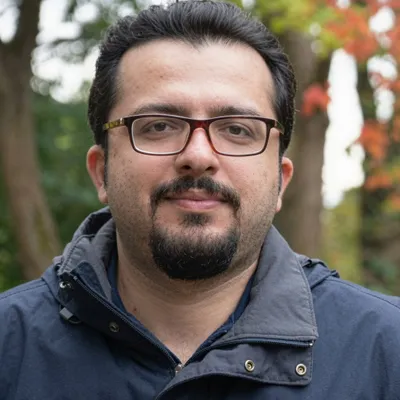
Iranian thinker
Mohammadreza Vaez
David KennedyPhilosophy of Education, Philosophy of Childhood, and Philosophy for ChildrenAmericanb. 1985


Life and Thought
David Kennedy is an American philosopher of education and a leading figure in philosophy for children and the philosophy of childhood. He is Professor Emeritus at Montclair State University and was affiliated with the Institute for the Advancement of Philosophy for Children. A substantial part of his work concerns the community of inquiry, philosophical dialogue with children, and the place of childhood in thought and education.
David Kennedy is a scholar and professor of philosophy of education whose academic career has been closely associated with Montclair State University and the Institute for the Advancement of Philosophy for Children. He began teaching in the university’s Department of Educational Foundations in 1996, served for a time as its chair, and retired in 2024. During his academic career, Kennedy taught graduate students and supervised doctoral research in philosophy for children.
One of the principal themes of Kennedy’s thought is the philosophy of childhood. He does not regard childhood merely as an incomplete stage on the way to adulthood, but attends to children’s distinctive modes of experience, questioning, and thought. His research examines the history of representations of the child in the Western intellectual tradition and the relationships among childhood, rationality, subjectivity, and education. The Well of Being: Childhood, Subjectivity, and Education and Changing Conceptions of the Child from the Renaissance to Post-Modernity are among his major works in this field.
Another major area of Kennedy’s work is philosophy for children. He places particular emphasis on the “community of inquiry,” a model in which the classroom becomes a space for questioning, dialogue, collaborative reasoning, and the reconsideration of viewpoints. In “Philosophy for Children and the Reconstruction of Philosophy,” he explores the dialogical and narrative dimensions of philosophy and argues that children can possess a distinctive philosophical voice.
Kennedy has also studied philosophical practice with young children, emphasizing their capacity for wonder, fundamental questioning, and reflection on such subjects as identity, reality, change, death, and the acquisition of knowledge. From this perspective, philosophy does not begin only after a person reaches a particular level of formal education; it can emerge from children’s natural questions and their encounters with the world.
From 1998 to 2010, he served as editor of Thinking: The Journal of Philosophy for Children and also participated in the founding and editing of Childhood & Philosophy. In addition to his university work, Kennedy has conducted numerous workshops and educational programs for teachers and academics in different countries, contributing to the practical development of philosophy for children and philosophical dialogue in schools.
Kennedy’s work stands at the intersection of philosophy of education, philosophy of childhood, and philosophy for children. A recurring question in his writings is how our understanding of education, philosophy, and even childhood itself would change if children were regarded not merely as recipients of instruction but as serious participants in philosophical dialogue.