Philosophy
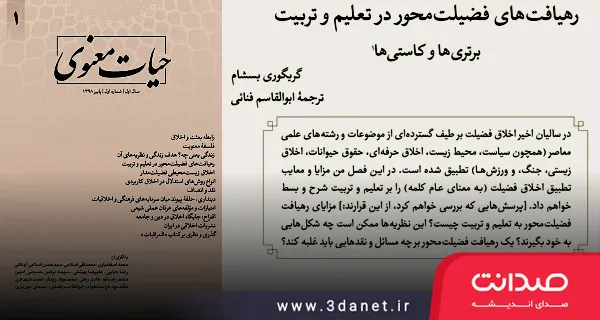
“Virtue-Centred Approaches to Education” by Gregory Bassham, translated by Abolghasem Fanaei
A virtue-centred approach to education emphasises the cultivation of moral and intellectual virtues over the mastery of content. An examination of its strengths and weaknesses shows how the criticisms levelled against it can be overcome.

Gregory Bassham
Author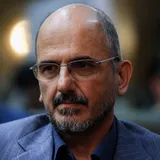
Abolghasem Fanaei
TranslatorVirtue-Centred Approaches to Education:
Prospects and Pitfalls[*]
Gregory Bassham
Translated by: Abolghasem Fanaei[†]
This article is a translation of: Bassham, G. (2013) “Virtue-Centered Approaches to Education: Prospects and Pitfalls”, In Virtues in Action, (London: Palgrave Macmillan), pp. 11-22. In recent years, virtue ethics has been applied to a wide range of contemporary subjects and academic disciplines (such as politics, the environment, professional ethics, animal rights, bioethics, war, and sports). In this article, the advantages and disadvantages of applying virtue ethics (in the broad sense of the term) to education are elaborated upon, and the following questions are examined: What are the advantages of a virtue-centred approach to education? What forms might these theories take? What issues and criticisms must a virtue-centred approach overcome? This article was published in the first issue of the quarterly journal Hayat-e Ma‘navi.
In recent years, virtue ethics has been applied to a wide range of contemporary subjects and academic disciplines (such as politics, the environment, professional ethics, animal rights, bioethics, war, and sports). In this chapter, I will elaborate on the advantages and disadvantages of applying virtue ethics (in the broad sense of the term) to education. [The questions I will examine are as follows:] What are the advantages of a virtue-centred approach to education? What forms might these theories take? What issues and criticisms must a virtue-centred approach overcome?
The Appeal of a Virtue-Centred Approach to Education
Virtue ethics is an approach in normative ethics “that emphasizes the virtues, or moral character, in contrast to the approach that emphasizes duties or rules (deontology) or the approach that emphasizes the consequences of actions (consequentialism).”[1] Virtue ethics, as a theory in normative ethics, cannot be straightforwardly applied to [the domain of] education, because education deals with many things other than “ethics.” Nevertheless, it is possible to develop a virtue-centred approach to education that is inspired by virtue ethics and bears many similarities to it. By “a virtue-centred approach to education” I mean a normative theory of education that emphasizes the cultivation of moral and intellectual virtues, in contrast to, for example, [an approach based on] mastery of content, vocational training, or skills development.[2] In the view of proponents of virtue-centred education, the central goal of education is the fostering of personal growth, helping students develop the intellectual and character virtues that are constitutive of human flourishing or the good life. According to the virtue-centred approach, the fundamental question of education is not “What should students know upon completing grade X?” or “What academic skills should students possess upon graduation?” These questions are important and legitimate, but for virtue theorists they are less central compared to questions concerning character. In an ideal situation, what qualities of heart, mind, and character would we like our students to value, choose, and acquire? What moral and intellectual virtues should we strive to cultivate in our students? How can we best nourish the emotional, moral, and intellectual growth of students? How can we provide a rich educational environment that helps students discover and maximize their potential for leading happy lives, full of virtue, purpose, and achievement? Virtue-centred approaches to education are best seen as a family of theories that regard the aforementioned matters as the central challenges of education. [One may now ask] what are the advantages of such an approach?
First, until relatively recently, virtue-centred theories dominated educational thought in Western civilization. Giants of education, such as Plato, Aristotle, Augustine, Aquinas, Locke, Rousseau, Kant, and Dewey, all endorsed versions of virtue-centred education.[3] In American education, virtue-centred approaches prevailed until the early decades of the twentieth century, when they declined for various reasons, including the rise of diverse forms of moral skepticism and an increasing emphasis on vocational training.[4] While appeals to authority and tradition are generally among the weakest forms of rational persuasion, their weight in this case is considerable. When, until quite recently, virtue-centred approaches were almost universally accepted, how certain can one be that these approaches should be discarded?
Second, a brief look at the mission statements of educational institutions shows that, whatever their educational practices may be in practice, schools are strongly eager to foster the intellectual and moral growth of their students. For example, Ithaca College states in its mission statement: “Ithaca College is dedicated to fostering intellectual growth, aesthetic appreciation, and character development in students, providing a foundation for lifelong learning.” Elon University declares in its mission statement that “We nurture respect for human differences, a passion for a life of learning, personal integrity, and an ethic of work and service.” Haverford College’s mission statement emphasizes: “We strive to foster the pursuit of excellence and a sense of individual and collective responsibility in the entire environment. Haverford does its utmost to be a college in which integrity, honesty, and concern for others are dominant forces.” Statements of this kind are common at both the college and pre-college levels in American education. This fact suggests that when schools pause for serious reflection on their core goals and ideals, they naturally revert to the language of virtue and character.
Third, just as fathers and mothers naturally desire to have a positive and profound influence on their children, educational institutions, given their institutional roles in society and social development, naturally have such a desire. This invites [these institutions] to focus on enduring dispositions/habits of the soul, rather than on matters such as skills, competencies, or short-term memorization. Deeply rooted intellectual habits, such as open-mindedness, intellectual perseverance, and intellectual curiosity, are gifts whose influence will endure long after one leaves school (and ideally throughout one’s life). The same holds true for moral virtues, such as courage, conscientiousness, and self-discipline. Conversely, [the impact of] academic skills and competencies, and mastery of [textbook] content, is often short-lived. In many cases, these matters are value-neutral. As Dumbledore remarks to Harry Potter, “It is our choices... that show what we truly are, far more than our abilities.”[5] Intellectual and moral virtues are, by definition, good traits that enable us to be both good and clever. Skills such as mathematical calculation and basic knowledge, such as understanding the fundamental principles of physics, are morally neutral attributes, which, in the words of Richard Paul, “can be used for [ends that are] good or evil, for enlightenment or for [deceptive] propaganda, for achieving a personal and limited goal or for advancing the public and universal good.”[6] Undoubtedly, many prominent Nazis were distinguished students with admirable academic knowledge and skills. What they lacked was wisdom and virtue.
Moreover, as John Locke pointed out centuries ago, an education that focuses on the development of intellectual and moral virtues has an inherent superiority over an education that targets the acquisition of academic skills and mastery of [textbook] content. Locke wrote: a student with “virtue and a well-temper’d mind, if the rest [of his education] be neglected, will in due time produce all the rest.”[7] Locke’s point is stated hyperbolically. Some academic subjects and skills must be learned within a specific timeframe, at the cost of dropping out, failing to gain admission to a good college, or other unfortunate consequences. At the same time, Locke is right that there is a kind of asymmetry between virtue and knowledge/know-how that testifies in favor of virtue. An adolescent who, for whatever reason, is not a strong student [academically and in terms of know-how] may nonetheless develop in a way that allows them to become a mature, wise, and learned human being, provided that at some point [in their life] they have cultivated virtues such as a love of learning, intellectual perseverance, self-discipline, industriousness, and a commitment to self-improvement. Given time and opportunity, these virtues ensure that the most significant educational deficiencies will be remedied. Basic knowledge and skills are not usually self-correcting in this way.
A focus on intellectual and moral virtues also provides scope for a stronger sense of participation by the entire educational community—administration, staff, students, as well as faculty/teaching staff. When a school’s primary focus is on students’ academic and skill mastery, the entire task of “education and upbringing” will be seen as the responsibility of the teaching staff. Conversely, when the focus is broadened to include [the cultivation of] virtues such as responsibility, respect for differences, honesty, integrity [of character], civility, community spirit, and a passion for excellence, the whole school can feel they share in the school’s educational and formative mission. This contributes to creating a sense of [being a member of] a community and affirms the common—though clichéd yet deeply sincere—remark that many of the most important things learned in school are not learned in the classroom.
Finally, careful reflection on the broad aims of education supports the virtue-centred approach. No pure separation [of these aims] is possible, but educational aims are of two kinds: intrinsic and extrinsic. Extrinsic aims in education are those pursued and valued as means to other valuable ends. Two widely recognized extrinsic ends of education in primary and secondary schools are preparing students for work and preparing them for the duties of democratic citizenship.[8] The skills and dispositions related to work and citizenship are not usually valued for their own sake, but rather as means to other desirable ends, such as a productive economy, a desirable lifestyle, and a highly functional political system. However, some aims of education are rightly seen as intrinsic [aims]. These aims especially include personal growth, that is, the cultivation of an individual’s abilities and capacities towards excellence, or what Jacques Maritain calls “the self-fulfillment of the person as a human being.”[9] As Plato notes in the Republic, the virtues of character certainly contribute to socially valuable ends, but these virtues are also valued for their own sake and as things that are intrinsically good.[10] For this reason, it makes sense, as in virtue-centred theories [in ethics, so too in education], to give priority to character development.[11]
Varieties of Virtue-Centred Approaches to Education
Just as virtue ethics takes many diverse forms (neo-Aristotelian, Stoic, Thomistic, Humean, Nietzschean, pluralist, and the like), so too do virtue-centred approaches to education. Without pretending to be exhaustive, let me briefly mention some of the main possible options for developing [such a theory].
A virtue-centred approach must first show whether it is applicable to all forms of education or only to some. Some virtue theorists, such as Robert Hutchins and Mortimer Adler, insist that all [types of] education at all levels should focus primarily and essentially on the cultivation of moral and intellectual virtues (especially the latter). Adler claims this is so because all human beings share a single nature as rational animals, all have the same capacities and capabilities that are to be developed, and “the fundamental education for a rational animal is the disciplining of his rational faculties and the cultivation of his intellect.”[12] Undoubtedly, the Aristotelian premises/presuppositions of Adler’s [argument] are debatable, but even if we grant them, the [desired] conclusion does not follow. [For] there may be forms of education (technical, vocational, athletic, artistic, early childhood, special education, etc.) in which the primary focus is not on moral or intellectual development, but on other educational goals, such as the acquisition of specific skills, psychological well-being, or mastery of a body of information. Moreover, teaching strategies that are effective at one level of education may not be appropriate at other levels. For instance, attempting to cultivate higher-order virtues such as rational autonomy and open-mindedness may be more appropriate at higher levels of education than, say, in preschool education. A fully developed virtue-centred approach needs to address such complexities.
Furthermore, the virtue theorist must choose between two interpretations that I call the “thick”/“maximalist” and the “thin”/“minimalist” interpretations of character development. The thick interpretation is one that fully (or in considerable detail) articulates a specific ideal of moral and intellectual excellence (or, more generally, optimal or well-developed character) and obliges teachers and educators to realize such an ideal. Most classical and medieval theories of education propose thick interpretations in this sense. The problem with thick interpretations in contemporary pluralistic societies is that they inevitably become entangled in controversial normative, metaphysical, or religious claims. For example, Aristotle defends a thick interpretation of ideal human development in which manual labour is disparaged, and which implies the dubious presupposition that rational contemplation is the highest form of human virtue.[13] Plato defends a thick interpretation of character development that places little value on worldly goals, bodily appetites, or experiential learning.[14] Aquinas injects a great deal of supernaturalism into his account of ideal human development and argues that education’s primary concern should be the inculcation of Christian virtues such as chastity, humility, temperance, piety, and obedience to authority, and encouraging students to realize God’s will on earth in order to enjoy eternal beatitude in His presence in the afterlife.[15]
Thick conceptions of personality development may be appropriate for religious schools or other educational institutions with an ideological orientation, but it can be argued that they are not suitable for public schools or colleges in modern secular democracies. Of course, public educational institutions need not adopt a neutral stance on controversial ethical and metaphysical issues. For example, they can support gender equality, human rights, and evolutionary theory, even though these views are not universally accepted. However, there are limits to what thick conceptions of human personality development should look like in public educational institutions, and perhaps in private institutions serving a diverse student body. Virtue theorists are compelled to develop thin theories for such institutions, specifying particular moral and/or intellectual virtues that can appropriately be cultivated [in these settings]. A common strategy is to focus on moral virtues that enjoy a broad “overlapping consensus” in society as a whole. Proponents of “character education” in the United States typically cite virtues such as respect, responsibility, honesty, fairness, tolerance, prudence, self-discipline, helpfulness, compassion, cooperation, courage, and various democratic virtues as appropriate, consensual virtues for the purposes of moral education in U.S. public schools. Similarly, thin [conception] virtue theorists tend to ignore controversial intellectual virtues such as Aristotelian “wisdom” (“knowing the noblest and most divine things”)[16] or Aquinas’s theological virtue of “faith,”[17] focusing instead on widely accepted intellectual virtues such as love of truth, intellectual perseverance, intellectual courage, open-mindedness, intellectual fairness, intellectual integrity, intellectual humility, intellectual autonomy, intellectual empathy, and a passionate desire for learning.[18]
Some virtue-centred approaches to education claim that teachers and educators should focus solely or primarily on cultivating intellectual virtues, not moral virtues. According to one virtue theorist, Robert M. Hutchins, education is concerned with “the development of the intellectual powers of men”; the “moral and spiritual powers” of students are “the province of the family and the church,” not the school.[19] Virtue-centred approaches must determine whether both intellectual and moral virtues should be explicitly promoted [in educational institutions], or only intellectual virtues, and if both are to be cultivated, whether one should take precedence over the other.
Finally, a well-developed virtue-centred theory of education must articulate, at least in general terms, how its selected intellectual and/or moral virtues are to be taught and assessed. Should the intellectual virtues related to “critical thinking” be taught in a separate course or infused throughout the curriculum, or both? In teaching intellectual virtues, what combination of direct instruction, coaching, and Socratic discussion is appropriate, and at what levels? If “good character” is to be instilled [in students], how can it be effectively taught and assessed? What role should be played by modelling, storytelling, rewards and punishments, values clarification, ethical theory, and the provision of a democratic learning environment? How can one avoid “indoctrination/brainwashing,” “conformity to peer pressure,” and “Skinnerian behaviour modification,”[20] those liberal bugbears? Many of the most troublesome and controversial issues concerning character education arise at this level of practical implementation.
Objections
Virtue-centred approaches to education face well-known objections. Let us briefly examine the most serious criticisms and see how virtue theorists can best respond to them.
The incompleteness objection: One standard criticism of virtue ethics is that it is incomplete, meaning that it is too vague to provide precise [and clear] answers to moral questions. [Critics] say that virtue ethics offers no “decision procedure” for resolving concrete moral dilemmas. Should I become a vegetarian? Support stricter gun control laws? Adopt a simpler, more environmentally friendly/kind lifestyle? [To answer questions like these], telling me to “act as a virtuous person would act” is of no help. It has been argued that an ethical theory should provide more precise guidance than this.
Virtue ethicists have responded to this objection in various ways. Some [of them] have argued that we should not expect an ethical theory to be complete, and that morality is too complex to be reduced to any set of calculative rules or a simple decision procedure.[21] Others have tried to turn the tables on critics, arguing that most prominent ethical theories are vague; such as “maximize good consequences,” “treat humanity always as an end in itself,” “act as God wills.”[22] Still others have argued that virtue ethics actually provides fairly precise [and clear] moral guidance.[23]
Whether or not these responses are satisfactory, virtue-centred approaches to education are not necessarily subject to the incompleteness objection. As noted earlier, virtue-centred approaches to education need not endorse virtue ethics. These approaches are a form of “virtue theory” (an inquiry that focuses on the virtues), but they are not necessarily a type of virtue ethics (a specific normative theory in ethics).[24] Moreover, it is absurd to expect a theory of education to be “complete” in the sense of providing a clear and unequivocal answer to every conceivable question about education. No theory of education has ever come close to this kind of completeness.[25] Of course, a virtue-centred approach to education might be unhelpfully vague. If so, such a theory needs further elaboration. But no general charge of “incompleteness” can be leveled against the very nature of virtue-centred theories in education.
The conflict of values objection: Another common criticism of virtue ethics is that virtues can conflict [with one another], and virtue ethics offers no way to resolve these conflicts. For example, in dealing with a timid child, the virtue of kindness might conflict with the virtue of honesty. Critics claim that virtue ethicists offer no concrete advice for resolving such conflicts other than unhelpful platitudes like “act virtuously” or “do what a person of practical wisdom would do.”
Virtue ethicists typically respond to this objection in two ways. First, they point out that this problem is not unique to virtue ethics. Most prominent ethical theories allow for possible conflicts among competing principles, values, and virtues. Second, there are standard methods for resolving conflicts in ethical theory that virtue ethics can also adopt. One such method is to prioritize conflicting values, principles, or virtues. Another is to argue that there are no real conflicts among the virtues, but merely apparent conflicts [among them]. For example, in the case of the apparent conflict between honesty and kindness [in dealing with a frightened child], one could argue that if telling the truth in the strict/full sense of the word would unnecessarily distress a frightened child, [the virtue of] honesty would not require such behavior.[26] [In my view] these seem to be effective responses to the objection based on value conflict. But if not, then most prominent ethical theories are in the same leaky boat.
The Relativism Objection: Another common charge against virtue ethics is that it leads to an unacceptable form/reading of moral relativism. Some critics, following Alasdair MacIntyre, have argued that virtues can only be acquired, cultivated, and meaningfully and clearly formulated/expressed within particular forms of communal life, which are highly diverse.[27] Others have argued that the very concept of "virtue" as "a trait it is good for a person to have" invites a clear kind of relativism. For it may be good to have certain traits in culture A at time T1 and not good in culture B at time T2. For example, hospitality toward strangers may be a virtue in most times and places, but not when we know the strangers carry deadly diseases. Moral philosophers who object to such variations will naturally reject virtue ethics.
Here too, virtue ethicists have responded in various ways. Some play the "common currency" card, recalling that most leading ethical theories bear a similar "sin" of relativism. For instance, both consequentialism and divine command theory would likely accept that hospitality toward strangers is not necessarily good or obligatory in every circumstance. Just as consequentialism is committed to the universal principle that good consequences should be maximized, virtue ethics is committed to the universal principle that traits which are good for a person should be cultivated. Neither theory is relativist in any objectionable sense. Virtue theorists like Martha Nussbaum have offered a deeper response to the relativism objection. Responding to MacIntyre, Nussbaum argues that while specific, local understandings of the virtues may vary, there may nonetheless be virtues such as prudence, courage, temperance, justice, self-discipline, and reasonableness that all human beings need simply because they are human and are social creatures living in a challenging world.[28] Some virtue-centred theorists in education may be objectionably relativist, but such theories are not per se and validly subject to this critique.
The “Stick with What We Know Works” Objection: The strongest objection to virtue-centred theories in education is that they divert our attention from what has been proven to work in education—namely, the coherent, planned teaching of a core body of knowledge—and call us toward fashionable and ephemeral forms of instruction that are based on unsound educational theories. One powerful advocate of this view is the educational reformer E. D. Hirsch, Jr.[29] In Hirsch’s view, American schools are failing because teachers have bought into a certain “worldview” that research shows is often baseless. Romanticism, progressivism, constructivism, and many other fashionable “isms” have led teachers and educators to disdain the teaching of a core body of knowledge in favor of teaching “critical thinking,” “hands-on learning,” “developmentally appropriate learning,” “child-centred education,” and “constructed knowledge.” Despite a tremendous increase in educational spending, the result has been stagnant test scores and very poor results in international comparisons. Hirsch’s proposed solution is to do what virtually all nations with high-performing schools do: establish rigorous national standards for educational achievement and emphasize the coherent, sequential teaching of shared prerequisite knowledge—what Hirsch earlier called “cultural literacy,” but now terms “core knowledge.”[30]
In Hirsch’s view, there is today a near-universal consensus about the big picture of education. “Everyone agrees on the goals of achieving equality of opportunity, competence, autonomy, learning how to learn, good citizenship, and moral responsibility.”[31] But there are deep disagreements about what these general goals mean and how they can be achieved. Hirsch hopes that as rigorous, non-ideological educational research advances, some of these disagreements about the details will disappear. Hirsch supports civic and moral education, and suggests that stories may have a greater power [to influence] “the mind and heart than direct instruction and real-life experience.”[32] He does not support direct instruction in “critical thinking” as a set of generalized, transferable rational skills and dispositions, arguing that it is a mistake to set up an opposition between “critical thinking” and “mere facts.” “Common sense and cognitive psychology alike support the Jeffersonian view that critical thinking is always based on factual knowledge.”[33] Proponents of core knowledge instruction argue that the primary emphasis in elementary schools should be on transmitting a core body of knowledge [to students’ minds]. This [mode of education] not only strengthens academic performance and enhances educational quality, but also, as a bonus, aids students’ moral and intellectual development. On this basis, virtue-centred approaches are right to believe that good character and critical thinking are important educational goals. But they are mistaken in prioritizing these goals over other fundamental educational aims, such as competence and equality of opportunity. We want our students—all students—to be good and smart. But the best way to promote these valuable goals is to emphasize [the teaching of] core knowledge.
This is a powerful objection to virtue-centred approaches to education. But I remain unconvinced.
Proponents of the core knowledge [educational approach] think it is a mistake to prioritize intellectual and moral virtues over other widely supported educational goals, such as skills, learning how to learn, and equality of opportunity. But, as noted earlier, there are reasons in favor of prioritizing virtues. In particular, it is far more plausible to see intellectual and moral virtues (or, more broadly, "flourishing" or "self-realization") as the ultimate end of education than to see goals such as skills, learning how to learn, and educational equality as such, since these are primarily and intrinsically valued as instruments for [achieving] other individual and collective ends.
The most important disagreement between proponents of the core knowledge [teaching-based approach] and virtue theorists concerns means. Does an emphasis on virtues cause poor teaching, and does it divert teachers and educators from the kinds of robust, information-rich, back-to-basics instructional strategies that seem so effective in other countries? Is it true that teaching a core body of knowledge is the best way to promote human flourishing in the long run, or, as virtue theorists claim, are more direct and deliberate approaches sometimes appropriate? Aristotle's question remains as relevant as ever: "Will we not be more likely to hit our mark if we have a target [in our actions and activities]?"[34] If our goal is for our children to grow up to be both good and clever, then it makes sense to keep this goal in mind when theorizing and planning about education. Today, many students are good at memorizing facts and their store of "core knowledge" is good. At the same time, many of them are morally uneducated and poor in critical thinking. Therefore, promoting core knowledge seems, at best, to be part of the solution.[35]
[*] This text is a translation of
Bassham, G. (2013) “Virtue-Centered Approaches to Education: Prospects and Pitfalls”, In Virtues in Action, (London: Palgrave Macmillan), pp. 11-22.
The first edition of this translation was published in the esteemed journal Hayat-e Ma'navi, Vol. 1, No. 1, (2019), pp. 49-64. I am grateful to my dear friend, Mr. Baferifar, for his agreement to republish this translation online.
[†] Assistant Professor at Mofid University.
[1]. R. Hursthouse (2012) “Virtue Ethics”, The Stanford Encyclopedia of Philosophy (Summer 2012 Edition), Edward N. Zalta (ed.), URL = <http://plato.stanford. edu/archives/sum2012/entries/ethics-virtue/>.
[2]. "A virtue is a good feature of character, specifically a disposition to respond to, or acknowledge, items within its field or fields in an excellent or sufficiently good way."
- Swanton (2003) Virtue Ethics: A Pluralistic View (New York: Oxford University Press), 19.
[3]. See generally the chapters on these thinkers in
A.O. Rorty (1998) (ed.) Philosophers on Education: New Historical Perspectives (New York: Routledge).
[4]. T. Lickona (1991) Educating for Character: How Our Schools Can Teach Respect and Responsibility (New York: Bantam Books), 7.
[5]. J. K. Rowling (1999) Harry Potter and the Chamber of Secrets (New York: Scholastic), 333.
[6]. R. Paul (1993) Critical Thinking: What Every Person Needs to Survive in a Rapidly Changing World, 3rd revised ed. (Santa Rosa, CA: Foundation for Critical Thinking), 321.
[7]. J. Locke (1947) “Some Thoughts Concerning Education,” in John Locke on Politics and Education (Roslyn, New York: Walter J. Black, 357 (§177).
[8]. M. Adler (1983) Paideia Problems and Possibilities: A Consideration of Questions Raised by The Paideia Proposal (New York; Macmillan), 8.
[9]. J. Maritain (1943) Education at the Crossroads (New Haven: Yale University Press), 18.
[10]. Plato (1937) Republic, in The Dialogues of Plato, translated by B. Jowett (New York: Random House), I:870 (612b).
[11]. Some might go further and say that education, by definition, is certainly concerned with virtues. See, for example,
Paul, Critical Thinking, 337.
(“Instruction that does not promote the development of human rationality, though it may properly be called training, is not education”), and
- Frankena (1965) Three Historical Philosophies of Education: Aristotle, Kant, Dewey (Chicago: Scott, Foresman, and Company), 7.
(“Education is the acquisition, through learning, of dispositions and virtues”). I belong to the camp that prefers not to settle substantive issues by arbitrary definitions.
[12]. M. Adler (1988) Reforming Education: The Opening of the American Mind (New York: Macmillan), 74.
More precisely, Adler claims that the cultivation of moral and intellectual virtues is the proximate end of all [types of] education. The ultimate end, as Aristotle claims, is happiness or the good life. Ibid., 60. Compare with
- Hutchins (2010) “The Basis of Education,” reprinted in J. Noll, ed., Taking Sides: Clashing Views on Educational Issues, 15th ed. (New York: McGraw-Hill), 11,
which defends a similar view.
[13]. Aristotle (1925) Nicomachean Ethics, translated by W.D. Ross (Oxford: Clarendon Press), X.8.1178b20–25.
[14]. Z. Loshan, “Plato’s Counsel on Education,” in Rorty, Philosophers of Education, 32–50.
[15]. A. MacIntyre, “Aquinas’s Critique of Education: Against His Own Age, Against Ours,” in Rorty, Philosophers of Education, 95–108.
[16]. St Thomas Aquinas (1993) Commentary on Aristotle’s Nicomachean Ethics, translated by C. I. Litzinger (Notre Dame, Indiana: Dumb Ox Books), 377.
[17]. St Thomas Aquinas (1981) Summa Theologica (Westminster, Maryland: Christian Classics), Vol. 3, 1163–98.
Aquinas defines “faith” as: “an act of the intellect assenting to the divine truth at the command of the will moved by the grace of God.”
Ibid., 1180 (II-II, 2, 9).
[18]. Paul, Critical Thinking, 255–56.
[19]. Hutchins, “The Basis of Education,” 12.
At one time Mortimer Adler held this view: “As I understand the essence of teaching, it cannot be a suitable or efficient means for shaping moral virtue. ... The intellectual virtues are largely teachable, just as the moral virtues are not.”
Adler, Reforming Education, 178.
[20]. See generally
- Kohn (1997) “How Not to Teach Values: A Critical Look at Character Education,” Phi Delta Kappa, 429–39. Available online at http://www.alfiekohn.org/teaching/hnttv.htm.
[21]. J. McDowell (1979) “Virtue and Reason,” Monist 62, 331–50; T. Morris (1997) If Aristotle Ran General Motors: The New Soul of Business (New York: Henry Holt), 142–145.
[22]. D. Solomon (1988) “Internal Objections to Virtue Ethics,” in P. A. French, T. E. Uehling, and H. Wettstein (eds) Midwest Studies in Philosophy, vol. 13, Ethical Theory: Character and Virtue (Notre Dame, Indiana: University of Notre Dame Press), 428–41.
[23]. R. Hursthouse (1999) On Virtue Ethics (Oxford: Oxford University Press), 28–31.
[24]. On the distinction between “virtue theory” and “virtue ethics,” see
- Crisp (1996) “Modern Moral Philosophy and the Virtues,” in R. Crisp, ed., How Should We Live? Essays on the Virtues (Oxford: Clarendon Press), 5.
[25]. Imagine a similar request that political theory be “complete” in the same sense. Is a political theory that provides a clear and definite answer to every conceivable political question worth formulating?
[26]. For an illuminating discussion of the objection based on conflicting values, see
- H. Irwin (2005) “Do Virtues Conflict? Aquinas’s Answer,” in S. Gardiner, ed., Virtue Ethics Old and New (Ithaca, New York: Cornell University Press), 60–77.
[27]. A. McIntyre (1984) After Virtue, 2nd ed. (Notre Dame, Indiana: University of Notre Dame Press), 181–225.
[28]. M. Nussbaum (1988) “Non-relative Virtues,” in P. A. French, T. E. Uehling, and H. Wettstein, (eds) Midwest Studies in Philosophy, vol. 13, Ethical Theory: Character and Virtue (Notre Dame, Indiana: University of Notre Dame Press), 32–53.
[29]. In a personal conversation, Professor Hirsch indicated that he does not see the core knowledge and virtue-centred approaches to education as incompatible. He strongly supports character education—primarily through stories—and sees an important place for virtue-centred education within the core knowledge curriculum. I am grateful to Professor Hirsch for this clarification. Nevertheless, it remains true that the transmission of cultural literacy receives such a strong emphasis in the core knowledge movement that “virtues” are pushed to the margins. My criticisms in the next few paragraphs, therefore, are less directly aimed at Hirsch himself than at the core knowledge movement he has inspired.
[30]. E. D. Hirsch Jr. (1996) The Schools We Need and Why We Don’t Have Them (New York: Doubleday).
[31]. E. D. Hirsch Jr. (2003) “General and Particular Aims of Education,” Principal Leadership 3, 20.
[32]. Hirsch Jr., “General and Particular Aims,” 23.
[33]. Hirsch Jr., The Schools We Need, 247.
[34]. Aristotle (1976) Nicomachean Ethics, revised ed., translated by J. A. K. Thomson (Harmondsworth: Penguin Books), 64 (1094a23).
[35]. I am grateful to Bernard Prosk, Regan Reitsma, Mike Austin, and Bill Irwin for their helpful feedback on an earlier draft of this chapter.
.
.
Virtue-Centered Approaches to Education: Prospects and Pitfalls
Gregory Bassham
In recent years, virtue ethics has been applied to a wide range of contemporary issues and disciplines (politics, the environment, bioethics, animal rights, war, sports, and so forth). In this chapter I explore the pros and cons of applying virtue ethics (broadly understood) to education. What are the advantages of a virtue-centered approach to education? What forms might such an approach take? What problems or objections must a virtue-centered approach overcome?
The Attractions of a Virtue-Centered Approach to Education
Virtue ethics is an approach to normative ethics “that emphasizes the virtues, or moral character, in contrast to the approach which emphasizes duties or rules (deontology) or that which emphasizes the consequences of actions (consequentialism).”[1] As a theory of normative ethics, virtue ethics cannot be straightforwardly applied to education, since education is concerned with many things other than “ethics.” It is possible, however, to develop a virtue-centered approach to education which takes inspiration from virtue ethics and shares many similarities. By a “virtue-centered approach to education” I mean a normative theory of education that emphasizes the moral and intellectual virtues, as opposed to, say, content mastery or skills development.[2] For a proponent of virtue-centered education, the central aim of education is to nurture personal growth, to help students develop the excellences of mind and character that are constitutive of human flourishing or the good life. For virtue theorists—as I shall hereafter call advocates of a virtue-centered approach to education—the central questions of education are not “What things should students know by Grade X?” or “What academic skills should students have mastered by Grade X?” These are important and legitimate questions, but for virtue theorists they are less central than questions of character. What qualities of heart, mind, and character would we ideally like our students to value, choose, and possess? What moral and intellectual excellences should we seek to cultivate in our students? How can we best nurture students’ emotional, ethical, and intellectual growth? How can we provide a rich learning environment that will help students discover and maximize their potential for living happy, fulfilled lives of excellence, purpose, and achievement? Virtue-centered approaches to education are best seen as a family of theories that regard these as the focal questions and challenges of education. What merits does such an approach have?
First, until relatively recently, virtue-centered theories dominated educational thought in Western civilization. Educational giants such as Plato, Aristotle, Augustine, Aquinas, Locke, Rousseau, Kant, and Dewey all endorsed versions of virtue-centered education.[3] In American education, virtue-centered approaches prevailed until the early decades of the twentieth century, when they declined for reasons we shall examine later.[4] While appeals to authority and tradition are generally among the weakest forms of rational persuasion, their weight in this instance is substantial. How confident can we be that virtue-centered approaches should be rejected when, until recently, they were nearly universally accepted?
Second, a glance at educational institutions’ mission statements indicates that, whatever their actual pedagogical practices, schools do strongly aspire to foster their students’ intellectual and moral growth. Ithaca College, for example, states in its mission statement: “To provide a foundation for a lifetime of learning, Ithaca College is dedicated to fostering intellectual growth, aesthetic appreciation, and character development in our students.” Elon University, in its mission statement, proclaims that “we foster respect for human differences, passion for a life of learning, personal integrity, and an ethic of work and service.” Haverford College writes: “We seek to foster the pursuit of excellence and a sense of individual and collective responsibility throughout the entire environment. Haverford strives to be a college in which integrity, honesty, and concern for others are dominant forces.” Such statements are typical at both the collegiate and pre-collegiate levels of American education. This suggests that when schools pause to reflect seriously on their core aims and aspirations, they naturally revert to a language of virtue, excellence and character.
Third, just as parents naturally desire to have a deep and positive impact on their children, schools and colleges, given their institutional roles in society, naturally wish to have a deep and positive impact on their students. This invites focus on strongly rooted dispositions (virtues), as opposed to skills, abilities, or information-grasp. Firmly embedded intellectual habits such as openmindedness, intellectual perseverance, and intellectual curiosity are gifts that keep giving long after a student has left school (ideally for a lifetime). The same is true of moral virtues such as courage, honesty, and self-discipline. By contrast, academic skills, abilities, and content-mastery often are short-term and in many cases are value neutral. As Dumbledore reminded Harry Potter, “it is our choices . . . that show us what we truly are, far more than our abilities.”[5] Intellectual and moral virtues, by definition, are good qualities that enable us to be both good and smart. Skills like mathematical calculation and factual knowledge such as a grasp of the basic principles of physics are morally neutral qualities that, as Richard Paul notes, “can be used either for good or ill, to enlighten or to propagandize, to gain narrow, self-serving ends, or to further the general and public good.[6] No doubt many leading Nazis were top students with impressive academic skills and knowledge. What they lacked was wisdom and virtue.
Fourth, as John Locke noted, an education focused on the development of intellectual and moral virtues has a built in advantage over one focused on the acquisition of academic skills and content-mastery. A student with “virtue and a well-tempered soul,” Locke writes, “though all the rest [of his or her education] should be neglected, would in due time produce all the rest.”[7] Locke’s point is overstated. Some academic subjects and skills must be mastered in a certain time frame on pain of flunking out, failing to get into a good college, and so forth. Locke is right, however, that there is an asymmetry between virtues and knowledge/skills that favors the virtues. An adolescent student who, for one reason or another, is not a strong student may still grow up to be a wise and learned adult if at some point he or she has developed intellectual and moral virtues such as a love of reading and learning, intellectual perseverance, self-disciple, and a commitment to self-improvement. The virtues ensure that, over time, most important educational gaps will be filled. Factual knowledge and skills are generally not fecund in the same way.
Fifth, a focus on intellectual and moral virtues allows for a stronger sense of involvement by an entire educational community—administration, staff, and students as well as faculty. When the primary focus of a school is on students’ mastery of knowledge and skills, the whole job of “education” is seen to be faculty’s responsibility. By contrast, when the focus is broadened to include virtues such as responsibility, respect for differences, honesty, integrity, civility, public spiritedness, and a passion for excellence, the entire school can rightly feel that they are part of the school’s educational mission. This contributes to a sense of community and underscores the common observation—trite but profoundly true—that many of the most valuable lessons we learned in school were not learned in the classroom.
Finally, careful reflection on the broad purposes of education lends support to a virtue-centered approach. Although no neat separation is possible, educational aims are of two sorts: extrinsic and intrinsic. Extrinsic educational aims are those that are valued and pursued as means to other ends. Two widely acknowledged extrinsic educational ends of basic schooling are preparing students for work and preparing them for the duties of citizenship in a democracy.[8] Work- and citizenship-related skills and dispositions are not usually valued for their own sakes, but rather as means to other desired ends, such as a productive economy and a well-functioning political system. Some purposes of education, however, are properly seen as intrinsic. These include, most notably, personal development: the cultivation of an individual’s powers and capacities along lines of excellence, or what Jacques Maritain calls “the fulfillment of man as a human person.”[9] As Plato notes, while excellences of character certainly contribute to valuable social ends, they are also valued for their own sakes.[10] For this reason, it makes sense to accord priority to the development of virtues or excellences of character, as virtue-centered approaches. do.[11]
Varieties of Virtue-Centered Approaches to Education
Just as virtue ethics comes in a variety of forms (neo-Aristotelian, Stoic, Thomistic, Humean, Nietzschean, “pluralistic,” and so forth), so do virtue-centered approaches to education. Let me briefly indicate—with no pretense of completeness—some of the major avenues of development.
A virtue-centered approach must first indicate whether it applies to all forms of education or only some. Some virtue theorists, such as Robert Hutchins and Mortimer Adler, insist that all education at all levels should focus primarily on the development of moral and intellectual virtues (particularly the latter). This is so, Adler claims, because all humans share the same nature as rational animals, all have the same powers and capacities to be developed, and the “basic education of a rational animal is the discipline of his rational powers and the cultivation of his intellect.”[12] Adler’s Aristotelian premises are certainly debatable, but even if we grant them, the conclusion does not follow. There may be forms of education (technical, vocational, athletic, artistic, early childhood, special education, etc.) where the central focus isn’t on moral or intellectual development, but on other educational objectives, such acquiring certain skills, psychosocial health, or mastering a body of information. Moreover, teaching strategies that may be effective at one level of education may not be suitable at others. For example, attempts to foster the virtue of intellectual autonomy may be more appropriate at higher levels of education than, say, in pre-school. A fully developed virtue-centered approach would need to address such issues.
In addition, a virtue theorist must choose between a thick and a thin conception of character development. A thick conception is one that spells out fully (or in considerable detail) a certain ideal of moral and intellectual excellence (or more generally optimal or well-developed character) and charges educators with the task of fostering that ideal. Most classical and medieval theories of education offer thick conceptions in this sense. The difficulty with thick conceptions is that they inevitably involve controversial normative, metaphysical, or religious claims. Aristotle, for example, defends a thick conception of ideal human development that includes the dubious assumption that intellectual contemplation is the highest form of human excellence.[13] Plato defends a thick conception of character development that accords little value to worldly pursuits, bodily appetites, or empirical learning.[14] Aquinas injects a strong dose of supernaturalism into his account of ideal human development, arguing that education should be centrally concerned with inculcating Christian virtues such as chastity, humility, temperance, piety, and obedience to authority, and encouraging students to fulfill God’s will on earth in order to enjoy eternal happiness with Him in the hereafter.[15]
While thick conceptions of character development may be suitable to religious schools or other ideologically-oriented educational institutions, they are arguably inappropriate for public schools or colleges in modern secular democracies. Public educational institutions need not be neutral on contentious moral and metaphysical issues. They can, for example, support gender equality, human rights, and evolutionary theory, even though these views are not universally accepted. But there are limits on how thick conceptions of human character development should be at public educational institutions, and indeed at private ones that serve diverse student populations. For such institutions, virtue theorists would need to develop thin theories that identify particular moral and/or intellectual virtues that can appropriately be fostered. One common strategy is to focus on moral virtues that enjoy a wide “overlapping consensus” in society as a whole. Advocates of “character education” in the United States commonly cite values such as respect, responsibility, honesty, fairness, tolerance, prudence, self-discipline, helpfulness, compassion, cooperation, courage, and a variety of democratic values as suitable consensus values for purposes of moral education in American public schools. Likewise, thin virtue theorists tend to ignore controversial intellectual virtues such as Aristotle’s “wisdom” (“the science of the most honorable and divine things”)[16] or Aquinas’s theological virtue of “faith”[17] and focus on consensus intellectual virtues such as the critical-thinking virtues of intellectual perseverance, intellectual courage, openmindedness, fairmindness, intellectual integrity, intellectual humility, intellectual autonomy, intellectual empathy, and a zest for learning.[18]
Some virtue-centered approaches to education claim that educators should focus only, or primarily, on the cultivation of intellectual virtues, not moral character. According to virtue theorist Robert M. Hutchins, teaching “deals with the development of the intellectual powers of men;” students’ “moral and spiritual powers are the sphere of the family and the church,” not schools’.[19] Virtue-centered approaches must decide whether both intellectual and moral virtues should be taught, or only the former, and if both are to be taught, whether one should be prioritized over the other.
Finally, a well-developed virtue-centered theory of education should spell out at least in broad terms how its selected intellectual and/or moral virtues should be taught and assessed. Should the intellectual virtues of “critical thinking” be taught in a separate course, infused throughout the curriculum, or both? In teaching the intellectual virtues, what mix of didactic instruction, coaching, and Socratic discussion is appropriate and at what levels? If “good character” is to be inculcated, how can this be effectively achieved? What role should role modeling, stories, rewards and punishments, values clarification, moral theory, and creating a democratic classroom environment play? How can the bugbears of “indoctrination,” “conformism,” “Skinnerian behavioral modification” and “a child’s right to an open future” be avoided?[20] Many of the thorniest and most controversial issues of character education occur at this level of specificity and practical implementation.
Objections
Virtue-centered approaches to education confront a number of well-known objections. Let’s look briefly at what I consider the most serious objections and how virtue theorists can best respond to them.
The incompleteness objection One standard criticism of virtue ethics is that it is incomplete in the sense that it is too vague to provide specific answers to moral questions. Virtue ethics, it is said, provides no “decision procedure” for deciding concrete moral dilemmas. Should I become a vegetarian? Support stricter gun control laws? Practice affirmative action in university admissions? It is no help to be told that I should “do what a virtuous person would do.” An ethical theory, it is claimed, must offer more specific guidance than that.
Virtue ethicists have responded in various ways to this objection. Some argue that we shouldn’t expect an ethical theory to be complete, that ethics is too complicated to be reduced to any simple algorithm or decision procedure. Others try to turn the table on critics, arguing that most leading ethical theories are vague (“Maximize good consequences.” “Treat people as ends in themselves.” “Do God’s will.”) Still others grab the bull by the horn and try to develop versions of virtue ethics that do provide fairly specific moral guidance.
Whether these are good responses or not, virtue-centered approaches to education are not necessarily vulnerable to the incompleteness objection. As noted earlier, virtue-centered approaches to education need not endorse virtue ethics. They are a form of “virtue theory” but not necessarily a species of virtue ethics. Moreover, it would be ridiculous to expect an educational theory to be “complete” in the sense of providing clear and definite answers to every conceivable educational question. No educational theory has ever been complete in this sense. Of course, a particular virtue-centered approach to education might be too vague or general. If so, it should be further developed. But no general charge of “incompleteness” can be leveled at virtue-centered theories of education as such.
The conflicting values objection Another common criticism of virtue ethics is that virtues can conflict, and virtue ethics offers no way of resolving those conflicts. For example, in dealing with a fearful child the virtue of kindness might conflict with the virtue of honesty. Critics claim that virtue ethicists offer no concrete advice for resolving such conflicts other than such unhelpful bromides as “do the virtuous thing” or “do what a person of practical wisdom would do.”
Virtue ethicists commonly respond to this objection in two ways. First, they note that this is not a problem unique to virtue ethics. Most leading ethical theories allow for possible conflicts between competing principles, values, and virtues. Second, there are standard ways of resolving conflicts in ethical theory that virtue ethics can also endorse. One is to prioritize conflicting values, principle, or virtues. Another is to argue that there are no real conflicts among the virtues, only apparent ones. For example, in the case of the apparent honesty/kindness clash, it might be argued that true honesty does not require strict truthfulness if that would needlessly upset a frightened child.[21] These strike me as effective responses to the conflicting values objection. If not, then most ethical theories are in the same leaky boat.
The relativism objection Another common charge against virtue ethics is that it leads to an unacceptable form of moral relativism. Some critics, following Alasdair McIntyre, argue that virtues can only be acquired, nurtured, and meaningfully articulated within particular forms of social life, which vary widely.[22] Others argue that the very concept of a “virtue” as “a character trait that it is good for a person to have” invites an obvious kind of relativism, since some traits of character might be good to possess in Culture A at time t and not good to possess in Culture B at time t*. For example, hospitality to strangers might be a virtue in most times and places, but not when most strangers are known to carry deadly diseases. Ethicists who object to such variations will naturally reject virtue ethics.
Here again virtue ethicists have responded in various ways. Some pull the tu quoque card, noting that most standard ethical theories are “guilty” of a similar kind of relativism. Both consequentialism and divine command theory, for example, would likely agree that hospitality to strangers is not necessarily good or obligatory in all circumstances. Just as consequentialism is committed to the objective principle that good consequences should be maximized, virtue ethicists are committed to the objective principle that character traits that are good for a person to have should be cultivated. Neither theory is relativistic in any objectionable sense. Virtue theorists such as Martha Nussbaum have offered a deeper response to the relativism objection. Responding to McIntyre, Nussbaum argues that while particular local understandings of the virtues may vary, there may still be virtues, such as prudence, courage, consistency, fairness, self-discipline, and reasonableness that all people need simply because they are humans and social beings living in a world of challenges.[23] Some virtue-centered theories of education might be objectionably relativistic, but this is not a valid objection to such theories as such.
The Stick to Our Knitting Objection The most powerful objection to virtue-centered theories of education is that we have no reliable ways to teach or assess moral and intellectual virtues, and so it would be a mistake to make teaching such virtues a priority. One forceful defender of this view is E. D. Hirsch, Jr. According to Hirsch, America’s schools are failing because teachers have bought into a certain “thoughtworld” that research shows to be mostly false. Romanticism, progressivism, constructivism, and many other trendy “isms” have led educators to denigrate the teaching of core knowledge in favor of “critical thinking,” “hands-on instruction,” “developmentally appropriate learning,” “child-centered education,” and “constructed knowledge.” Despite massive increases in educational spending, the result has been stagnant test scores and abysmal results in international comparisons. Hirsch’s proposed solution is to do what nearly all nations with high-performing schools do: establish rigorous national standards of educational achievement and stress the coherent, sequential teaching of shared background knowledge—what Hirsch earlier called “cultural literacy” but now calls “core knowledge.”[24]
According to Hirsch, while teaching “critical thinking” and “ethical character” may sound good in theory, rigorous research shows that it doesn’t work in practice. On the other hand, he claims, we know how to teach core knowledge and raise test scores. For these reasons, he argues, it is a mistake to devote scarce time and resources in pre-collegiate education to the direct cultivation of moral and intellectual virtues. The clear emphasis should be on the transmission of core knowledge. Not only will this boost academic performance and promote educational equality, it will also, as a bonus, promote students’ moral and intellectual growth. Research shows that high academic achievers have fewer behavioral problems, commit fewer crimes, and have better moral reasoning skills than do low academic achievers. Research also demonstrates, Hirsch asserts, that it is mistake to oppose “critical thinking” with “mere facts.” “Common sense and cognitive psychology alike support the Jeffersonian view that critical thinking always depends upon factual knowledge.”[25] Thus the best way to promote critical thinking is to provide students with a well-stocked storehouse of background knowledge.
Hirsch offers a powerful objection to virtue-centered approaches to education. Here’s why I think the objection ultimately fails.
Hirsch offers a false dichotomy between teaching core knowledge and teaching the virtues. He may be right that teaching core knowledge is the best way to cultivate the intellectual and moral virtues. This doesn’t mean that education shouldn’t be virtue-centered. To adapt a distinction made by Mortimer Adler, the “ultimate end” of education might be the development of moral and/or intellectual virtues and the achievement of excellence of mind and character. This is consistent with saying that that “proximate end” of education is cultural literacy and its alleged concomitant, high academic performance. If Hirsch is right, the one does not exclude the other.
The real dispute between Hirsch and virtue theorists is about methods and means. Is it wise to devote significant time and educational resources to direct and explicit cultivation of the virtues? Are there ways of transmitting core knowledge that can also serve as direct and effective means of promoting students’ moral and intellectual development? I suspect there are, and thus I see no deep incompatibility between virtue-centered education and Hirsch’s core knowledge approach.
[1] Hursthouse, Rosalind, "Virtue Ethics", The Stanford Encyclopedia of Philosophy (Summer 2012 Edition), Edward N. Zalta (ed.), URL = <http://plato.stanford.edu/archives/sum2012/entries/ethics-virtue/>.
[2] “A virtue is a good quality of character, more specifically a disposition to respond to, or acknowledge, items within its field or fields in an excellent or good enough way.” Christine Swanton, Virtue Ethics: A Pluralistic View (New York: Oxford University Press, 2003), 19.
[3] See the relevant chapters on these thinkers in Amélie Oksenberg Rorty, ed., Philosophers on Education: New Historical Perspectives (New York: Routledge, 1998).
[4] Thomas Lickona, Educating for Character: How Our Schools Can Teach Respect and Responsibility (New York: Bantam Books, 1991), 7.
[5] J. K. Rowling, Harry Potter and the Chamber of Secrets (New York: Scholastic, 1999), 333.
[6] Richard W. Paul, Critical Thinking: What Every Person Needs to Survive in a Rapidly Changing World, 3rd revised ed. (Santa Rosa, CA: Foundation for Critical Thinking, 1993), 321.
[7] John Locke, Some Thought Concerning Education, in John Locke on Politics and Education (Roslyn, New York: Walter J. Black, 1947), 357 (§177).
[8] Mortimer J. Adler, Paideia Problems and Possibilities: A Consideration of Questions Raised by The Paideia Proposal (New York; Macmillan, 1983), 8.
[9] Jacques Maritain, Education at the Crossroads (New Haven: Yale University Press, 1943), 18.
[10] Plato Republic, in The Dialogues of Plato, translated by Benjamin Jowett (New York: Random House, 1937), I:870 (612b).
[11] Some would go farther and say that education, by definition, is centrally concerned with the virtues. See, for example Paul, Critical Thinking, 337 (“Instruction that does not further the development of human rationality, though it may properly be called training, is not education”) and William K. Frankena, Three Historical Philosophies of Education: Aristotle, Kant, Dewey (Chicago: Scott, Foresman, and Company, 1965), 7 (“education is the acquisition by learning of desirable dispositions or excellences”). I belong to the camp that prefers not to settle substantive issues by definitional fiat.
[12] Mortimer J. Adler, Reforming Education: The Opening of the American Mind (New York: Macmillan, 1988), 74. More precisely, Adler claims that development of the moral and intellectual virtues is the “proximate end” of all education. The ultimate end, as Aristotle claims, is happiness or the good life. Ibid.., 60. Compare Robert M. Hutchins, “The Basis of Education,” reprinted in James William Noll, ed., Taking Sides: Clashing Views on Educational issues, 15th ed. (New York: McGraw-Hill, 2010), 11, who defends a similar view.
[13] Aristotle, Nicomachean Ethics, translated by W.D. Ross (Oxford Clarendon Press, 1925), X.8.1178b20-25.
[14] Zhang Loshan, “plato’s Counsel on education,” in Rorty, Philosophers of Education, 32-50.
[15] Alasdair MacIntyre, “Aquinas’s Critique of Education: Against His Own Age, Against Ours,” in Rorty, Philosophers of Education, 95-108.
[16] St. Thomas Aquinas, Commentary on Aristotle’s Nicomachean Ethics , translated by C. I. Litzinger (Notre Dame, Indiana: Dumb Ox Books, 1993), 377.
[17] St. Thomas Aquinas, Summa Theologica (Westminster, Maryland: Christian Classics, 1981), Vol. 3, 1163-98. Aquinas defines “faith” as “an act of the intellect assenting to the Divine truth at the command of the will moved by the grace of God.” Ibid, 1180 (II-II, 2, 9).
[18] Paul, Critical Thinking, 255-56.
[19] Hutchins, “The Basis of Education,” 12. At one time Mortimer Adler took this view: “As I understand the essence of teaching, it cannot be the adequate or effective instrument for forming moral virtue. . . . The intellectual virtues are preeminently teachable, as the moral virtues are not.” Adler, Reforming Education, 178.
[20] See generally Alfie Kohn, “How Not to Teach Values: A Critical Look at Character Education,” Phi Delta Kappa, February 1997: 429-39. Available online at http://www.alfiekohn.org/teaching/hnttv.htm.
[21] For an insightful discussion of the conflicting values objection, see T. H. Irwin, “Do Virtues Conflict? Aquinas’s Answer,” in Stephen M. Gardiner, ed., Virtue Ethics Old and New (Ithaca, New York: Cornell University Press, 2005: 60-77.
[22] Alasdair McIntyre, After Virtue, 2nd ed. (Notre dame, Indiana: University of Notre Dame Press, 1984), 181-225.
[23] Martha Nussbaum, “Non-relative Virtues,” in P. A. French, T. E. Uehling, and H. Wettstein, eds., Midwest Studies in Philosophy, vol. 13, Ethical Theory: Character and Virtue (Notre Dame, Indiana: University of Notre Dame Press, 1988):
[24] E. D. Hirsch, Jr., The Schools We Need and Why We Don’t Have Them (New York: Doubleday, 1996).
[25] Ibid., 247.
.
.

Discussion0 comments
No comments yet; let yours be the first voice.