Philosophy
Orientalism After Edward Said
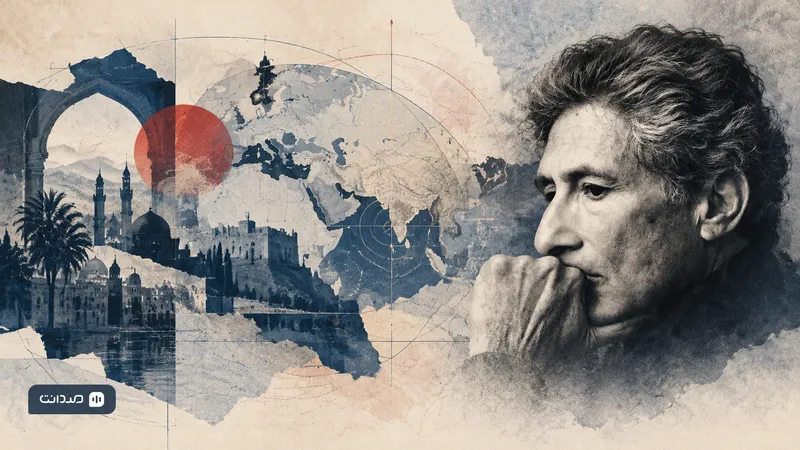
In Orientalism, Edward Said demonstrated that knowledge about the East cannot be separated from relations of power and the history of colonialism. Examining the theoretical foundations of his argument and the criticisms it has attracted, this article explains why rethinking the project of Orientalism remains essential, as does attending to people’s lived experiences, cultural heterogeneity, and critical awareness.
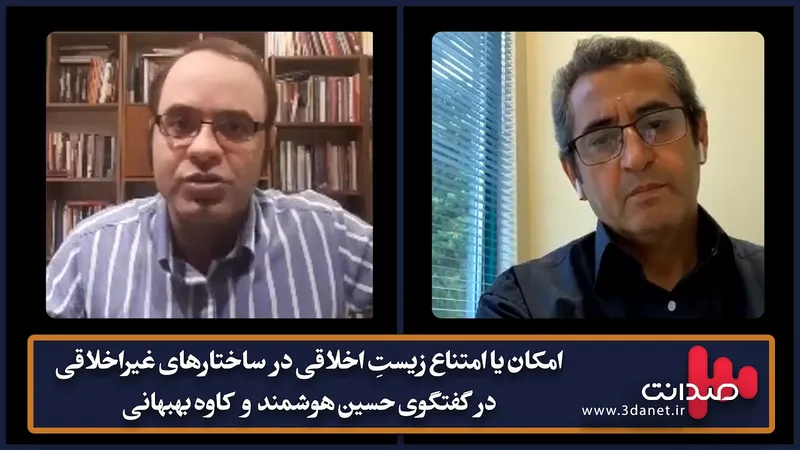
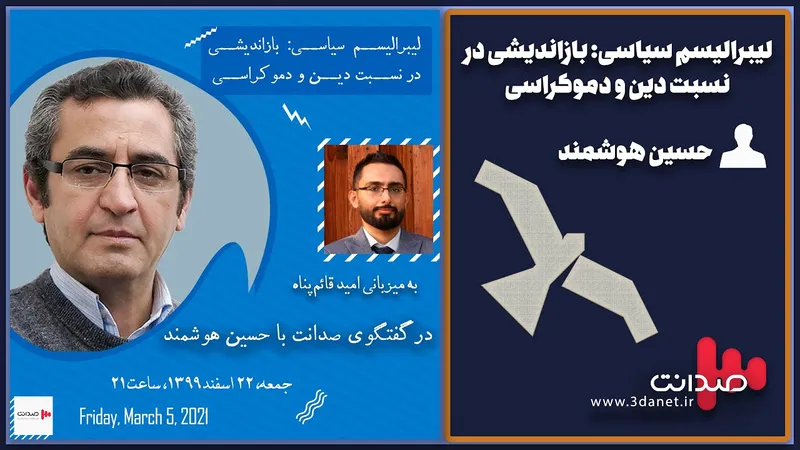
Hossein Houshmand
نویسنده
Edward Said
اندیشمند مورد بررسیAbstract
In his book «Orientalism» (1978), Edward Said did not regard the project of Orientalism merely as an error or prejudice in the work of a few scholars. He saw it as part of a structure that had aligned Western knowledge about the East with colonialism and Western domination. Scholarly language, concepts, academic institutions and colonial experience had produced an image of the "Orient" that was at the same time the West's image of itself. This radical critique has acquired a new importance today. In Islamophobia in the West, in the legitimating narratives of war in many dominant media outlets, in the think-tank projects of American hawks concerning the war of America and Israel against Iran, and in the covering-up of the genocide in Gaza, the same representations and the same link between knowledge and power have been set in motion once again. This essay first clarifies the foundations of Said's theory: the three meanings of Orientalism, representation, discourse, and the distinction between manifest and latent Orientalism. It then weighs the criticisms of that theory: the homogenization of heterogeneous traditions, the sweeping breadth of the concept of discourse, the problem of truth, and the danger of reproducing the binary of East and West. These criticisms do not destroy the critical core of Said's work; and because the link between Orientalism and domination is still alive, a fundamental reconsideration of the project of Orientalism becomes necessary. In the new preface to his book in 2003, Said himself touched on some aspects of this reconsideration: attention to the concrete experience of people, critical consciousness, humanism, the heterogeneity of cultures, and opposition to the "clash" of civilizations.
Nearly half a century has passed since the publication of Edward Said's «Orientalism», and the question this book raised can still be heard in our everyday debates about Islam, the Middle East and our relationship with the West. The book's importance lay not only in its answers; it also changed the kind of questions asked in this field. That Europeans had for centuries fashioned contemptuous images of Muslims, Arabs and the peoples of Asia was known before Said, and there were already debates under way about the link between knowledge and colonialism. Said set these side by side within a broader framework. For him the issue was not merely that some writer had offered a false picture of the East; he wanted to show how novels, linguistic and historical scholarship, academic institutions, political rhetoric and colonial experience had, over time, built a system of representation in which the "Orient" became an object of knowledge, classification, judgment and control.
From here his argument moves beyond the critique of individual prejudice. If we were dealing only with the errors of this or that writer, the remedy would be clear: we would replace false information with correct information and set personal bias aside in research. But Said asks whether scholarly language itself, the concepts we use, the boundaries of academic disciplines, the authority of the expert and the historical relationship of the researcher to the object of research are not also implicated in the shaping of knowledge. Can a piece of scholarship be full of accurate information and yet define a people through a handful of fixed attributes? And if such an image is produced in a society that holds political and military power, will its effect remain confined to the university? Every time a media outlet speaks of "the Muslim mind" or "the Iranian temperament," these same questions arise again.
After Said, literary studies, history, anthropology and Middle Eastern studies could no longer treat knowledge as a realm separate from power, and they paid growing attention to the position of the researcher, the language of representation and the historical conditions under which knowledge is produced. But the very breadth that gave his theory its power also became the source of many criticisms. If the literary text, linguistic scholarship, colonial policy and popular culture all come under a single concept, the important differences among them are lost. If Orientalism is a discourse spanning several centuries, where are we to place the diversity of countries, periods and scholars? And if knowledge is intertwined with power, what remains of truth and valid knowledge? So the debate cannot be reduced to a choice between Said and his critics. In this essay I try first to clarify the inner logic of his theory, then to weigh its serious criticisms, and finally to show what in this project still matters and can and should be carried forward.
The Three Meanings of Orientalism
Said does not use Orientalism in a single sense. At the start of the book he offers three definitions, each of which reveals a layer of the problem and which disclose the book's logic only in connection with one another. The first is the familiar academic meaning: anyone who teaches the Orient, writes about it or researches it, whether an anthropologist or a sociologist, a historian or a philological scholar, is an Orientalist, and what he or she does is Orientalism.1 Professional Orientalists have leaned most heavily on this meaning, and the sharp reaction of many of them to Said stems from the worry that scholarly research is being equated with colonialism or political propaganda. Said, however, does not treat academic activity as the end point of the definition, and asks what mental division of the world gives coherence to this vast field.
The second definition answers precisely this question. Orientalism is a style of thought founded on a fundamental distinction between the "Orient" and the "Occident." Poet and novelist, philosopher and political theorist, economist and agent of empire can all take this distinction as the starting point for their theories, epics, novels and reports about the East and its people, customs, mind and life. In this sense Orientalism is no longer the name of a discipline; it is a way of expressing difference. "East" and "West" cease to be two geographical directions and become two sets of human and cultural traits: an East that is irrational, passive, sensual and static, or in need of guidance; a West that is rational, active, historical and capable of governing itself. What matters to Said is not merely whether these attributes are favorable or unfavorable; it is the conversion of countless historical and social differences into a confrontation between two overarching essences.
This definition has another consequence that receives less attention: the representation of the East is at the same time a representation of the West. If the East is the "Other," the West builds itself in distinction from this Other. A society that presents the Other as irrational or static has, in that very moment, defined itself as rational and dynamic. In this view the East is not merely an object of knowledge; it is a component of the West's cultural and historical self-understanding.
The third definition ties these two levels to material relations of power. Taking the late eighteenth century as a rough starting point, Said describes Orientalism as a corporate institution for dealing with the Orient, one that operates by making statements about it, authorizing views of it, describing it, teaching it, settling it and ruling over it; in short, a Western style for dominating the Orient and exercising authority over it.2 As European colonial power expanded, knowledge of the East came to be lodged in a network of universities, governments, military missions and journeys. The Orient is studied and known, and this very knowledge can increase the capacity to manage and dominate it. Said does not say that every specialist in Eastern languages or history is a colonialist; he says that the academic discipline of Orientalism, the more general style of thinking about the East, and the historical relations of power have not been entirely separate from one another. Concepts forged in specialist knowledge find their way into popular culture and politics, and political conditions also shape the choice of research problems. If we sever these three definitions from one another, most of his ideas and much of the strength of his argument is lost.
The concept of "representation" gains its importance from this point. Said opposes the notion that a scholarly or literary text is a neutral mirror held up to external reality. Representation always takes place through language: out of the vast reality before him, the writer selects certain things, places them in classifications and explains them with particular concepts and distinctions. This does not in itself mean that representation is false, but it opens a gap between the world and its description, and that gap is itself the object of critique. Said's question is what is brought to the fore in this formulation and what is left out. When very different societies are gathered under the heading of the "Oriental mind" or the "Arab temperament," representation moves from describing a specific phenomenon to judging the nature of a people, and knowledge is drawn from reporting concrete facts toward constructing a cultural "type."
To explain this process, Said draws on Michel Foucault's concept of discourse: a system of concepts and rules that determines what statements are acceptable, who has the right to speak, and which questions acquire scholarly value. Power in this sense is not only the power of the state. An academic title, familiarity with a language, membership in a specialized discipline and the backing of a reputable institution also give the researcher's words an authority an ordinary person lacks. This is not illegitimate in itself, since specialized knowledge is impossible without criteria of competence. Said's critique concerns the conversion of this limited scholarly authority into a sweeping authority, the authority to speak about the nature, mind and destiny of a society. When a great deal of research stresses a society's stasis, fanaticism, lack of rationality or political incapacity, these attributes pass from statements about particular cases into part of the general conception of that society; and from then on political discourse can refer to this same language, putting to political use an image that has already gained scholarly credibility.
From Napoleon to Today
Napoleon's expedition to Egypt holds a special place in Said's account because it shows knowledge and power openly side by side. The expedition was not merely the work of soldiers; scholars and specialists accompanied it and gathered a wealth of information on Egypt's geography, history, antiquities, language and society. This knowledge was neither worthless nor necessarily false. Said's point is that, under conditions of occupation, the same knowledge was converted into the capacity to administer and control the society under study. This is an instance of modern Orientalism: the West takes its seat as the subject that sees, classifies and explains, while the East becomes the object of observation and description. Military power makes presence and the gathering of knowledge possible, and knowledge yields a more precise understanding of the dominated territory; and when the expedition ends or the form of power changes, the texts and classifications left behind are reproduced in universities and intellectual traditions.
Said shows how this tradition became institutionalized and took root in European universities. The important point is not merely the racism of a few nineteenth-century thinkers such as Ernest Renan and Count Gobineau; by virtue of their intellectual standing they became part of a tradition with which later works had inevitably to clarify their relation. Said speaks of a "great and powerful library" from which even rebellious writers do not easily remain outside.3 Discourse in this sense is not a set of explicit commands; it is an inheritance of concepts, questions and intellectual authorities within which later scholars begin their work. This is where the analysis of discourse differs from a conspiracy theory: the writers need not be members of a conscious program of domination. An epistemic tradition can reproduce its presuppositions without any conscious coordination. A scholar who simply does his specialized work, for instance, will, if the concepts already at his disposal have made the East unitary, fixed and opposed to the West, go on extending that same boundary without intending to.
To explain this continuity, Said distinguishes between "manifest Orientalism" and "latent Orientalism." Latent Orientalism is a kind of almost unconscious and untouched certainty, while manifest Orientalism comprises the various explicit views about the society, language, literature and history of the East.4 At the manifest level, theories and judgments change; scholars disagree with one another about Islam, the Arabic language or Ottoman history, and there is plenty of dispute, change and rupture. Said's claim is that beneath these differences a set of deeper certainties about the fundamental nature of the East remains, and, in the words of one of his interpreters, racism, ethnocentrism and sexism are important components of this layer.5 The advantage of this distinction is clear: it explains why, once the explicit language of colonialism or outdated racist theories has been set aside, certain images of the East persist. No scholar needs to say outright that the peoples of the East are racially inferior for the East still to be imagined as inherently static, irrational and in need of guidance. A change in manifest vocabulary is not yet a change in the deep structure of representation.
Yet this very concept later became one of the fundamental criticisms against Said. If latent Orientalism is defined too broadly, it becomes difficult to identify which text is really under its influence. When its attributes are assumed to be sweeping and fixed, how is one to show that a given text conforms to this structure? This objection goes to the heart of Said's methodology, since a theory that aims to expose a hidden continuity must also supply criteria for recognizing its absence or rupture.
Be that as it may, Said does not confine Orientalist discourse to the era of classical colonialism. After the Second World War, as the colonial role of Britain and France declined and the power of the United States grew, its classical form was transformed, and he speaks of a shift "from an academic to an instrumental attitude."6 Knowledge of the Middle East became ever more tied to foreign policy, security and resources, and the expert's analysis could be put to use directly in the media, in think tanks or in policy-making bodies. Orientalism, then, is for him no relic of a colonial past: the institutional forms change, but the relation between knowledge and power remains, and the discussion reaches the way Islam and the Middle East are represented in public and political language, the same language whose trace can still be followed in news coverage of the region's wars and crises. Even so, one should not say that every Middle East expert is a direct agent of government policy. For a researcher to have an effect, he need not be a policy-maker himself; specialized terms and classifications can frame public debate and later be put to use in other contexts.
This brings us to the question of competence or authority. Who has the right to speak about the East? Are the people under study merely objects of research, or do they also have a share in determining the meaning of their own experience? Said protests against a structure in which Western expertise becomes the exclusive right to interpret the Other; this is not a rejection of expertise, but a protest against an expertise that invalidates rival views or the experience of the very people being studied.
From this standpoint, the making of the "East" is bound up with the making of the "West." For Said, the West is not a pre-given and unchanging identity that then confronts the East; part of its historical meaning is formed in this very encounter. If the East is irrational, the West takes the place of rationality; if the East is static, the West is historical and dynamic; if the East needs to be administered and controlled, the West is fit to govern. The representation of the other is always also part of the representation of the self. Said's question can be asked about any situation in which a more powerful group makes another the object of knowledge and definition. But one must be cautious about how far this point generalizes. If the concept of Orientalism is taken so broadly as to encompass every Western description of non-Western societies, it becomes impossible to distinguish among careful scholarship, prejudice, political propaganda and imaginative literature. The criticisms leveled at Said's theory in the following decades begin from this point.
Criticisms of Said's «Orientalism»
The first criticism concerns Said's historiography. Can the very different traditions of Orientalism be fitted into a single narrative? French and British Orientalism, studies of India, China and the Middle East, linguistic scholarship and the work of colonial administrations do not necessarily follow one logic. David Kopf shows that British Orientalism in India in the early nineteenth century was not merely a carrier of Eurocentrism but also played a part in the reconstruction of Hinduism and the emergence of Indian national consciousness,7 and Daniel Varisco reminds us that Gandhi, in his resistance to colonial rule, drew on the achievements of some Orientalists.8 The problem is not only historical: if all these cases are placed in advance under a single discourse, the theory becomes immune to criticism by counterexample. According to Said's theory, the scholar who serves the colonial state is trapped in the bond between Orientalism and power, but the anticolonial scholar too can be called caught in latent Orientalism. A theory that behaves in this way loses its explanatory power.
The second criticism concerns the scope of the concept of "discourse." According to Varisco, Said's theory at times becomes so all-embracing that the individuality of texts and authors is lost.9 Said himself also insists on the close reading of individual works, yet the tension remains: if each text must be read on the basis of its own features, then in every case one must show what relation that text has to the overarching discourse; and if discourse has determined everything in advance, reading texts will amount to nothing more than finding examples for the theory. The same problem appears in the distinction between the "good Orientalist" and the "bad Orientalist." If the criterion of membership in Orientalism is so loose, how are we to explain the scholarship that has distanced itself from clichés? In his later writings Said cites several such cases, people like Clifford Geertz, Jacques Berque and Maxime Rodinson, who, thanks to the specificity of their work and their self-awareness about method and presuppositions, distance themselves from certain dogmatic tenets of Orientalism.10 Thus, in Said's own view, discourse is not a prison from which there is no escape.
The third criticism concerns truth and representation. If all knowledge is representation, and representation is always bound up with power and historical position, can we still separate correct representation from incorrect? Michael Richardson argues that if the "Orient" is regarded as a purely imaginary construct, the truths that Orientalists have discovered about it also become suspect.11 This objection is among the most serious challenges to certain readings of Said. Whoever deems a representation distorting has necessarily assumed that it can be measured against something outside itself, namely evidence and real experience. If there is no standard other than discourse, talk of distortion also becomes meaningless. Theories influence the selection of facts, and facts never "speak for themselves" with complete neutrality, but more careful research, critical argument and better-considered methods can reduce bias and misinformation. The critique of absolute neutrality does not lead to a denial of the epistemic value of research.
The fourth criticism, and perhaps the most important, is that a project that sets out to break the binary of East and West may reproduce it anew. Sadik Jalal al-Azm brought this danger to the fore in his discussion of "Orientalism in reverse": if the West in Said's theory becomes a unitary and perpetually dominating totality, the critique of Orientalism can apply the same essentialist structure, this time against the West.12 This objection is not merely a defense of the West against Said; it goes to the coherence of the project itself. If essentialism is wrong, it cannot be criticized only when its object is the East. One must show why totalities such as "East" and "West" become problematic when they take the place of specific histories and internal differences.
Even so, Said cannot be dismissed merely by pointing to such criticisms and historical errors. The question he raised still stands: are academic expertise and scholarly language always independent of historical presuppositions and political consequences? If not, the main issue is no longer to prove a hidden political program in the minds of all Orientalists, but to examine more closely the ways in which scholarly concepts and methods affect public and political conceptions of societies.
The Necessity of Reconsidering the Project of Orientalism
The fundamental question now is whether research on the Middle East can be entirely detached from its political context. The answer is neither the wholesale acceptance of Said's analysis nor a return to the simple defense of the neutrality of Orientalism. Said's analysis tends to reduce the presuppositions of Orientalism wholesale to negative judgments about the peoples of the region and ultimately to relations of power; some defenders of Orientalism, for their part, separate its specialized knowledge from any political consequence and regard obvious instances of racism or politicization as lying outside the discipline's central core. The more precise path is to examine the presuppositions themselves, one by one, before passing judgment, and then to ask whether and how they lead to bias or political consequence. This approach moves critique from judgments about the intentions of individuals to the level of research method.
A few examples below clarify this problem. One of the old philological presuppositions might be called "etymology as destiny": the point is that the original meaning of a word is so foregrounded that it seems to have fixed its "true" meaning forever, while the layers added by centuries of historical usage are treated as secondary. This method does not necessarily lead to a negative judgment about Arabs or Muslims, and not every philological concern can be counted as the kind of Orientalism Said had in mind. But it can create a particular authority for the specialist, since the researcher, by virtue of knowing a word's root, supposes he understands the meaning of a contemporary speaker's words better than the speaker himself. The issue here is not "latent racism"; it is rather a particular conception of the relation between text and history on the one hand and the living speaker on the other.
The second example concerns how historical change is understood. In part of the classical scholarship on Islamic societies, the earliest periods become the measure of authenticity, and later developments are treated mostly as decline. In the study of Islamic jurisprudence, for instance, an exclusive focus on classical texts can hide contemporary legal life from view: a scholar may know a great deal about the historical formation of sharia and fiqh and never have seen a present-day courtroom. This is not exactly the colonial domination Said describes; it may be the product of a discipline's habits and of the primacy of the text over the history of societies. Even so, it yields a picture of those societies in which change, innovation and lived experience are faint.
Another assumption is the notion that "the facts speak for themselves." But a mass of information does not remove the problem of selecting and organizing it: the researcher always decides what to record and under which categories to place the data. This is Said's own insight, though with greater caution: from the mediating role of language and theory one cannot conclude that reality is unattainable; what is needed is a critique of the method itself, its concepts and its assumptions. The problem becomes more visible in the way some specialists treat Islamic texts, as though they knew the correct interpretation better than believers do. This signals a methodological problem, namely the relation between textual expertise and the experience of the people for whom those texts are part of a living tradition. Studying a text historically without conversing with today's Arabs, Iranians and Turks is justified on many subjects. But when the subject is the life and meaning of that very tradition, setting aside people's lived experience does more than narrow the scope of knowledge; it leads the method toward a misunderstanding of that living reality itself, because it reduces the living meaning of the tradition to the meaning of the text in the past.
So far, the conclusion can be stated in two judgments. Orientalists produced a great deal of precise information, and its value cannot be ignored; and the methods of any scholarly tradition have limits that must be examined. Said, too, may have erred or exaggerated in particular judgments, yet his method of examining discourse in relation to the historical conditions of its production has its own validity. This means neither accepting Orientalism wholesale nor rejecting it wholesale. The questions about context, assumptions and method must remain, but we should not presume in advance that the answer is always the same and always ends in proof of Western domination. Instead of treating every error as evidence of a discourse of domination, we can show why a given method is limited; and instead of treating every scholarly achievement as a defense against Said, we can accept that accurate information may also be selected within frameworks that are open to criticism.
Revisiting the Orientalist project is not confined to this methodological critique, because Said's later writings, especially the preface to the 2003 edition, show that he too did not want his book to become a defense of the opposition between two cultural totalities, East and West. This gained importance in an era when, after the Cold War, the Gulf War and above all September 11, oppositional images of Islam and the West had intensified again. Said states explicitly that his aim in writing on Orientalism was not to perpetuate "hostility between two rival, unified political and cultural blocs," but to reduce the effect of discourses that reproduce such oppositions.13 His alternative may be called, above all, "critical consciousness": the Orientalist, the intellectual and any scholar who speaks about another society must also put in question his own authority and the tradition on which he draws. Hence Said's goal is not to abandon scholarship and expertise; it is to resist the conversion of scholarly authority into an authority immune to critique. In the preface to the 2003 edition, Said sees the task of scholarship and critique as dismantling "reductive formulae" and that "abstract yet powerful" way of thinking which draws the mind away from "history and concrete human experience" and leads it toward "ideological fiction, metaphysical opposition and collective passion."14 What is problematic in Orientalism is not difference or classification as such; it is that classification takes the place of history and concrete experience, and the "Orient" becomes an abstract entity whose way of thinking and acting we already know in advance.
Said knows that eliminating boundaries altogether is impossible; if "us and them" is removed, other distinctions, such as North and South or privileged and deprived, will emerge. The issue is how distinctions are used: do they remain analytical tools open to revision, or do they harden into absolute and hostile identities? Against any theory that speaks of a "clash of civilizations," the humanism of the late Said gains importance, because it turns attention from abstract totalities back to people living in specific histories: the people of the Middle East are not merely "the Orient," just as the people of Europe and America are not a single, unchanging "West." Cultures, too, are hybrid and heterogeneous, so intertwined that neither a unified description of them nor a simple boundary between them is possible;15 they have borrowed from one another, and none has taken shape in isolation. This is why Said sets the "manufactured clash of civilizations" against the "slow working together of cultures" that overlap and can live side by side peacefully in ways far more complex than simple civilizational conceptions allow.
Putting these critiques and Said's responses side by side makes a revision of the Orientalist project itself necessary. The assumptions of Orientalist scholarship must be assessed in specific disciplines and subjects, since one cannot accept in advance that all of them are products or instruments of domination. A method may be both valuable and seriously limited; a scholar may fall into cliché on one subject and do precise work on another; and an academic assumption may, without any political motive, acquire political consequences in the public sphere. A highly general theory loses these distinctions. Such an assessment also needs a standard outside discourse: evidence, the lived experience of the people who are the subject of study, and methods that keep the possibility of discovering error open. Rigorous scholarship alone does not remove every harm, but it can reduce bias and misinformation. What should remain of Said's project is its critical core; what should be set aside is the presumption that every Orientalist text is in advance an instance of the discourse of domination and that the scholar's only task is to find its marks in the text.
In this sense, Said's critique of Orientalism remains unfinished. He brought the right question to the humanities with unprecedented force: how is knowledge about the Other constructed, and how does it relate to authority? His answer, however, was at times too sweeping, fitting differences among scholarly methods, intellectual assumptions, political motives and historical consequences into a single mold. To continue his project is not to abandon this question but to sharpen it. At a time when the media and political discourse still readily imagine the "East" and the "West" as two hostile and homogeneous totalities, it is this lesson of the late Said that serves the present more than any other part of his book: resisting reductive formulae, returning to people's concrete experience, and understanding cultures in their complexity, heterogeneity and historical interconnection.
This lesson today is not confined to the university. In "Orientalism," Said had shown that Islam was for Europe a "lasting trauma" and that in the Western imagination it became linked with terror, devastation and barbarism.16 Islamophobia in the West today, which defines Muslims through a few fixed attributes, continues this same tradition. Many dominant Western media outlets, in the war of America and Israel against Iran, construct a narrative that legitimizes the war and justifies the killing of civilians, and they paint a picture of Gaza that turns its people into a "dehumanized Other" and covers up genocide; and warmongering think-tank projects give such narratives a "scientific" backing. This is the very link between knowledge, representation and power that Said examined. In this respect his critique is still alive, and this very situation makes a fundamental revision of the Orientalist project necessary: a careful examination of the assumptions of Orientalists and scholars of the Middle East, and asking which images and which policies these assumptions open the door to. The result of such a revision may be called critical Orientalism: scholarship that retains precise linguistic and textual knowledge but puts its own authority and assumptions in question, does not imagine the "Orient" as a fixed entity detached from history, and engages in dialogue with the experience of the people about whom it writes. Said himself, in the 2003 preface, had shown the direction of this revision: humanism and critical consciousness against the "clash" of civilizations.
Notes
1. Edward W. Said, Orientalism, 25th Anniversary ed. (New York: Vintage Books, 2003), 2.
2. Said, Orientalism, 3.
3. Said, Orientalism, 157.
4. Said, Orientalism, 354–355.
5. Daniel Martin Varisco, Reading Orientalism: Said and the Unsaid (Seattle: University of Washington Press, 2007), 57–58.
6. Said, Orientalism, 246.
7. A. L. Macfie, ed., Orientalism: A Reader (Edinburgh: Edinburgh University Press, 2000), 194.
8. Varisco, Reading Orientalism, 152.
9. Varisco, Reading Orientalism, 45–46.
10. Said, Orientalism, 326.
11. Michael Richardson, “Enough Said: Reflections on Orientalism,” in Macfie, Orientalism: A Reader, 211.
12. Sadik Jalal al-Azm, “Orientalism and Orientalism in Reverse,” in Macfie, Orientalism: A Reader, 217, 231.
13. Said, Orientalism, 334–335.
14. Said, Orientalism, xxiii.
15. Said, Orientalism, 347.
16. Said, Orientalism, 59–60.


Discussion0 comments
No comments yet; let yours be the first voice.