Political Science
Politics in Dark Times: John Rawls and the Possibility of Reasonable Hope
Can we still hope for justice in an age when war, inequality and distrust have dimmed the public sphere? Drawing on Hannah Arendt, this essay probes what "dark times" means, describes the darkness of the world and of Iran today without euphemism, and asks what John Rawls's political philosophy, through "reasonable hope," offers us beyond mere consolation. The answer is neither reckless optimism nor reckless despair.


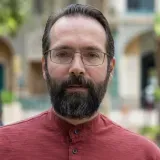
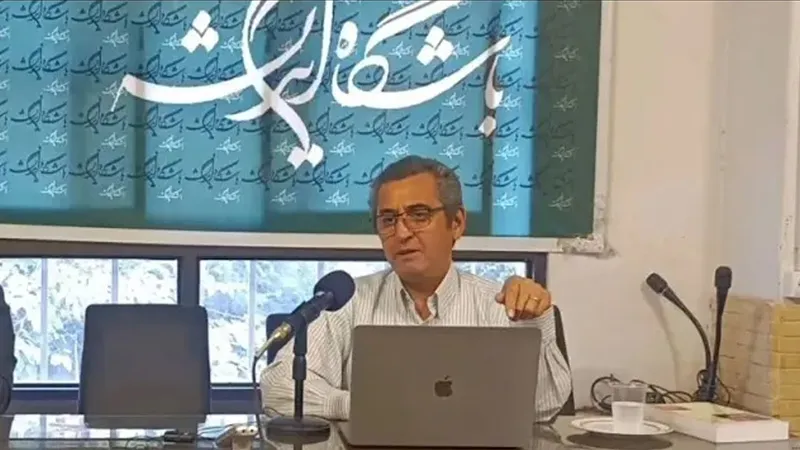
Hossein Houshmand
سخنران
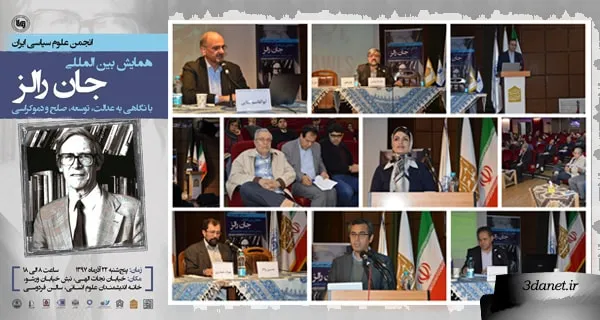
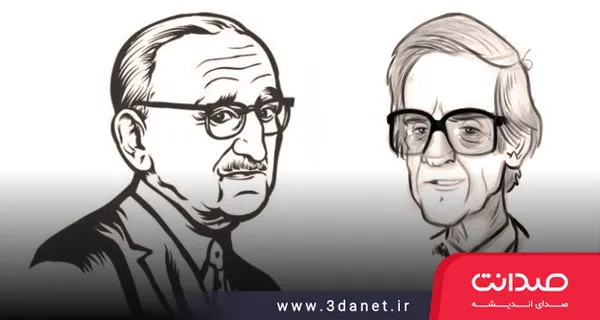
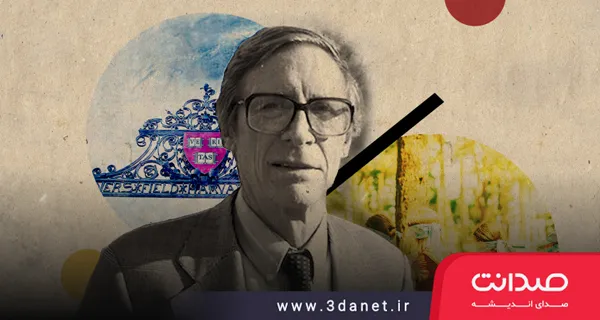
John Rawls
اندیشمند مورد بررسیPolitics in Dark Times: John Rawls and the Possibility of Reasonable Hope*
There is a question that many of us, and young people in particular, perhaps more than any generation in Iran's recent history, live with every day: is there any hope? Does the struggle for justice, for building a better society, mean anything at all? Or must we accept that power always triumphs over right, and that the wisest course is for everyone to look after themselves, or, if they can, to leave?
There is no easy answer to this question. Easy answers, whether optimistic or pessimistic, are seductive. In this essay I examine three questions. First, with the help of a philosopher who herself lived through the darkest years of the twentieth century, Hannah Arendt, what "dark times" means. Second, what the darknesses of our own time are, as we experience them every day. And third, whether John Rawls's political philosophy can offer something more than consolation in this darkness: what Rawls calls "reasonable hope."
Hannah Arendt and Politics in Dark Times
Hannah Arendt (Hannah Arendt) was a German-born Jewish political philosopher. After the Nazis came to power she fled Germany, was held for a time in a camp in France, and finally found refuge in America. She devoted much of her intellectual life to understanding how something like totalitarianism became possible. In 1968 she published a book titled Men in Dark Times (Men in Dark Times), taking the phrase "dark times" from a poem by Bertolt Brecht (Bertolt Brecht), written in exile on the eve of the Second World War and addressed to posterity:
Truly, I live in dark times!
Only foolish talk is harmless now.
A smooth brow betokens a hard heart,
and the one who laughs has simply not yet heard the terrible news.
What kind of age is this, in which
to speak of trees is almost a crime
when we are silent about so much horror!
The one who calmly crosses the street is guilty...۱
The important point is that by "darkness" Arendt does not simply mean war and catastrophe. For her, politics is a public realm in which human beings appear before one another, speak with one another and act in concert; and the function of this realm is to illuminate human affairs, a place where one can see what is happening, who is doing what and who is saying what. Dark times are times when this light begins to fade: when speech, instead of disclosing reality, conceals it; when the secrecy of power and hollow exhortations take the place of free conversation; and when people retreat from the public realm into their private lives. Jürgen Habermas, too, in The Structural Transformation of the Public Sphere, speaks of the decline of the public sphere: a process in which the critical debate of citizens gives way to a public opinion manufactured by the media and advertising, and the public sphere is, in his phrase, "refeudalized." In this sense, a dark time is not merely a time of war; it is a time of distrust, silence and withdrawal.
At the same time, Arendt says that even in the darkest times we have the right to expect some illumination, and that this illumination comes less from theories and more from the uncertain, flickering and often feeble light that some men and women kindle in their lives and work. Two other ideas of hers matter to us as well. The first is "natality": as Arendt puts it, every human being born into the world brings a new beginning with them. This very capacity to begin, to do something that could not have been predicted in advance, is the wellspring of political action; for political action is nothing other than beginning something new in the common world. And for this reason history is never wholly predetermined: no situation, however dark, is an inescapable fate, because human beings can always set a new beginning in motion. The other idea is "plurality": politics arises from the fact that we human beings think differently and must nonetheless live side by side in a shared world and build it together. A politics that tries to abolish these differences is no longer politics; it is domination.
Arendt also offers a warning that is deeply instructive for us. She says we must resist two temptations: reckless optimism and reckless despair. They seem opposed, but they are in fact two sides of the same coin, because both release us from responsibility. The person who is sure everything will turn out well on its own and the person who is sure nothing will ever turn out well both arrive at the same conclusion: there is no need for me to do anything. The optimist stays passive because he thinks history will bring things to a good end by itself; the pessimist stays passive because he thinks every effort is futile. In both cases, judgment about what ought to be done and the acceptance of responsibility for it are set aside, and politics, which for Arendt is the realm of action and responsibility, is emptied of meaning.
The Darkness of Our Time
From this vantage point we can look at our own time. The aim is not to remain in the darkness but to find a way out of it toward light and hope; yet to find that way, we must first recognize the darkness and describe it without euphemism.
Globally, young people everywhere face shared experiences. First, vast inequalities, the product of several decades of neoliberal economic policy, in which education, health care and housing have become goods attainable only with more money, and a generation that, even in the richest countries, is not sure it can live as well as its parents did. Second, technofeudalism, which in Yanis Varoufakis's (Yanis Varoufakis) account means the end of capitalism: digital fiefdoms in place of markets, cloud rent in place of profit, and users who have become "cloud serfs" (cloud serfs), along with the fear that artificial intelligence will take their jobs. Third, democratic backsliding, which has reduced democracy to a performance: elections are held, but independent institutions, from courts to the media and universities, come under pressure, opponents are branded enemies of the nation, and populist leaders present themselves as the sole voice of "the real people." Even in the United States, which long regarded itself as the model of liberal democracy, many observers have spoken of tendencies during the Trump era that recall fascism: a cult of personality, disregard for election results and the rule of law, the demonization of immigrants and opponents, and pressure on the media and universities. And finally, endless wars, from the genocide in Gaza unfolding before the eyes of the world to the American and Israeli war against Iran, and the inability or unwillingness of international institutions to stop them. The result is a feeling that has spread among the world's young: that the global order rests on force and naked power, not on right, and that international law is only for the weak. In such a world, inequality is not merely economic; it also leads to a crisis of meaning. The logic of markets and platforms reduces human beings to consumers and users, measuring the worth of everything by its price and the worth of everyone by their wealth or their number of followers. The consequence is a sense of emptiness and the meaninglessness of life among many young people, and, in response, a retreat into instant gratification and self-absorption.
In Iran, these experiences have taken on a particular form and intensity. In less than two years, we, and young people especially, have seen two devastating wars at close range: thousands killed, including civilians and children, infrastructure destroyed, and the feeling that the country's skies may become unsafe again at any moment; and alongside this, the experience of sanctions, siege and humiliation. Inflation at its highest level in decades, unemployment among educated young people and unaffordable housing have produced what might be called a "suspended life": work, marriage and a home are all postponed, and what is lost is not only comfort but control over one's own life. This situation has domestic roots as well, namely an economy that relies on oil revenue and rents and does not distribute resources fairly, which sanctions and war have intensified.
The question of staying or leaving has become an everyday question for many families; there are perhaps few families from which no one has emigrated or is not thinking of emigrating, and even those who stay often regard staying not as a choice but as a necessity.
The distance felt between society and official institutions, and the sense that the voices of the people and of the young have no place in politics, have led to the very dimming or silencing of the public realm that Arendt spoke of. And a deeply plural society, religious and non-religious, with different ethnic identities and historical memories, inside the country and in diaspora, has arrived, rather than at dialogue, at polarization and mutual suspicion. Each group sees the other as the enemy, the belief has spread that the only solution is the total victory of one group over the others, and social media, which thrive on provoking anger and hatred, have deepened these rifts. This is precisely what Arendt feared: the loss of the "common world."
These experiences, for all their differences, share two things. First, a concentration of power that no principle of justice restrains: military power that sees itself as above the law, economic power that converts into political influence, and political power that evades accountability. And second, and perhaps more dangerous, a pessimism that rises out of all these experiences and tells us: nothing changes, so everyone must look after themselves. This pessimism leads to a practical self-centeredness, or "egoism": once hope for the common good is gone, the only thing that seems reasonable is to pursue one's own interest, and solidarity, trust and responsibility toward others give way to individual calculations of gain and loss. And a society whose members think only of themselves no longer has the capacity to solve any shared problem. This is the darkness of our time. And the central question is: against this pessimism, is there a hope that is not naive?
Rawls and Reasonable Hope
Arendt shows us what darkness is and where light comes from: from people who, in difficult circumstances, go on thinking and take responsibility. But a more fundamental question remains for thinking about politics: are just institutions possible at all? Can human beings, with all their fear, selfishness and distrust, build a society in which justice endures? Here we come to John Rawls. Arendt's flickering light is valuable but fragile and fleeting; Rawls asks whether this light can find a place in institutions and become effective and lasting.
John Rawls was born in America in 1921 and died in 2002. He spent his youth in the Second World War as an infantry soldier in the Pacific theater, and shortly after the atomic bombing he passed through devastated Hiroshima with his unit and saw its ruin with his own eyes. Yet after the war his lifelong companion was "hope." His book A Theory of Justice (1971) returned the question of justice to the center of political philosophy. Later, in Political Liberalism, he asked how a society whose citizens hold different religious and secular worldviews can be just and stable, and in The Law of Peoples he carried this question to relations among nations.
Rawls says that one of the most important tasks of political philosophy is to defend a "reasonable faith" in the real possibility of a just society. Why is such a defense necessary? Because he, like Arendt, had seen the catastrophes of the twentieth century. He asked: do the wars of this century and the evil of the Holocaust not show that political relations are inevitably founded on power and coercion? As Paul Weithman (Paul Weithman), one of Rawls's leading interpreters, puts it, these catastrophes provoke doubt about human nature itself: perhaps we are fundamentally not the kind of beings who can build and safeguard a just society.
Why is this doubt dangerous? Rawls saw an example of the danger in the despair of the intellectuals of the Weimar Republic, a republic whose failure opened the way for Hitler's rise. Weimar was Germany's first experiment in parliamentary democracy, founded in 1919 after Germany's defeat in the First World War and lasting until Hitler came to power in 1933; a democracy that collapsed under the pressure of economic crisis, runaway inflation and the humiliation of defeat. By his account, one reason for the fall of Weimar and Hitler's rise was that German intellectuals such as Martin Heidegger and Thomas Mann no longer believed a decent parliamentary system was possible; in their view, "its time had passed." Carl Schmitt's (Carl Schmitt) critique of parliamentary democracy, to which Rawls refers in the same place, was an example of this intellectual climate. Here there is a mechanism familiar from our own lives: once we believe others will not stay committed to justice, we ourselves have no motive to observe it. If I am sure everyone cheats, why shouldn't I? In this way pessimism fulfills itself: the less we believe in the possibility of justice, the more injustice grows, and the more injustice grows, the more reason we find for pessimism. Hope, then, from this perspective, is not an individual feeling; it is a political fact.
But Rawls does not ask us to hope naively and without grounds. He speaks of a "realistic utopia": a picture of a society that, in his own words, "can exist and perhaps someday will"; a society compatible with human beings as they are, not with angels, yet one that extends the limits of what we ordinarily consider "possible." Rawls says the limits of the possible are not determined by what presently exists, since institutions are made by human beings and can be changed. Imagine living in the eighteenth century, when slavery was legal and commonplace and many said the economy could not function without it. A society without slavery would then have seemed unrealistic; yet the hope of the abolitionists, as we now know, was a reasonable hope.
The most important point is this: reasonable hope is not the same as probable hope. We are not meant to hope only for things whose realization is highly likely. Hope, in the Rawlsian sense, is reasonable when it meets three conditions. First, it must not be inconsistent with what we know about the world and human beings; that is, the available evidence must not show it to be impossible, even if it does not guarantee its realization. Second, it must not conflict with our aims and plan of life and, as happens in fantasy, cut us off from our real lives. And third, we must be able to share it openly with others and defend it before them; that is, it must not be a hope that serves only one group, but one that regards others as fellow citizens of equal standing and makes us more open to hearing their demands for justice. Reasonable hope is not a prediction of the future; it is our orientation in the present.
It should be made clear what reasonable hope is not. Reasonable hope is not optimism, because it does not deny reality and sees the darkness as it is. Nor is it a utopian dream, because it does not imagine a society of flawless human beings, but one of people like ourselves, with all our shortcomings. And it is not waiting for a savior, because it looks not to a sudden event or a singular hero, but hopes in institutions that human beings build and reform. Reasonable hope can be compared to a compass: it does not tell us where to place each step, but it shows the direction, and without it any movement may bring us, after much effort, back to the very point from which we began, or even carry us farther from our destination.
And this hope has a psychological foundation too. In A Theory of Justice, Rawls shows that a just society does not need heroism and self-sacrifice to remain stable. Ordinary people, if they grow up in just institutions, gradually develop a "sense of justice": the child first accepts rules out of love for and trust in the parents, then, in cooperating with others and seeing that others also do their part, learns fairness, and finally internalizes the principles of justice for the sake of those principles themselves. So against the cycle of pessimism we spoke of earlier, a cycle of trust is also possible: the more just institutions are, the more citizens trust one another, and the more trust grows, the easier it becomes to sustain just institutions. Rawls's message is that we ordinary human beings, with the very nature we have, are capable of entering the cycle of trust.
This hope is, in a sense, "Enlightenment" itself. Kant, by whom both Arendt and Rawls were deeply influenced, understood enlightenment as humanity's emergence from a self-incurred immaturity, and made its condition the "public use of reason": that citizens speak with one another freely, openly and with reasons. Rawls elaborates this idea in the concept of "public reason": in a just society, political power, and also citizens' political beliefs, must rest on reasons that all citizens, with all their differences, can understand and accept. This is the very illumination of the public realm that Arendt feared would be extinguished.
Rays of Hope: Rawlsian Responses
First, one point must be recalled. Rawls never said in detail how one might move from an unjust present society to a just one. One reason was that this transition differs in every society and requires precise knowledge of that society's conditions. Its meaning for us is clear: applying Rawls's logic to today's world and to Iran is work we must do ourselves. What follows is sometimes Rawls's own word and sometimes an extension of the foundations of his political philosophy.
First, inequality and the suspended life. Here Rawls's answer is clearer than anywhere else. Neoliberalism takes the market to be the final arbiter and regards its outcome, whatever it is, as just or at least unavoidable. Rawls thinks exactly the opposite. In his view, the first subject of justice is the "basic structure" of society: the constitution, the system of property, the market, taxation and education. This structure shapes our lives from the day we are born, and no one has chosen their natural talents or the family they were born into, or earned them by merit; these are products of luck, not desert.
For such a structure Rawls proposes two principles of justice. The first principle says that every citizen must enjoy a fully adequate scheme of equal basic liberties, such as freedom of thought and conscience, freedom of expression and assembly, and the political and legal liberties guaranteed by the rule of law; and these liberties may not be sacrificed for the economic benefit or greater welfare of others. The second principle concerns social and economic inequalities and has two parts. The first is "fair equality of opportunity": those with the same talent and motivation must, regardless of the class and family into which they were born, have the same chance of attaining offices and positions, which is something more than formal equality before the law. The second is the "difference principle": economic inequalities are justified only if they work to the greatest benefit of the least advantaged members of society.
Most important of all, among everything a society must distribute among its citizens, Rawls regards the "social bases of self-respect" (or self-esteem) as the most important. He says the lack of long-term security and the lack of opportunities for meaningful work destroy not only people's respect for themselves but also their sense of being members of society rather than trapped within it. This is precisely a description of the "suspended life."
These principles have an institutional implication. It is commonly assumed that Rawls's theory of justice is a response to inequality in the form of the "welfare state," that is, a state that protects the casualties of the market through taxes, insurance and subsidies. But Rawls does not regard the welfare state as sufficient for realizing justice, because it allows wealth and capital to be concentrated in the hands of a few and helps only at the end of the process those who have fallen behind in market competition, which may produce a discouraged and dependent underclass. His alternative is a "property-owning democracy": the ownership of wealth and capital, as well as education and skills, should be widely distributed among the people from the outset, so that citizens are genuinely equal and all can manage the affairs of their own lives, which is a condition of self-respect. Rawls also regards a form of "liberal socialism" as compatible with justice, and leaves the choice between the two to the circumstances of each society; for him the decisive criterion is the dispersal of economic power and democratic control over it, not state ownership. This has a psychological dimension as well: an excessive desire for greater wealth and status often springs from insecurity and anxiety, and this anxiety, if it spreads through society, drives people to rewrite the rules in their own favor and to buy political power. Hence a property-owning democracy is not merely a plan for a fairer distribution; it is also a condition for the stability of a just society.
In a property-owning democracy, the ownership of the means and resources of production does not remain concentrated in the hands of a small minority, and workers, as owners or members of cooperatives, can oversee the capital and conditions of their own work. Serious limits on inheritance and gifts prevent vast fortunes from passing from one generation to the next, and public financing of elections, together with limits on the share of private wealth in electoral competition, preserves the real value of political liberties for all citizens. The aim of this system is not to maximize national wealth or average income but to improve the economic standing and political dignity of the most disadvantaged citizens; and because it rests on the principle that no one should benefit from collective effort without contributing to it, it calls citizens to take part in production and common life rather than making them passive recipients of state aid.
Our economy fits none of these models. The nearest description is a "rentier state": a state whose revenue comes from oil rather than from the taxes of its people, and which for that very reason is less answerable to them and ties access to opportunity to proximity to power. For us, the Rawlsian horizon is neither a return to a state-run economy nor abandoning society to a rentier market, but a real dispersal of ownership, broad investment in education and skills, transparency in public revenues, and the separation of wealth from political influence.
Second, technofeudalism and artificial intelligence. Rawls wrote nothing about platforms or artificial intelligence, but the foundations of his political philosophy speak directly to this very problem: the relation among ownership, power and equal liberty. If machines take over a large part of human labor, who owns this technology will determine whether we end up in a society of free and equal citizens or in a society of a few owners and a majority who depend on their aid and handouts to get by. Rawls's principle of the "fair value of the political liberties" takes on new significance here. Rawls means that equality in political liberties must not be merely formal: all citizens, regardless of wealth and social position, must have roughly equal chances to influence political decisions and to attain public office. This is why Rawls opposed the influence of wealth in elections and the media. Today the principle applies equally to companies that dominate public opinion through their algorithms. Here the model of property-owning democracy offers a fitting answer to technofeudalism. People's data, perhaps the most important source of capital and wealth today, is accumulated in the private ownership of a few companies, with no public oversight. The logic of property-owning democracy, namely dispersing the ownership of capital rather than concentrating it, steers this resource toward public ownership and democratic oversight; and for this reason it can be regarded as the most important Rawlsian alternative to technofeudalism.
Third, distrust, democratic backsliding and plurality. Here Rawls's political liberalism has the most to say. Rawls holds that the exercise of political power is legitimate only when it rests on principles that all citizens, as free and equal persons, can reasonably be expected to accept. And he holds that a free society is inevitably a plural society; this plurality is not the result of ignorance or ill will but the natural outcome of freedom of thought, and universal agreement on a single religion or a single secular philosophy can be maintained only through oppression. Rawls distinguishes between a "modus vivendi" and an "overlapping consensus." In a modus vivendi, groups tolerate one another only out of necessity, because they lack the strength to suppress each other, and wait for the balance of power to shift so that they can impose their creed on the rest. In an overlapping consensus, citizens with different worldviews each find, from within their own worldview, a reason to accept shared principles of justice, and toleration, fairness and readiness for reconciliation are counted as virtues and, in Rawls's phrase, as the "political capital" of society. In this language, what we see today in many societies around the world under the name of populism is a retreat from consensus to the logic of the modus vivendi: one group considers itself the sole representative of "the real people," places others outside the nation and brands opponents as enemies. Rawls's lesson is that democracy cannot be sustained by procedures alone, such as elections and majority rule; its political capital must also be cultivated, and this capital cannot endure without justice in the basic structure. "Procedural democracy" is necessary but not sufficient; a stable democracy also requires "substantive democracy," that is, equal rights and liberties, justice in the basic structure of society, and a political culture in which toleration and fairness are honored. Without this support, procedures can become instruments of majority domination.
For us, this means a third way between religious rule and militant secularism. Rawls's "public reason" does not mean that the religious citizen must set aside their religious identity; it means that on fundamental questions every person, religious or not, should try to justify their positions with reasons that others too can accept, and should not impose their doctrine on others through power. Islam need not become liberalism, nor liberalism Islamic theology; the question is whether different traditions can find, from within themselves, reasons to support shared principles of justice and basic rights.
Fourth, staying or leaving. To think about this question, the thought of Albert Hirschman (Albert Hirschman), economist and political theorist, is deeply illuminating. In his short and famous book Exit, Voice, and Loyalty (Exit, Voice, and Loyalty), Hirschman says that when a member of an organization, a firm or a country is dissatisfied with it, there are two main paths. One is "exit": leaving, like a customer who shops at a different store. The other is "voice," or protest: staying and trying to change things from within, by speaking, criticizing and participating. Exit is the logic of the market, and voice is the logic of politics. A third element, "loyalty," delays exit and gives voice a chance. Hirschman's profound point is that when exit is easy, those who leave first are usually the ones with the greatest ability and sensitivity, the very people who, had they stayed, would have had the most effective voice; and with their departure voice grows weaker and the chance of reform is lost. Conversely, when voice goes unheard, exit becomes the only option that seems real.
Rawls understands society as a "fair system of cooperation" among free and equal citizens, and to simplify his theory he assumes that we enter society at birth and leave it at death. Today this assumption seems simplistic, and what is raised here is more an extension of his logic. But there is a point in it that connects with Hirschman: a just society is one in which citizens feel they are members of it, not trapped within it. Loyalty cannot be built by decree; loyalty emerges when voice is heard, and voice is heard when institutions are just and accountable. So the answer to mass emigration is neither blaming those who have left nor closing the borders, but building a society in which staying and speaking out are meaningful. And reasonable hope, in this sense, is itself a kind of "voice."
And fifth, war. Rawls opens The Law of Peoples with the statement that the great evils of human history, namely unjust war, oppression, religious persecution, hunger and poverty, and genocide and mass murder, follow from political injustice. This statement, for all its bitterness, is hopeful: if these evils are rooted in political injustice and not in fate or an inescapable human nature, then by reducing political injustice we can reduce them. The principles of the Law of Peoples are clear: respect for the independence of peoples, non-intervention, the right of self-defense and no right to war for other purposes, respect for fundamental human rights, and the principle that civilians are never legitimate targets. By these standards, judgment about the genocide in Gaza and the American and Israeli war against Iran, and about attacks on schools, hospitals, homes and infrastructure anywhere in the world, is not difficult. And this judgment comes from within the liberal tradition itself.
Rawls also says that a nation whose citizens are content with their standing as free and equal citizens has no reason for aggressive war; but the humiliation of a nation can destroy the foundations of peace and democracy. A world order that condemns nations to humiliation and siege is therefore itself a source of war. At the same time, Rawls has a lesson for us too: national security and justice are not two separate matters. A nation whose citizens regard their political system as just and legitimate is more resilient against external threats. Rawls's logic gives us a language with which to defend Iran's right to security and independence without that defense leading to the denial of citizens' rights at home; in the Law of Peoples, non-intervention and respect for human rights stand side by side.
But Isn't All This Wishful Thinking?
It may be asked: all this is lovely, but what can a theory written for an ideal society do in the face of war, inflation and distrust? This is a serious objection, and Rawls's critics have raised it too. Rawls's answer lies in the distinction between two kinds of theory. Ideal theory shows the long-term goal; nonideal theory asks how, in the unjust world we now inhabit, we can move step by step toward that goal. Ideal theory does not replace nonideal theory, but without it we do not know which reform brings us closer to justice and which merely reproduces injustice in another form. This is the compass of reasonable hope.
It must of course be said in fairness that Rawls's framework has limitations too, among them the view of many critics that his theory of global justice leans too heavily on "peoples" as the principal units of justice and, in a world where great powers, financial markets and transnational corporations dominate the lives of billions, gives too little weight to global inequalities. The alternative of these critics, known as "cosmopolitans," is to extend the principles of justice, including the difference principle, to the whole world, so that distributive justice holds not only within borders but among all human beings. Rawls did not accept this approach, because he was concerned about imposing a single model on peoples with different cultures and traditions. Instead he emphasized the plurality of cultures and respect for non-liberal but "decent" political systems, societies whose reform should be gradual and come from within, not be imposed from outside. Rawls also proposed a "duty of assistance" to societies burdened by unfavorable conditions. Such limitations are no reason to set his theory aside; they call us to rethink and extend his thought.
Final Word: The Horizon of Reasonable Hope
Rawls ends The Law of Peoples with a startling question: if a reasonably just society were not possible, and human beings were for the most part pessimistic and self-centered, would it be worth it for human beings to live on earth at all? His answer is that we have no reason for such pessimism. History has shown that the political world is changeable and that what seems impossible today may become possible tomorrow.
The reasonable hope we learn from Rawls has three features. First, it is not hope in a savior or a sudden event; it is hope in institutions, in a society that can be reformed. Here Rawls adds an important concept to Arendt's view: the flickering light that courageous individuals kindle in dark times is precious, but to become effective and lasting it must find a place in institutions. Second, this hope demands responsibility of us. The lesson of Weimar is that the despair of elites and intellectuals has political consequences; and the lesson of Arendt is that both reckless optimism and reckless despair release us from responsibility. Reasonable hope is a third way: seeing reality without illusion, and yet not surrendering to it. And third, this hope is collective: a hope that can be shared with others, with all their differences; not one group's hope of victory over another, but hope for a society that all of us can regard as our common home.
Political science teaches us how power works, and the more we know about power, the stronger the temptation of pessimism grows. But political philosophy teaches us something else as well: that power can be restrained, that institutions are made by human beings and human beings can transform them, and that justice is not an unattainable dream but a real possibility worth striving for. And Arendt reminds us that every human being is a new beginning; history is not closed.
Rawls says that when our understanding of justice takes the form of a realistic utopia, our hope is no longer mere longing but becomes a reasonable hope. This is the light that can be kept burning in the heart of darkness.
Notes
* This essay is the written and edited version of a lecture delivered on 24 Aban 1405 (15 November 2026) to a gathering of political science students at Shiraz University.
۱ Brecht wrote the poem "To Those Born Later" during his years of exile, between 1934 and 1938, and published it in 1939 in the collection Svendborg Poems. The translation of the lines quoted in the text is by Ali Amini. The poem has three parts. The first, from which lines appear in the text, is a picture of an age in which obliviousness and indifference are the only road to ease: laughter means the terrible news has not yet arrived, and talk of the beauty of nature means silence in the face of injustice. The poet goes on in this same part to say that if he still has bread, it is by luck and not by merit, and that ancient wisdom we learn from books, namely withdrawing from the world's strife, avoiding violence and answering evil with good, is beyond him in such an age. In the second part, the poet speaks of his life in times of turmoil and hunger and of a lifetime spent in cities and among rebellious people; he saw the goal, but it was far away. The third part has a meaningful connection to our discussion: the poet asks those born later to judge his generation with forbearance, and is aware that the struggle against darkness may itself darken the one who struggles. Arendt, too, refers to this part in the preface to Men in Dark Times.
References
Arendt, Hannah. 1968. Men in Dark Times. New York: Harcourt, Brace & World.
Hirschman, Albert O. 1970. Exit, Voice, and Loyalty: Responses to Decline in Firms, Organizations, and States. Harvard University Press.
Rawls, John. 1971. A Theory of Justice. Harvard University Press.
Rawls, John. 1996. Political Liberalism. Columbia University Press.
Rawls, John. 1999. The Law of Peoples, with "The Idea of Public Reason Revisited." Harvard University Press.
Varoufakis, Yanis. 2023. Technofeudalism: What Killed Capitalism. London: Bodley Head.
Weithman, Paul. 2009. "John Rawls and the Task of Political Philosophy." The Review of Politics 71 (1): 113–25.





Discussion0 comments
No comments yet; let yours be the first voice.