Iranian thinker
Gholamali Keshani
Gholamali KeshaniPromotion of NonviolenceIranianb. 1956
Let us always remain students!


Life and Thought
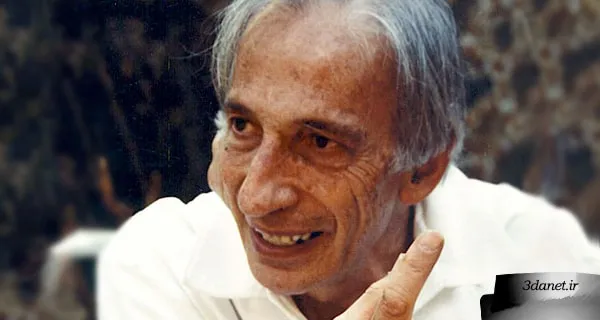
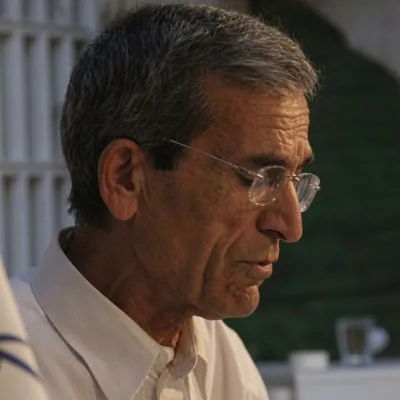
Gholamali Keshani is an Iranian translator based in Tehran whose work focuses on social ethics, civil disobedience, and nonviolence. He regards translation as an ethical duty and has translated into Persian works by thinkers such as Thoreau, Gandhi, and Simone Weil.
Gholamali Keshani, an Iranian translator and writer, was born in 1335 and is from Tehran. He is self-taught, yet considers his present intellectual and practical identity indebted to many teachers. Among them, he regards himself as a lazy but grateful student of his mother’s school—the school of freely giving amid hardship—as well as of Ahmad Saeidnia, who was in practice his teacher of critical thinking in ninth-grade history class; Ignazio Silone, Thoreau, Gandhi, Majid Rahnema, Mohammad Reza Nikfar, and many uncredentialed teachers of urban and rural streets. He has always regarded himself as a lifelong student.
In early adolescence, he was briefly a fundamentalist follower of Ayatollah Khomeini’s treatise; shortly afterward, until 1361, he was a devotee of Ali Shariati. Until 1357, he was an active religious-left student and an elected representative on the three-member student council of Pars Higher School. Yet in Azar 1357, apprehensive about the events ahead, he withdrew from active participation in the politics of the dominant current. In his own account, in 1361, after his accidental encounter with Gandhi and Gandhi’s nonviolence, he came to recognize a small part of the vast immaturity and intellectual impasse of himself and his peers.
After many years, through Gandhi’s emphasis and then Simone Weil’s, Keshani came to recognize the “priority of fulfilling one’s duty over claiming one’s right.” From Václav Havel he learned that “only by creating a better life can a better ‘system’ be nurtured.” From Mostafa Malekian, however, he also learned that the task of an engaged human being in the vein of Hannah Arendt is “the reduction of suffering and the articulation of truth.”
One of Keshani’s intellectual and professional characteristics is his avoidance of fame and passive conformity, alongside an attentiveness to neglected, obscured, and marginal subjects and ideas. This has enabled him to identify and present the faint voices of diverse and nonconforming people: figures such as Thoreau; Gandhi, with his radical critique of mainstream economics; Simone Weil, in her ethical-political aspect; Murray Bookchin, with his libertarian municipalist thought; Majid Rahnema and Ivan Illich, with their radical and forward-looking critique of the major institutions of modern society; and ideas such as nonviolence, simple living, the post-development critique of conventional development, the critique of party rule, the critique of consumerism, bottom-up self-governance, decentralization, alternative economies, the rhizomatic movement, and eco-villages.
He considers a “translation movement” a necessary condition for changing individual and collective circumstances; for this reason, he feels obliged to choose books that advance this movement. For Keshani, translation is not a profession but the fulfillment of an ethical duty and a form of social-spiritual activism whose selfless performance also brings spiritually meaningful pleasures to the translator. Along this path, he has made all but four of his translated books available for free download on the Nonviolence website.
According to Keshani, he learned the foundations of English through self-study and developed his knowledge further while translating. For 26 years, until 1389, he worked as a technical translator, and several railway-industry classics, including the two-volume Safety and Rail, have been published in his translation.
In 1378, he published his first translation directed toward social transformation, Thoreau’s Civil Disobedience, online as a free download. Since then, his later works have also been published in service of the ideal of “a different Iran”: safer, more prosperous, freer, more just, and more peaceful.
His latest works are the trilogy Sarvodaya: Welfare for All by Gandhi, in two volumes; Village Self-Government by Gandhi; and The Economics of Eco-Villages, which is ready for publication. Together with Possession Lies in Sufficiency: Thoreau’s Alternative Economics, these works indicate his attention to the need for structural, social, and individual transformation, and to a constructive view of livelihood and sound governance, in pursuit of good living and coexistence in the spirit of Khayyam, Thoreau, and Havel.