Political Science
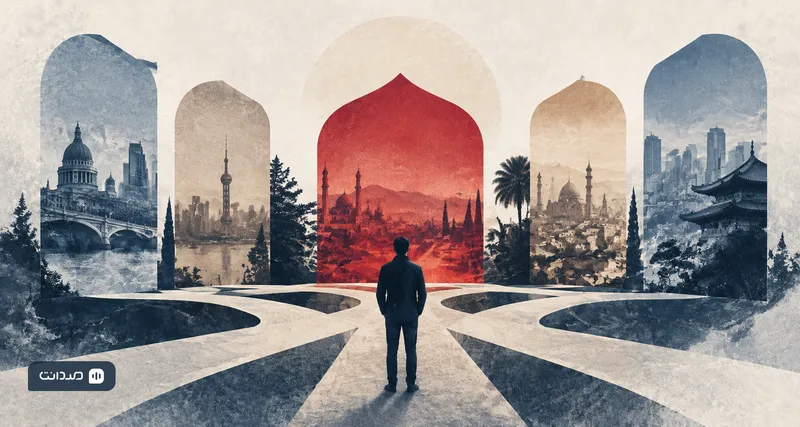
Beyond Occidentalism and Anti-Westernism: In Search of Multiple Modernities
Scholarship on the West in Iran has always swung between fascination with it and resistance to it. Examining the thought of Fardid, Al-e Ahmad, Shariati, Davari and Soroush, this article asks how one might move beyond the binary of Occidentalism and anti-Westernism and, while preserving an anticolonial sensibility, think about the possibility of multiple modernities. Along the way, Charles Taylor's theory and the intellectual experience of Muhammad Iqbal of Lahore open an alternative horizon for understanding modernity.
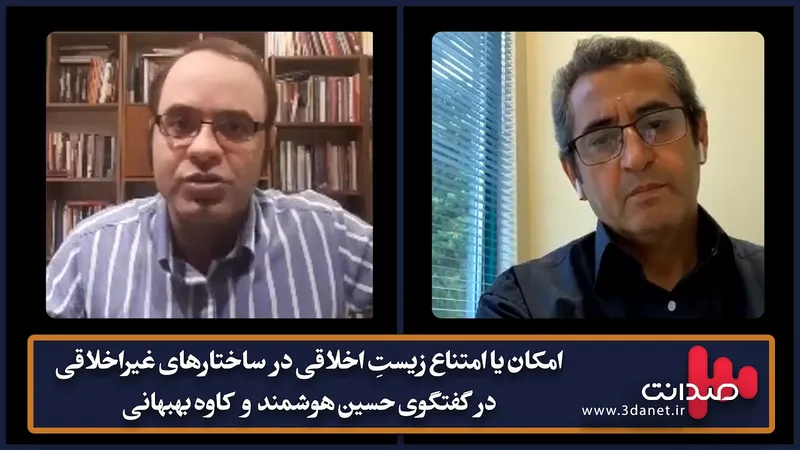
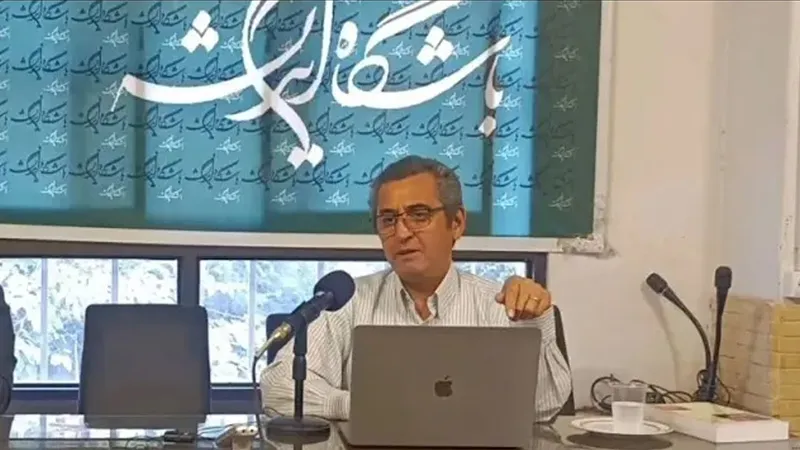
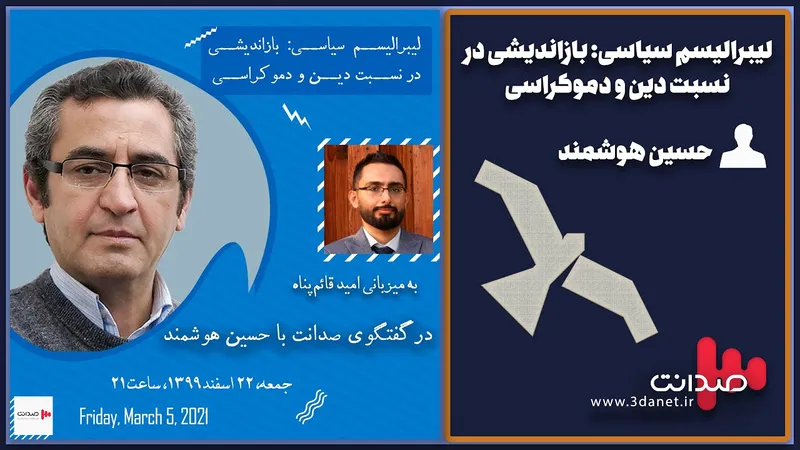
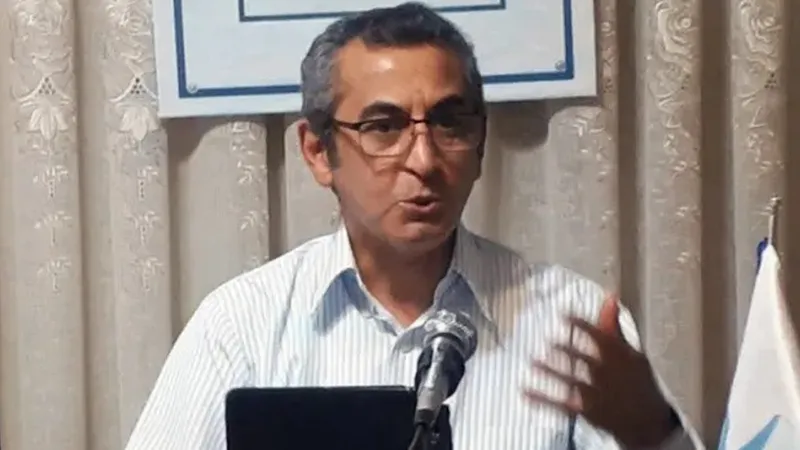
Hossein Houshmand
نویسندهThe study of the West neither takes shape in a vacuum nor is possible from a neutral standpoint outside history. The experience of modernity in Iran and the Global South is intertwined with colonialism, dependency and cultural alienation; yet the historicity of Westernology does not amount to relativism, nor does it exempt one's own tradition from critique. The central question of this article is how, while preserving an anticolonial and anti-imperialist sensibility, one can move beyond the binary of "Occidentalism/anti-Westernism" and think modernity from within diverse traditions, without essentializing the West and without imitating it. The article examines the history of Westernology in contemporary Iran, from Fardid, Al-e Ahmad and Shariati to the Davari–Soroush controversy. It then proposes an alternative approach, drawing on the distinction between "maximal Enlightenment" and "minimal Enlightenment" and on the theory of "multiple modernities" of Charles Taylor (Charles Taylor), and analyzes the views of Muhammad Iqbal of Lahore as an example of an Islamic modernity that is neither secular nor traditionalist.
Where Does the Study of the West Begin?
In Iran, the study of the West often begins as though "the West" were an object outside ourselves, one that could be described from a neutral point and free of any prejudice. No such point exists in our historical experience. Before we theorized about the West, we had already entered into a relationship with it: through wars and treaties, travel and translation, new schools, the Constitutional Revolution, technology and capitalism, colonialism and anticolonialism; and through hopes and fears — in Hamid Enayat's phrase, love and hate — that have accumulated in our political imagination over two centuries. Iran was not a classic colony, but its contemporary history is bound up with Russian and British intervention, occupation, economic concessions and dependent regimes. Hence "the West" in our minds is not only Descartes and Kant, the university and the idea of progress; the memory of power, domination and humiliation is present in it as well.
This situatedness, however, does not lead to relativism. That understanding is historical does not mean that every judgment is equally valid; awareness of our historical position should make us more sensitive to our own prejudices, whether about the "essence of the West" or about the "authentic self." The historicity of understanding is the beginning of critique, not its end. On this basis, the study of the West is less a catalogue of the merits and demerits of Western civilization than an elucidation of the historical and epistemic conditions under which "the West" has been known and made. This article seeks to move from "identitarian Westernology" to "critical and normative Westernology": from the question "What is the West in essence?" to the question of what forms modernity takes, and by what criteria, and from within which resources, we can assess its achievements, its power and its internal plurality, and shape our own form of it.
In Iran, as in much of the Islamic world, the West has been at once a "model of progress" and a "threatening other." This duality was not confined to politics and economics. Anticolonial literature, from Frantz Fanon to Edward Said, has shown that colonialism penetrates the colonized person's conception of self and world; the "self," therefore, is already entangled with the gaze of the other. In such a situation, what some scholars have called the "painful triumph of nativism" was not merely a return to tradition; it was an attempt to construct a "self" against a "West" that was both an object of borrowing and an object of negation (Boroujerdi, 1996). Hence the search for "authenticity" became a central concept, and the question was no longer whether we should learn from the West, but how to learn without dissolving into the other.
From Fardid and Al-e Ahmad to Shariati
The importance of Ahmad Fardid lies less in a systematic, published body of thought than in the language he gave generations of Iranian intellectuals for understanding "the West." He coined the term "Westoxification" (gharbzadegi), and Al-e Ahmad carried it into the public sphere. In Fardid's account, the West and modernity are not a geographical location but the name of a "historical epoch" and of a particular way in which human beings relate to Being. The influence of Heidegger is evident: the problem of the modern West is, at its foundation, the forgetting of Being, the dominance of subjectivity and the reign of technical rationality (Mirsepassi, 2017; Boroujerdi, 1996). The appeal of this conception is that it does not detach modern ideas and institutions from their history.
But this very strength, once it hardens into a totalizing theory of the "essence of the West," turns into a weakness. When "the West" becomes a single essence, the differences between liberalism and fascism, colonialism and the critique of colonialism, Kant and Nietzsche, Heidegger and Popper are no longer real differences, and are taken to be diverse forms of one hidden truth. Fardid's legacy is therefore divided: it both resists a superficial understanding of modernity and opens the way to essentialism and to the dichotomization of "East/West."
If Fardid framed "Westoxification" at the level of the philosophy of history, Al-e Ahmad translated it into the everyday experience of Iranian society. For him, Westoxification is the disease of a society that does not produce technology and is a consumer of others' products without commanding the logic of their production or the knowledge behind it. His critique should not be reduced to a fear of technology: the problem is not the "machine" itself but a passive relationship to the machine and becoming a consumer market for others. In this sense Westoxification is a diagnosis of uneven development and dependency. One may say that Al-e Ahmad's critique is made within the context of Third World debates and the critique of dependency, not merely as a "reactionary return to tradition" (Saffari, 2017).
At the same time, the use of the language of disease and contamination to describe Westoxification carries a theoretical cost: it blurs the line between critiquing structures of power and distrusting everything modern, and the "self" is at times assumed to be so unified that an authentic, indigenous culture seems to be waiting to be discovered, whereas tradition itself is a product of history, translation, plurality and contestation. Nevertheless, Al-e Ahmad voiced a problem that simple theories of modernity failed to see: a society may become modern in appearance while becoming, inwardly, more dependent and more distrustful of itself.
Ali Shariati placed the debate on another horizon. In the intellectual climate of Paris in the 1960s, in contact with Third World literature and liberation movements, he linked the problem of the West directly to colonialism and to the making of the subject. Fanon's influence on him is clear and documented; he had a hand in translating "The Wretched of the Earth" and rendered the Fanonian language of decolonization into Shia vocabulary. In Shariati, "return to the self," properly understood, is not a mechanical return to the past; the self is not a fixed substance but a resource for recovering the power of agency: a dependent or colonized society, in order to have an equal relationship with the world, must first distance itself from the image the other has made of it. "Return" is less a step backward than a reconstruction of the subject, an orientation toward the future. This project is tied to Iqbal's legacy: Shariati tries to draw out of Islamic sources the image of an active, responsible, history-making human being who is passive neither before the West nor before his own tradition; tradition for him is not a repository of relics but a raw material that must be "extracted and refined" in order to generate liberating force in the new situation.
Yet serious tensions remain in Shariati's thought as well. His liberationist language at times speaks of society as an "alienated" mass in need of guidance, and the theory of "Ummah and Imamate" and guided democracy, even if we do not call it theocracy, faces a crisis of legitimacy in a pluralistic society. Here one of the key problems of anticolonial literature comes to light: a very strong sensitivity to justice, domination and liberation, but insufficient sensitivity to political legitimacy under conditions of moral and religious plurality in modern societies. This shortcoming does not discredit anticolonial thought; on the contrary, it shows why that thought needs to engage contemporary political philosophy in order to become a political and normative theory.
The Davari–Soroush Controversy
In the 1980s the debate over the West in Iran took on a more coherent philosophical form. The controversy between Reza Davari Ardakani and Abdolkarim Soroush in Kayhan-e Farhangi was one of its most serious manifestations. Ostensibly the dispute was over whether "the West" has a single substance and essence, but behind it lay two different conceptions of history, knowledge and the possibility of adopting modern achievements. In "The Selfhood, Substance and Truth of the West," "The Substance and Essence of the West" and "The Requirements and Consequences of Denying the West," Davari defends the idea that the West should not be reduced to a collection of discrete objects, sciences and institutions: modern science, technology, the modern state and philosophy arose within a single history. The substance of this history he calls "nafsaniyyat" (selfhood). By this word he does not mean something psychological or moral, such as selfishness or base desire; "nafsaniyyat" is the counterpart of "subjectivity," that is, a view that takes the human being as subject and as the foundation of knowledge and being, and sees the world as an object of his representation and mastery. But the difficulty with Davari's view begins where a "historical connection" is turned into an "essential unity." If we regard all the internal conflicts of the West as forms of "selfhood," the concept explains everything, but for that very reason becomes unfalsifiable: no evidence can refute it, and a concept that no fact can contradict explains nothing.
Soroush objects to Davari from precisely this point. In "Westerners and the Good and Evil of Their Affairs and Modes" and "The Existence and Essence of the West," his question is epistemological: on what grounds do we assume a single essence for so plural a phenomenon? In his view, the West can be a historical whole, that is, a set of interrelated parts, but it does not follow that a "universal" or true essence called "the West" exists; the unity of the West is conventional and historical, not essentialist. This critique is very important for the study of the West: if the West has no single essence, each theory, institution and achievement must be assessed separately, and the historical origin of a theory is not the same as its validity. But Soroush's position, too, faces a challenge if it turns into simple selectivity: institutions are not independent phenomena; freedom of expression is tied to a legal order, the university to institutional independence, and elections to democracy and civil society; from a critique of essentialism about the West one cannot conclude that transfer and selection are entirely costless and context-free.
In my view, the Davari–Soroush controversy reveals two real dangers: Davari shows the danger of "dehistoricizing modernity," and Soroush the danger of "essentializing the West." But their debate remains within the framework of the question of what the West is and how far its components are separable. The alternative approach I propose here tries to change the framing of the problem. Instead of ruling that "the West" is essentially unified or decomposable, we can ask what norms we have for assessing modernity, modern achievements and our own tradition as well. The problem shifts from the ontology of "the West" to the ethics of belief, public rationality and political philosophy, and for this reason the distinction between maximal and minimal Enlightenment becomes important.
Minimal Enlightenment and Moving Beyond Essentialism
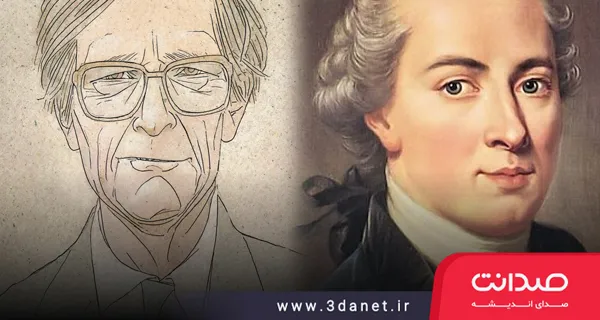
The word "enlightenment" usually conjures a uniform picture: rationalism, modern science, critique of religion, individualism, secularism and liberalism. Contrary to this picture, however, in the works of Kant, the most important philosopher of the Enlightenment, two different tendencies can be distinguished. On one reading, Enlightenment is a "comprehensive philosophical doctrine": the enlightened person must accept a particular set of philosophical and moral beliefs, from individual autonomy as the highest value to a specific conception of religion and the good life, and becoming modern is often equated with leaving historical religion and tradition behind. This is what Samuel Fleischacker calls "maximal Enlightenment"; maximal not in the amount of rationality but in the scope of its claims (Fleischacker, 2013).
But in Kant, especially in the essay "What Is Enlightenment?", there is another conception as well: Enlightenment is less a set of conclusions than a manner and a process: emerging from self-incurred immaturity, daring to use one's own understanding, seeking reasons for our beliefs that can be exposed to public judgment, and being ready to revise them. More important than what we believe is how we believe; that is, the ethics of belief. This is the distinction between Enlightenment as an "epoch" and Enlightenment as a "process." The maximal reading turns the historical features of Europe in the age of Enlightenment into the standard of rationality; the minimal reading draws from the same history open and generalizable rules: intellectual independence, epistemic responsibility, openness to critique, free conversation and acceptance of reasonable disagreement.
Minimal Enlightenment rests on several principles. First, no one is exempt from responsibility for their beliefs: tradition, the majority, political leaders and religious authorities cannot judge in our place, and intellectual independence means being able to give reasons for our beliefs. Second, it requires a public sphere: beliefs are tested through contact with the criticism and experience of others, and freedom of thought and expression are epistemic conditions, not merely political values. Third, it sees religious and moral plurality not as a regrettable accident but as a natural consequence of the freedom of reason: even reasonable and well-intentioned people, owing to differences in life experience, in the assessment of evidence and in the vagueness of concepts, can arrive at different conclusions; this is what John Rawls formulated under the headings "the fact of reasonable pluralism" and "the burdens of judgment" (Rawls, 1996). Fourth, it distinguishes between critiquing tradition and negating tradition: a religious tradition, like any other, must be open to questioning and reinterpretation, but it does not follow that revealed religion is inherently irrational; a religious tradition may well be able to reinterpret and affirm freedom of conscience, human dignity and justice from within its own sources.
Minimal Enlightenment, therefore, is neither "diluted secularism" nor a program for privatizing religion; it asks the state and the public sphere to provide conditions in which different comprehensive moral-religious doctrines can live side by side with mutual respect and peacefully, without any one of them being imposed on the others as the official truth.
If we regard Enlightenment as a comprehensive moral worldview (as nearly all Iranian and Muslim thinkers, including those I have mentioned above, have assumed), our encounter with the West inevitably becomes a question of identity: either we must join the "camp of Enlightenment" and leave a large part of our tradition behind, or, in defense of tradition, regard Enlightenment as an alien project and reject it. Minimal Enlightenment breaks this dogmatism and takes a pluralist view of the beliefs and values of modernity. In this view, the modern West neither carries a single truth nor is wholly corrupt, but is a field of plurality and contestation: it contains both natural religion and the defense of historical, monotheistic religion; both colonialism and the critique of colonialism; both racism and anti-racist movements; both militant secularism and political liberalism and post-secular theories.
Minimal Enlightenment is rare in contemporary Iranian thought, but it has an exception: its most important elements are evident in the thought of the early Soroush. I do not place the early Soroush in the camp of maximal Enlightenment, because a significant part of "The Theoretical Contraction and Expansion of Sharia" contains the capacities of minimal Enlightenment: the distinction between sacred religious text and religious knowledge, the historical and collective character of understanding, the changeability of interpretations, the denial of immediate and infallible access to religious truth, the necessity of a free public sphere for religious critique, and the rejection of religious despotism. In the later stages of his intellectual life, moving from epistemological critique and the opening of the space of interpretation to broader judgments about the nature of revelation and about natural and personal religiosity, Soroush has inclined toward a more maximal formulation of Enlightenment; but my concern here is not to judge his whole record, but to preserve that initial possibility: religious intellectualism is most compatible with Enlightenment when it understands Enlightenment itself minimally and does not turn it into a comprehensive system, whether metaphysical or moral, rather than, as Soroush does, especially in his later works, reducing only religion to a "minimal religion." In any case, my alternative approach to modernity is not merely a synthesis of Davari and Soroush. From Davari it takes the sensitivity to history and context, and from Soroush the critique of essentialism and the emphasis on argumentative assessment, but it shifts the central question from the "essence of the West" to the "plural forms of modernity," a shift that Charles Taylor's theory has formulated well.
Taylor and Multiple Modernities
Taylor's theory of "multiple modernities" (multiple modernities), for all the differences in its foundations from minimal Enlightenment, challenges common assumptions about the relation between modernity and tradition. If maximal Enlightenment tries to turn the particular historical results of the West into a universal standard of rationality, this theory holds that modernity is not a single, neutral, transcultural process that all societies will eventually reach in one form; modernity took shape in a particular history and culture, and others' encounter with it can take different forms. The question is no longer whether we must become "modern," but what we can accept, criticize or reformulate, for what reason, and from within which historical and semantic resources.
Taylor defends a cultural theory of modernity against the "acultural theory." In the acultural conception, modernity is a set of developments relatively independent of culture: rationalization, modern science, industrialization, bureaucracy, secularism and the decline of religion's social role. The West has merely traveled this road earlier than others; others, too, if they set aside traditional obstacles, will travel the same road (Taylor, 1995). The "cultural theory of modernity" does not accept this: modernity is accompanied by a transformation in the human understanding of self, society, the moral good and social order, and what took shape in the West cannot be separated from the context of its emergence and treated as a universal model. Taylor's concept of the "social imaginary" (social imaginary) is important for explaining this process: society is not organized on the basis of philosophical theories but on people's shared picture of how they live together and of the reasonable relations among them. Modernity is not the transfer of a few institutions or technologies from one society to another, but a change in this very imaginary and in our understanding of ourselves and of society (Taylor, 2004).
This point is linked to Taylor's critique of "subtraction narratives" (subtraction narratives). In a subtraction narrative, modernity is the product of removing religion, superstition and pre-modern beliefs, and what remains after the subtraction is the modern, rational human being. Taylor shows that modernity is not the result of something falling away but carries new forms of understanding about the human being and society. "Exclusive humanism" likewise is not what is left after religion is removed; it is a historical form of understanding the good and human flourishing. In "A Secular Age," Taylor pursues the same analysis concerning religion and stresses the change in the "conditions of belief": in the modern world, faith is no longer the obvious, shared default of social life but one of several possibilities. This change neither proves secularism nor refutes religion; believer and unbeliever alike live in a space in which religious and non-religious possibilities are available (Taylor, 2007).
From here Taylor's discussion arrives at the relation of a religious tradition to modernity. In "A Catholic Modernity?", his question is not how to reject modernity wholesale or to bring Christianity into line with all of modernity's results, but whether one can, from within the Catholic Christian tradition, have a selective and critical relation to it. He considers the dichotomy of "acceptance" and "rejection" mistaken, because that dichotomy itself presupposes that modernity is an undivided whole (Taylor, 1999). Some modern goods, such as universal benevolence, human dignity, human rights and the value of ordinary life, are not alien to the history of Christianity and have roots in it. This does not deny the church's historical conflicts with modern developments, but it shows that modernity cannot be regarded merely as the story of humanity's liberation from religion. Hence the critique of modernity should not lead to a denial of its achievements, and the defense of tradition should not come at the cost of ignoring the developments and advances that have revealed or institutionalized important human values.
The relation of this theory to minimal Enlightenment should not be reduced to sameness. Minimal Enlightenment is not a comprehensive philosophy of rationality, religion or the good life; it defends conditions under which adherents of different comprehensive moral-religious doctrines can take responsibility for their beliefs, give reasons for them, expose them to critique and live in a shared public sphere. Taylor's importance is that he sets aside one of the foundational presuppositions of maximal Enlightenment: that becoming modern means societies passing beyond their traditions and approaching a single form of rationality. If modernity is itself a historical and cultural form, the simple relation between reason and tradition, or future and past, can no longer be drawn between the "modern" and the "non-modern"; hence a religious tradition too can reread modern achievements from within its own resources.
This point matters for moving beyond the binary of Occidentalism and anti-Westernism. If we take the West to be the bearer of a single modernity, our encounter with it becomes an identity choice: becoming Western or rejecting the West as a whole. If the West itself has a multilayered and plural history, this binary changes at its foundation. The question is no longer "Shall we accept or reject the West?" but what, among the West's diverse legacies and the achievements of modernity, we find reasonable, what must be criticized, and what can be understood anew within the framework of our own resources.
Even so, Taylor speaks from within a tradition that belongs to the history of the West. The thesis of multiple modernities holds particular significance for non-Western and non-Christian traditions: instead of imitating a Western version of modernity, they too can reread modern moral goods from within their own tradition and make them their own. The question is whether such a modernity is also possible from within the Islamic tradition and, if it is, what form it takes.
Iqbal and Islamic Modernity
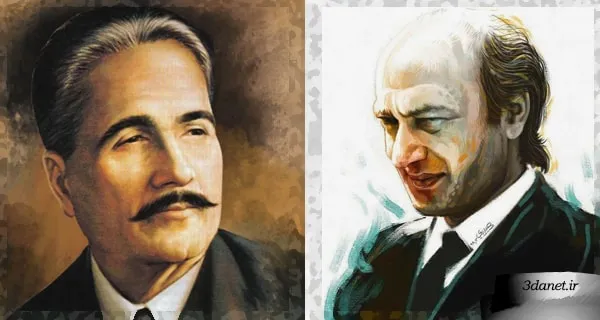
Muhammad Iqbal of Lahore (1877–1938), the modern Muslim poet and philosopher, is among the most serious thinkers to have answered this question. Iqbal rejected both secularism and traditionalism. At first glance this position appears contradictory, since modernity and secularism are usually taken to be two sides of the same coin; yet Iqbal separates the two, and this separation is the key to understanding his thought and also an explanation of why his message was heard in the Muslim world less than it deserved. He regarded modernity neither as an imported commodity nor as a complete break with the past; modernity was the response a society gave to the pressure of new ideas, and its simple meaning was that human beings, whether as individuals or as a collective, should take the reins of their own affairs. Iqbal therefore understood modernity not as adaptation to Western values but as the "expansion of human freedom" (Iqbal, 2013).
Iqbal does not sever his ties with the past; he rereads it in light of modern experience. In his thought, tradition and modernity are not rivals but lie along a single continuum. He pursues the critique of tradition from within tradition itself, bringing ancient concepts into the political language of his age and, in doing so, transforming them (Majeed, 2009). His poetry is full of images of movement, and he sought this movement in the very structure of Islam, finding it in the concept of ijtihad: ijtihad is "the principle of movement in the structure of Islam," and he regards neglect of it as one of the main causes of Muslim decline. In the Payam-e Mashriq he says:
How fine it would be, had a man of virtue
walked free of the bonds of antiquity.
If imitation were the better way,
the Prophet too would have followed the path of his forefathers.
By ijtihad he meant rereading the foundational principles of Islamic teachings in light of the changed conditions of modern life, not abolishing them. On history, too, he held that a return to the Islamic past is necessary, but only so that a rational justification for the present can be provided, and that a false reverence for history and its artificial revival are no cure for the decline of any nation (Iqbal, 2013).
In Iqbal's view, the boundary between Islam and the West was a porous one; he even believed that European culture, intellectually speaking, is an extension of some of the most important phases of Islamic culture (Iqbal, 2013). But he was not naive: he saw that Muslims pay attention to the West while the West pays no attention to them, and this gap between possible intellectual common ground and the reality of domination was one of the roots of his opposition to the secularism that the West wished to export to the East (Majeed, 2009).
Iqbal considered secularism in the context of Islam to be practically "impossible," and he offered two reasons for this. First, Islam for him is a moral ideal that has produced a social order and has a living bond with it. One cannot keep the ideal and set aside the order that is its collective embodiment, because rejecting this order ultimately leads to rejecting the ideal itself (Sevea, 2012). For this reason the spiritual and the temporal are, in his view, not two separate realms but a single reality (Iqbal, 2013).
Second, politics severed from religion, in his view, turns into sheer despotism. "Religion" here means neither the rule of the clergy nor an ecclesiastical institution. Iqbal considers the Islamic state "divine" only in the sense that its principles rest on tawhid, not in the sense that a representative of God on earth sits at its head and hides his autocracy behind infallibility; he also deems the republican form compatible with the spirit of Islam, and he regards tawhid, as a practical principle, as none other than equality, solidarity and freedom (Iqbal, 2013). Religion in this sense is a norm that limits political power from the outside. When this norm is removed, nothing remains of politics except power and interests. Iqbal also says that the universal ethics of Christianity in Europe gave way to rival national ethics and states, that nationalism and the homeland became the only basis of political unity, and that the European states, having separated spiritual from temporal life, are now at odds with one another and are searching for a unity that the Church once provided (Sevea, 2012). His claim about despotism, therefore, is less a defense of religious government than an argument for the necessity of a moral limit on political power.
Beyond this, Iqbal's social argument against secularism is also significant: the secular order, which removes parts of social life from the sway of religious symbols and institutions, weakens the legitimacy of religious identities and leaves Muslims in a position without support.
What, then, did Iqbal put in place of secularism and traditionalism? His answer is a kind of Islamic modernity. He does not equate modernity with secularism; secularism is one possible response to modern conditions, not its inevitable response. This very distinction allows him both to want modernization and to reject secularism (Sevea, 2012). His Islamic modernity has two features.
First, modern life should not be separated from faith but should draw inspiration from it: becoming more modern does not necessarily mean being less religious. Iqbal establishes this link through ijtihad, and since he did not consider individual ijtihad sufficient for the modern world, he proposed collective ijtihad by way of a legislative assembly (Iqbal, 2013). Second, this modernity must belong to Muslims themselves. Every nation must make sense of its own historical experience for itself, for borrowed ideas do not give a nation the strength to live. For this reason Iqbal's modernity is not of the "passing modernity" kind, that is, an effort to bring a secular tradition into fashion and to align Muslims with it.
The pivot of this project is the concept of khudi (selfhood). Iqbal stressed the irreplaceable uniqueness of the individual and individual authenticity and initiative, and he set khudi against imitation: just as ijtihad stands against blind adherence to one's forefathers, so khudi stands against surrendering one's independence and initiative to others. From here a political concept emerges, since it calls on Muslims to rewrite their own destiny with "creative imagination" and gives them a sense of political agency. Even so, khudi should not be taken as individualism in the liberal sense. In Iqbal's view the individual and society are complementary, and the individual finds self-expression only within the structure of the collective. Iqbal accepts certain liberal values, such as freedom and equality, but he understands them within the framework of tawhid and a moral society, not on the basis of self-grounded individualism. This freedom does not take shape in a vacuum; its historical background is the colonial experience of Muslims: Iqbal believed that freedom is born out of constraint and that colonialism brought Muslims self-awareness and a sense of rebirth; he said, "the storm of the West made the Muslim a Muslim."
Yet Iqbal's project of Islamic modernity never found a resounding voice in the Muslim world. One fundamental reason may be the very entanglement of modernity and secularism. In the public mind modernity is equated with secularization, and in many Muslim societies secularization is regarded as an idea imposed from the West; hence defending modernity is read as indifference to religion, and modernists appear in others' eyes as propagandists for secularism. In this way Iqbal's central message, that being religious and being modern can be realized at the same time, is barely heard. Another reason may be social: this approach appeals mostly to the middle class, and in the postcolonial Muslim world this class has not yet managed to articulate its outlook clearly or to find adequate representation. The result is that Islamic modernity is caught between two dominant forces: the secularism of the Westernizing political elites on the one hand, and the traditionalism of fundamentalist groups on the other.
What prevented Iqbal's message from being heard, namely the equation of modernity with secularization, is precisely what Taylor calls the "subtraction story": it takes modernity to be something that emerges when religion and tradition recede from human life. In this narrative, becoming modern means de-religionization, and someone who is both religious and modern is a contradiction in terms. By rejecting this narrative, Taylor treats Catholic modernity as a possibility within a religious tradition, and Iqbal, years before him, pursued the same possibility for Islam. But his Islamic modernity still lacks a clear and accepted formulation. The two dominant forces mentioned above, though apparently opposed to each other, think within a shared framework: both equate modernity with de-religionization and differ only in how they value it, one welcoming it and the other rejecting it. This is precisely the binary of Westernization and anti-Westernism that this article seeks to move beyond, and Iqbal stood outside this very framework. He placed his hope in later generations:
After me they will read my poems, grasp them, and say:
a single self-aware man transformed a world.
(Zabur-e Ajam)
From Westernization and Anti-Westernism to Multiple Modernities
In light of what has been said, Occidentalism must move from discovering the essence of the West toward understanding multiple modernities. Fardid, Al-e Ahmad and Shariati each put a finger on a real wound: dependency, colonialism and alienation. But the historical context of a theory does not guarantee its validity. Once "the West" became a single essence, Westernization and anti-Westernism, for all their differences, remained within one shared framework: both presuppose that modernity is an integrated package that must be accepted wholesale or rejected wholesale. The Davari–Soroush debate did not step outside this framework either. One spoke of the West's historical unity and the other of the possibility of selecting its parts; and neither fully moved beyond this binary or made clear how modernity might be thought within the context of other traditions.
The West is not monolithic. This may be the most important lesson of the Davari–Soroush debate, if we take it one step further: the West is neither a single essence nor a collection of independent parts, each of which can be freely adopted or discarded. The West is an intellectual, institutional and plural history, with parts that are linked to one another, though these links are neither necessary nor unchangeable.
Minimal enlightenment and the theory of multiple modernities, each in its own way, break this very binary of Westernization and anti-Westernism. Minimal enlightenment shows that what is defensible and generalizable in the Enlightenment is its epistemic virtues and rules (responsibility for one's beliefs, openness to criticism, free dialogue, acceptance of reasonable disagreement) and not a comprehensive doctrine that sets religion and tradition aside in advance. Taylor, too, shows that modernity is not the product of stripping religion and tradition from human life; it is a historical and cultural form that can take different shapes in different traditions. In that case we need not sanctify "the West" in order to defend freedom of thought and expression, the separation of powers, the independent university and the scientific method; if these are worth defending, it is by virtue of the reasons and functions that support them, not because they are "Western." Likewise, in order to criticize colonialism, racism and unbridled capitalism, we are not compelled to reduce the whole history and thought of the West to a malignant essence.
Iqbal shows that this possibility is not merely theoretical. He understood modernity as the "expansion of human freedom," neither imitation of the West nor a break with tradition, and he saw the West as both a colonial power and an interlocutor. If we take multiple modernities seriously, the binary of Westernization and anti-Westernism is no longer an inescapable fate.
Tradition, too, in this horizon is neither a sacred, unchangeable treasure nor an obstacle to be cleared from the path to modernity, but a historical collection of texts, narratives, practices and institutions that can be reread. Some of its elements may be incompatible with freedom and equality and require serious critique and rethinking; others can provide powerful moral resources for justice and solidarity. Critique must run in both directions. Critique of the West without critique of tradition leads to a self-justifying nativism, and critique of tradition without critique of imperial power leads to self-contempt and imitation.
From Fardid and Davari we learn that modernity has a history, and from Soroush that this history must not be reduced to a single essence and that the validity of an idea cannot be inferred from its birthplace. Al-e Ahmad and Shariati remind us that colonialism, dependency and alienation are serious realities, and that the postcolonial human being, in order to take an equal place in the world, needs to recover his or her cultural and identitarian agency. But the experience of these very intellectual traditions shows that "authenticity," if it turns into a unified self immune to criticism, can itself become a source of exclusion and authoritarianism.
Perhaps the question about "the West" was from the beginning a question about ourselves. As long as we imagine the West as a single essence, we must either imitate it or clash with it, and in both cases we fail to see ourselves: to see that our own tradition, too, is plural, contested and unfinished. Occidentalism, if it moves beyond this fork in the road, no longer hands down a final verdict and does not force us to choose between "Westernization" and "anti-Westernism." It places a more modest and more difficult task upon our shoulders: learning what must be criticized, what can be taken from others, and what must be rebuilt anew within our own tradition. Modernity is neither something that others can provide for us nor something we can pass beyond by denying it; in today's shared world we must build it with our own understanding and judgment, without self-abasement and without self-sufficiency. For this reason the ultimate question is no longer what the West is, but what we want to be and how we should draw up the project of our own modernity.
References
Al-e Ahmad, Jalal. Gharbzadegi (Westoxification). Tehran: Ravaq, 1978.
Davari Ardakani, Reza. "Nafsaniyyat, Essence and Truth of the West." Keyhan-e Farhangi, year 1, no. 1, Farvardin 1363 [March–April 1984], pp. 13–14.
Davari Ardakani, Reza. "The Essence and Quiddity of the West." Keyhan-e Farhangi, year 1, 1363 [1984].
Davari Ardakani, Reza. "The Requirements and Consequences of Denying the West." Keyhan-e Farhangi, no. 3, Khordad 1363 [May–June 1984], pp. 18–19.
Soroush, Abdolkarim. "The Existence and Quiddity of the West." Keyhan-e Farhangi, no. 5, Mordad 1363 [July–August 1984], pp. 19–22.
Soroush, Abdolkarim. "Westerners and the Good and Evil of Their Affairs and Conditions." In Tafarroj-e Son': Essays on Ethics, Industry and the Human Sciences. Tehran: Serat.
Soroush, Abdolkarim. The Theoretical Contraction and Expansion of Religious Law (Qabz va Bast-e Te'orik-e Shari'at). Tehran: Serat, 1990.
Shariati, Ali. Return to the Self, Collected Works 4. Tehran: Elham, 1983.
Shariati, Ali. "Ummah and Imamate," in Ali, Collected Works 26. Tehran: Elham, 1986.
Boroujerdi, Mehrzad. 1996. Iranian Intellectuals and the West: The Tormented Triumph of Nativism. Syracuse University Press.
Fleischacker, Samuel. 2013. What Is Enlightenment? Routledge.
Iqbal, Muhammad. 2013. The Reconstruction of Religious Thought in Islam. Edited and annotated by M. Saeed Sheikh. Introduction by Javed Majeed. Stanford University Press.
Majeed, Javed. 2009. Muhammad Iqbal: Islam, Aesthetics and Postcolonialism. Routledge.
Mirsepassi, Ali. 2017. Transnationalism in Iranian Political Thought: The Life and Times of Ahmad Fardid. Cambridge University Press.
Rawls, John. 1996. Political Liberalism. Columbia University Press.
Saffari, Siavash. 2017. Beyond Shariati: Modernity, Cosmopolitanism, and Islam in Iranian Political Thought. Cambridge University Press.
Sevea, Iqbal Singh. 2012. The Political Philosophy of Muhammad Iqbal: Islam and Nationalism in Late Colonial India. Cambridge University Press.
Taylor, Charles. 1995. “Two Theories of Modernity.” Hastings Center Report 25 (2).
Taylor, Charles. 1999. “A Catholic Modernity?” In A Catholic Modernity? Charles Taylor’s Marianist Award Lecture, ed. James L. Heft. Oxford University Press.
Taylor, Charles. 2004. Modern Social Imaginaries. Duke University Press.
Taylor, Charles. 2007. A Secular Age. Harvard University Press.

Discussion0 comments
No comments yet; let yours be the first voice.