Shiite jurisprudence possesses within itself the potential for rethinking and renewal, provided we refrain from imposing modern presuppositions upon it and instead discover its internal logic.


Life and Thought
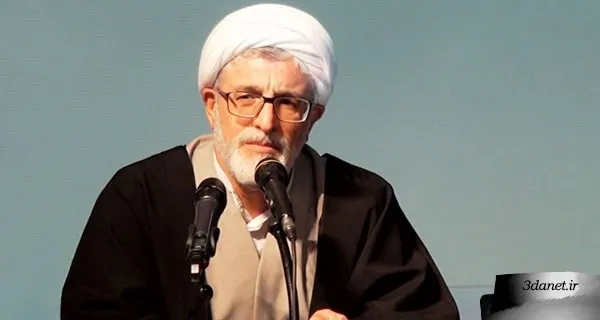
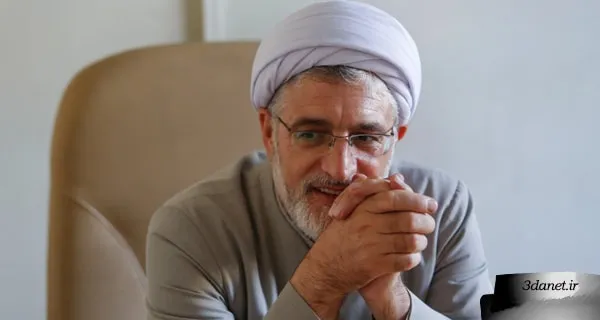
Davoud Feirahi (1964–2020) was a political science researcher and professor at the University of Tehran. He was considered one of the contemporary theorists in the field of Islamic political thought and Shiite political jurisprudence, and authored numerous works on the relationship between jurisprudence and the modern state.
Davoud Feirahi, born on October 24, 1964, and passed away on November 11, 2020, was a political science researcher, professor at the University of Tehran, and one of the most important contemporary theorists in the field of Islamic political thought and Shiite political jurisprudence. He had both advanced seminary education and earned his PhD in political science from the University of Tehran. Feirahi was a long-time professor in the Political Science Department of the Faculty of Law and Political Science at the University of Tehran and also taught at Mofid University in Qom.
He began his preliminary seminary studies in Zanjan and then continued them in Qom. At university, his research path focused on Shiite political thought, the relationship between jurisprudence and power, legitimacy, the modern state, law, and constitutionalism. His doctoral dissertation, titled Power, Knowledge, and Legitimacy in Islam, later became one of the reference works in Islamic political thought studies.
Feirahi passed away in November 2020 after contracting COVID-19. News reports at the time of his death also emphasized his status as a professor at the University of Tehran and a researcher of Islamic political thought.
Feirahi's main project can be considered the "Re-reading of Shiite Political Jurisprudence in the Horizon of the Modern State." He sought to show that Islamic jurisprudence and political tradition do not only belong to the past, but can be re-read with new questions such as law, state, party, constitutionalism, citizenship rights, and governance.
Several axes recur in his works: the relationship between religious knowledge and political power, the problem of legitimacy, the transformation of the state in the Islamic world, the possibility of constitutional jurisprudence, the relationship between jurisprudence and law, and the place of the party in religious governance. Feirahi was neither a traditionalist in a closed sense nor a modernist in the sense of a complete break from tradition; his effort was more about finding a path between jurisprudence, new political rationality, and the historical experience of Iran.
Bibliography
Writings and transcribed lectures11 titles
Power, Knowledge and Legitimacy in Islam
The Islamic State and the Productions of Religious Thought
Political System and Government in Islam
The History of the Evolution of the State in Islam
Methodology and Political Thought in Islam
Religion and State in the Modern Age
Fiqh and Politics in Contemporary Iran: Political Fiqh and Constitutional Fiqh
Fiqh and Politics in Contemporary Iran: The Transformation of Governance and the Fiqh of Islamic Government
The Threshold of Modernity: A Commentary on Tanbīh al-Umma wa Tanzīh al-Milla
Fiqh and Party Governance
The Concept of Law in Contemporary Iran: Pre-Constitutional Developments
Sedanet articles about Davood Feirahi