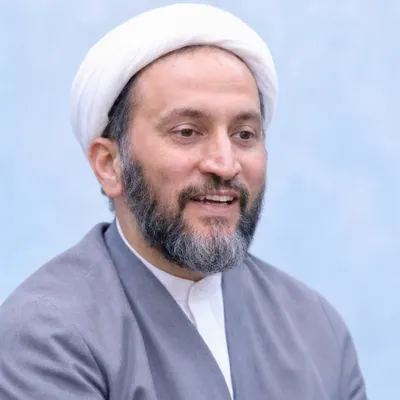
Iranian thinker
Hossein Souzanchi
Hossein SouzanchiIslamic Philosophy and Islamic HumanitiesIranian
Life and Thought
Hossein Soozanchi is a researcher in Islamic philosophy, an advanced seminary student (dars-e kharij) at the Qom Seminary, and a full professor in the Department of Social Sciences at Baqir al-Olum University. His work primarily focuses on Transcendent Theosophy, the relationship between science and religion, Islamic humanities, jurisprudence and ethics, and social issues from the perspective of Islamic philosophy.
Hossein Soozanchi began his academic studies in theology, philosophy, and Islamic theology at Imam Sadiq University, where his master's thesis examined the approach of Morteza Motahhari to tradition and modernity in the realm of religious thought. He then pursued a PhD in Islamic Philosophy and Theosophy, specializing in Transcendent Theosophy, at Tarbiat Modares University, completing his dissertation titled "A Critical Examination of the Problem of the Gradation of Being in Transcendent Theosophy." Concurrently, he continued his seminary studies and is an advanced student (dars-e kharij) at the Qom Seminary.
Soozanchi serves as a full professor in the Department of Social Sciences at Baqir al-Olum University. His main research areas include Transcendent Theosophy, the gradation of being, the unity of being, the philosophy of the humanities, religious science, the relationship between science and religion, the transformation of the humanities, jurisprudence and ethics, and issues concerning women and the family. His articles in these fields include "The Possibility of the Individual Unity of Being in Transcendent Theosophy," "The Place of Method in Science," "Religious Science as a Basis for the Interaction of Science and Religion," "The Possibility of Religious Science," and "The Distinction Between Jurisprudence and Ethics."
A significant part of Soozanchi's intellectual work is dedicated to defending and explaining the possibility of Islamic humanities. Drawing from Islamic philosophy and the theological and jurisprudential tradition, he seeks to provide a framework for engaging with modern humanities and contemporary social issues. Alongside his philosophical research, he has been an active presence in debates, critiques, lecture series, and social and religious writings.