

Life and Thought
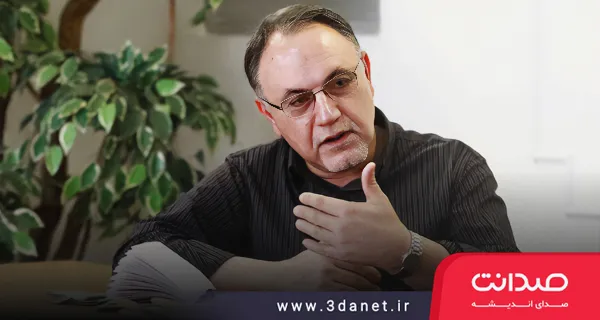
Alireza Alavitabar, born in 1960 in Shiraz, is a journalist, writer, and one of the intellectual figures of Iran's reformist movement. He is best known for his contributions to the intellectual press of the 1990s and his analytical journalism, and he played a role in shaping the theoretical language of reformism.
Alireza Alavitabar, born in 1960 in Shiraz, is a journalist, writer, and one of the intellectual figures of Iran's reformist movement. He is best known for his contributions to the intellectual press of the 1990s and his analytical journalism, including serving as editor-in-chief of the Sobh-e Emrooz newspaper and as an advisor to Seyyed Mohammad Khatami. However, his cultural significance extends beyond his relationship with day-to-day politics; Alavitabar played a role in shaping the theoretical language of reformism, civil society, civic participation, and the relationship between religiosity and democracy.
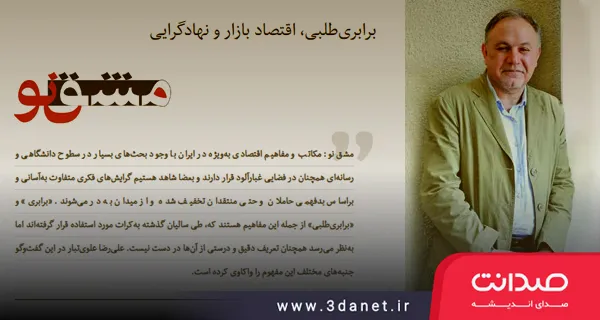
A central focus of his work is the discussion of the possibility of coexistence between intellectualism, religiosity, and democracy. The book Intellectualism, Religiosity, Democracy is a collection of essays on the relationship between religion and politics, tradition and modernity, and socio-economic orientations.
Another cultural dimension of Alavitabar's work is his attention to 'civic culture': the idea that democracy is not merely about the ballot box or political competition, but requires the practice of participation, dialogue, local institutions, and social responsibility. His two books on citizen participation in city governance follow precisely this path and are recorded in bibliographic sources on the subject of local administration and civic participation.
Bibliography
Writings and transcribed lectures5 titles
Intellectualism, Religiosity, Democracy
The Decisive Test: The Possibility and Nature of Reforms in Iran
Participation in Urban Governance: A Study of the Model of Citizen Participation in Urban Affairs, Global Experiences and Iran
A Model for Citizen Participation in Urban Governance: Empirical Findings and Strategies
Reforms versus Reforms: A Critical Dialogue