Iranian thinker
Arash Naraghi
Arash NaraghiPhilosophy of Religion and EthicsIranianb. 1966
Authentic life is a life connected to the divine.


Life and Thought
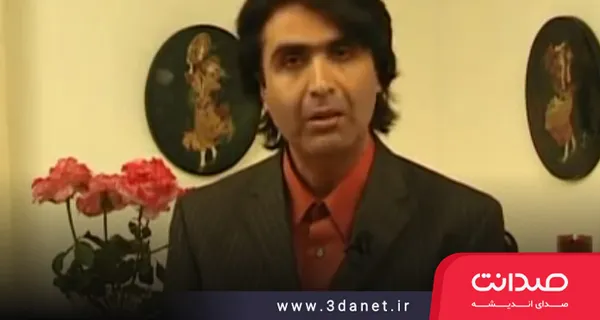
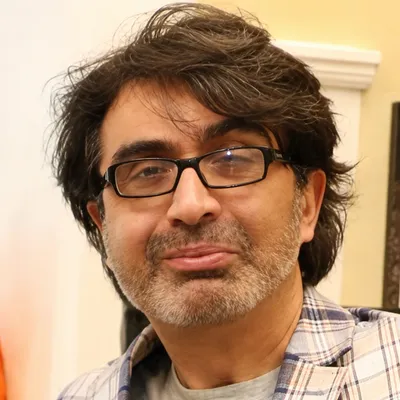
Arash Naraghi, born in Tehran in 1966, is an Iranian philosopher, writer, and religious intellectual whose work focuses on the philosophy of religion, ethics, and human rights. He has sought to establish a philosophical dialogue among religious faith, modern ethics, and the Islamic mystical tradition.
Arash Naraghi, born in Tehran in 1966, is an Iranian philosopher, writer, translator, and religious intellectual. His principal fields of study include the philosophy of religion, ethics, modern theology, Islamic mysticism, human rights, and the relationship between religion and modern rationality. Working within the broader current of Iranian religious intellectualism, he has sought to establish a philosophical dialogue among religious faith, modern ethics, human rights, and the mystical tradition.
Naraghi initially studied pharmacy at the University of Tehran and later moved to the United States to pursue philosophy. He received his PhD in philosophy from the University of California, Santa Barbara, where his research focused on ethics and the philosophy of religion. His doctoral dissertation examined moral dilemmas within the framework of virtue ethics. Moravian University identifies him as a professor of philosophy and religion and director of its ethics program.
As Naraghi has written, his earliest intellectual concerns arose from questions about existence, the human relationship with the sacred, and the possibility of rational faith. These concerns led him toward the philosophy of religion, theology, Islamic mysticism, and ethics. Some of his early writings appeared in journals such as Kiyan and Rah-e No and became part of the debates on religious intellectualism and revisionist theology in Iran during the 1990s.
A Treatise on the Study of Religion was among Naraghi’s first major works, in which he proposed a model for analyzing Abrahamic faith. In his later writings, his interests expanded from the philosophy of religion to the ethics of human rights, tolerance, civility, the theology of absence, love, spirituality, and Rumi’s thought. Throughout this work, he engages both the Islamic mystical tradition and analytical philosophy, modern ethics, and contemporary debates on human rights.
Distinctive features of Naraghi’s thought include his defense of an ethics-centered interpretation of religion, emphasis on human dignity, criticism of religious violence, concern for minority rights, and effort to reread tradition within a modern horizon. He has sometimes described his intellectual project as “critical traditionalism”: preserving the possibility of dialogue with tradition without relinquishing its rational, ethical, and historical critique.
Bibliography
Writings and transcribed lectures7 titles
Toleration and Civility (Essays on Social Ethics)
Treatise on Religious Understanding: A Model for Analyzing Abrahamic Faith
The Ethics of Human Rights
The Mirror of the Soul: Essays on the Life and Thought of Rumi (Jalal al-Din Balkhi)
The Present and Absent Hadith: Essays on the Theology of Occultation
Tradition and Open Horizons
Articles and essays on philosophy of religion, ethics, human rights, Islamic mysticism, new theology, and religious intellectualism