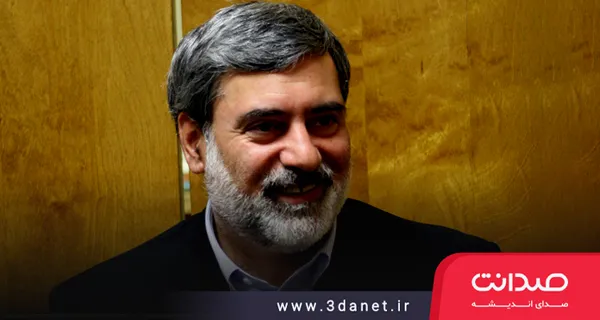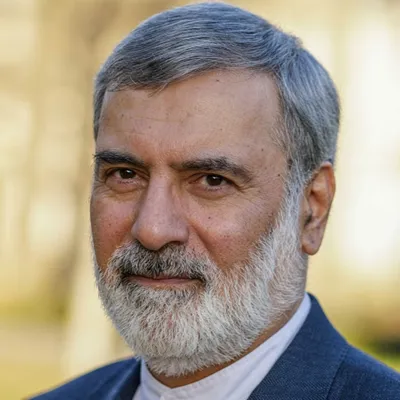
Iranian thinker
Mohsen Kadivar
Mohsen KadivarPhilosophy and Political ThoughtIranianb. 1959
In their times
Open in the Timeline of ThoughtInfluenced2


Influenced by3


Critics1

Same school2


Contemporaries7


Life and Thought
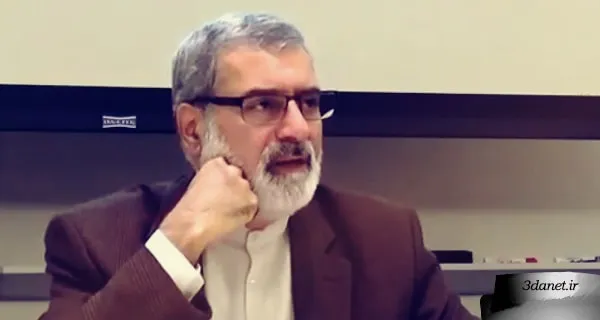
Mohsen Kadivar, born June 1959 in Fasa, is an Iranian jurist, theologian, and religious intellectual. He is a research professor of Islamic studies at Duke University in the United States and a critic of the theory of the Guardianship of the Jurist, as well as an activist in the fields of human rights and Islamic philosophy.
Mohsen Kadivar, born June 1959 in Fasa, is an Iranian jurist, theologian, religious intellectual, and researcher in Islamic studies. He is a full research professor of Islamic studies in the Department of Religious Studies at Duke University in the United States. Kadivar is considered one of the important figures of contemporary religious intellectualism in Iran, and his main areas of work are Shiite political jurisprudence, Islamic theology, Islamic philosophy, human rights, freedom of religion, and the critique of the theory of the Guardianship of the Jurist.
He began his Islamic studies in 1980 and then continued at the Qom Seminary. His most important teachers were Hossein-Ali Montazeri and Abdollah Javadi-Amoli. In 1997, Kadivar received a certificate of ijtihad from Hossein-Ali Montazeri. He also earned a master's degree in theology and a doctorate in Islamic philosophy and wisdom from Tarbiat Modares University. His doctoral dissertation was on the views of Aqa Ali Modarres Tehrani in Transcendent Theosophy.
From the beginning, Kadivar has been engaged with the issue of the relationship between jurisprudence, governance, freedom, and human rights. His intellectual project can be summarized in three axes: the structural reform of the Islamic heritage, the critical refinement of Shiite thought, and rethinking the relationship between tradition and modernity.
In political jurisprudence, he is a serious critic of the theory of the Guardianship of the Jurist and appointed religious government. In the field of human rights, he has endeavored to show that a reading of Islam can be presented that is compatible with freedom of religion, human dignity, and civil rights. In philosophy and theology, he has also focused on Transcendent Theosophy, the rational tradition of Shiism, and the critical editing of philosophical texts.
Bibliography
Writings and transcribed lectures11 titles
Theories of the State in Shiʻi Jurisprudence
Guardianship-based Government
Appointed Government
Concerns of Religious Government
Sharia and Politics: Religion in the Public Sphere
Khorasani Book of Politics
Ḥaqq al-Nās: Islam and Human Rights
Apostasy Punishment and Religious Freedom
The Book of Reason
The Collected Works of the Founding Sage Aqa Ali Modarres Tehrani
Bibliography of the Rational Sciences