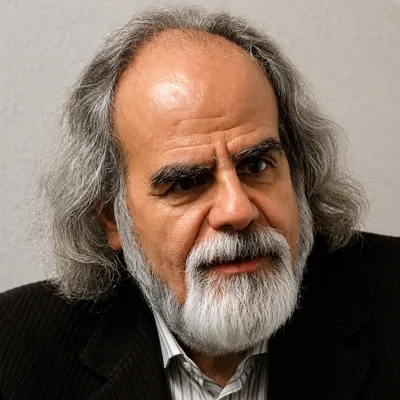
Iranian thinker
Mostafa Malekian
Mostafa MalekianEthics and Religious StudiesIranianb. 1956
The most important duty of a human being is to reduce the suffering of human beings.


Life and Thought
Moral philosopher and theorist of 'Rationality and Spirituality'; one of the most influential intellectual figures in contemporary Iran bridging ethics, religion, and everyday life.
Mostafa Malekian was born on June 2, 1956, in Shahreza, a city in Isfahan Province. He completed his elementary and most of his high school education in his hometown, and after obtaining a diploma in mathematics in Tehran, influenced by his parents' advice and pressure from some relatives, he initially turned to technical-engineering fields and began his university studies in 1973 in mechanical engineering at the Faculty of Engineering of the University of Tabriz.
However, after two years of studying in this field, he concluded that it was not right for a gap to exist between his field of study and the fields his heart was devoted to, namely the humanities. Therefore, he withdrew from his studies, retook the university entrance exam, and was accepted with first rank in the field of Islamic Philosophy at the University of Tehran, where he began his studies. He found the classes of Morteza Motahhari to be among the few useful classes in that field. He also attended the classes of Mehrdad Bahar and Abdolhossein Zarrinkoub as an auditing student and was very interested in and fascinated by them. He also frequently visited the home of the late Amirhossein Yazdgerdi, who was his professor of Persian language and literature, and served as his assistant in scholarly research.
Towards the end of his undergraduate studies, when he had only one semester left, the Shah's regime arrested him for possessing the works of Dr. Ali Shariati and imprisoned him for a few days, subsequently barring him from continuing his education at the university. After the victory of the Islamic Revolution, he returned to the university and graduated in July 1979. In that same month of July 1979, he married Ms. Simin Saleh, and in the same year, he went to the Qom Seminary to study Islamic sciences in general, and Islamic philosophy and mysticism in particular. Also, at the insistence of Dr. Mofatteh, the then-president of the University of Tehran, he continued his studies at the master's level in philosophy. However, towards the end of his master's studies, for some reasons, he abandoned academic education and continued with personal study and seminary education.
He had previously learned Arabic language and literature. In Qom, he continued Islamic philosophy, Islamic mysticism, principles of jurisprudence, and jurisprudence to the advanced level; but over time, he gravitated more and more towards Western philosophy and, alongside the conventional seminary courses, studied Western philosophy on his own. In addition, he took on the teaching of some subjects that were outside the conventional seminary system, such as the English language.
He resided in Qom for 18 years, from 1979 to 1997. During this period, however, he also traveled back and forth to Tehran, and from 1986, he began teaching at the Faculty of Theology and Islamic Studies of the University of Tehran and also taught at Imam Sadiq University. Almost simultaneously, he was invited to teach graduate courses at Tarbiat Modares University, and again concurrently, he was invited to Sharif University of Technology. Thus, he taught at four universities, at one as a resident professor and at the other three as a visiting and guest professor.
He returned to Tehran in 1997. However, he was not disconnected from Qom; for instance, although he had never taught at Mofid University in Qom, he was a member of the dissertation approval board of that university. He also taught for years at the Teacher Training Center of the Qom Seminary, which was affiliated with the University of Qom, and collaborated with the Imam Khomeini Educational and Research Institute, and was also a senior advisor at the Research Center for Islamic Philosophy and Theology of the Islamic Culture and Thought Research Institute. Since 2009, his activities have been limited to teaching at non-governmental institutions.