Do not say we have no access to that King— / With the generous, things are never difficult.







Life and Thought
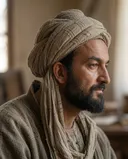
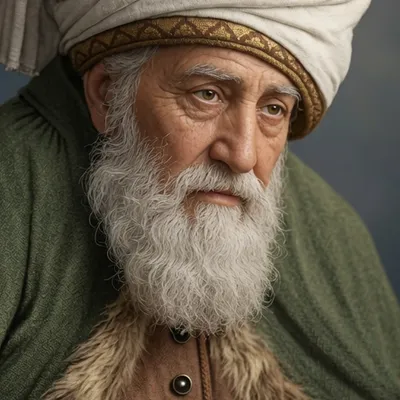
Jalal al-Din Mohammad Balkhi, known as Molana, is an Iranian-Islamic poet and mystic born in 1207 CE and died in 1273. His thought revolves around love and inner spiritual journey, and works such as the Masnavi-ye Ma'navi and the Divan-e Shams remain from him.
Jalal al-Din Mohammad Balkhi, known as Molana, Mowlavi, and in the West as Rumi, was born in 604 AH / 1207 CE and died in 672 AH / 1273 CE in Konya. He was a Persian-language poet, Hanafi jurist, theologian, Sufi mystic, and one of the greatest figures of Iranian-Islamic culture.
Molana was born in Balkh or its nearby regions. His father, Baha al-Din Valad, known as Sultan al-Ulama, was one of the scholars and mystics of his time. Molana's family migrated from Khorasan during his childhood, and after journeys to Nishapur, Baghdad, Mecca, Damascus, and other cities, they finally settled in Konya. After his father's death, Molana initially appeared mainly as a jurist, teacher, and preacher; but his meeting with Shams-e Tabrizi transformed the course of his life, turning him into an impassioned poet, a lover-mystic, and one of the greatest spokesmen of spiritual experience.
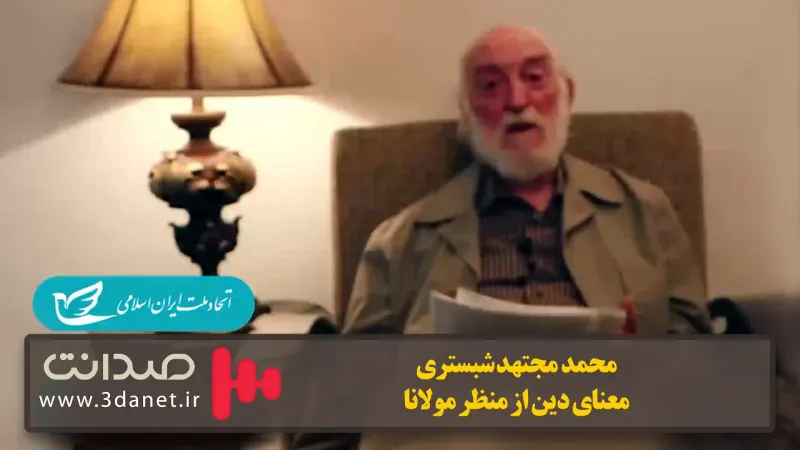
Molana's thought revolves around love, liberation from self-centeredness, inner spiritual journey, moving from form to meaning, and the human connection with Absolute Truth. In his view, religion is not merely a set of external rituals and rulings; it is a path for the transformation of the soul. For this reason, Molana's mysticism is a mysticism of "transformation," not merely a mysticism of interpretation.
Through the language of stories, allegory, humor, dialogue, and poetry, Molana makes the most complex mystical and ethical issues tangible for both general and specialized audiences. He draws upon the Quran, Hadith, folk tales, Iranian culture, philosophy, theology, and everyday experiences to guide the human being from the outward to the inward, and from the self to love.
Bibliography
Writings and transcribed lectures6 titles
Masnavi-ye Ma'navi
Divan-e Shams-e Tabrizi or Divan-e Kabir
Rubaiyat
Fihi Ma Fihi
Seven Sessions
Letters

.webp)