Iranian thinker
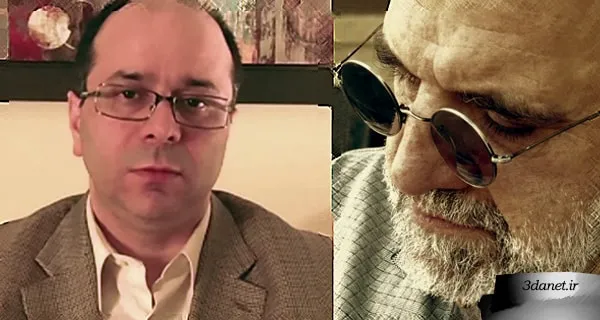
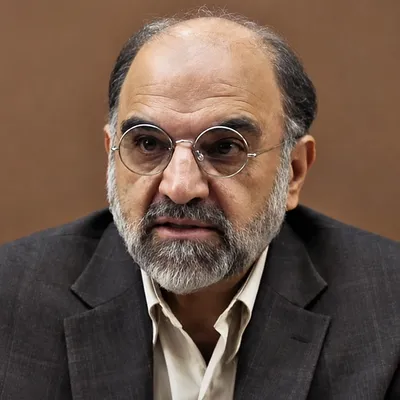
Abdolkarim Soroush
Abdolkarim SoroushPhilosophy of ReligionIranianb. 1945
Religion is divine, but religious knowledge is human, historical, and fallible.
In their times
Open in the Timeline of ThoughtInfluenced17


Influenced by8




Students1

Critiqued1

Critics6


Same school1

Contemporaries7


Life and Thought
Abdolkarim Soroush, born Hossein Haj Farajollah Dabbagh in Tehran in 1945, is an Iranian philosopher and scholar of religion. He developed the theory of the theoretical contraction and expansion of religious knowledge and has taught at several leading universities around the world.
Abdolkarim Soroush, born Hossein Haj Farajollah Dabbagh in Tehran in 1945, is a philosopher, scholar of religion, specialist in Rumi, and one of the most important figures in contemporary Iranian religious intellectualism. He initially studied pharmacy at the University of Tehran and later pursued analytical chemistry and the philosophy of science in London. After the Iranian Revolution, he returned to Iran and, through his lectures, essays, and books, became one of the country’s most influential religious thinkers.
Soroush has taught or conducted research at various Iranian institutions and at universities including Harvard, Princeton, Yale, Amsterdam, and Georgetown. In addition to the philosophy of religion and modern Islamic theology, he is an important scholar of Rumi and has delivered numerous lecture courses on the Masnavi, the Divan of Shams, and mystical experience.
Soroush’s best-known contribution is the theory of the theoretical contraction and expansion of religious knowledge. In this theory, he distinguishes between “religion” and “religious knowledge”: religion is divine, whereas human understandings of religion are historical, changeable, and fallible. This distinction became one of the foundations of religious intellectualism in contemporary Iran.
Other major themes in his thought include religious pluralism, the distinction between the essential and accidental aspects of religion, the expansion of prophetic experience, the prophetic dreams theory of revelation, the relationship between religion and democracy, the freedom of faith, and criticism of the ideological use of religion and clerical power. His later work has increasingly emphasized the experiential, poetic, and historical dimensions of revelation and religious faith.
Bibliography
Writings and transcribed lectures16 titles
The Theoretical Contraction and Expansion of the Sharia
Straight Paths
The Expansion of Prophetic Experience
The Ethics of the Gods
Fatter Than Ideology
Knowledge and Value
Contemplation of Creation
The Restless Institution of the World
The Attributes of the Pious
The Tale of the Lords of Knowledge
The Romantic Gamble
The Tale of Servitude and Enchantment
Politics-Nameh
Secrecy, Intellectualism, and Religiosity
Religion and Power
The Word of Muhammad, the Dream of Muhammad