Language is the house of Being.
In their times
Open in the Timeline of ThoughtInfluenced32


Influenced by8


Students4


Teachers1

Critics1

Contemporaries2


Life and Thought
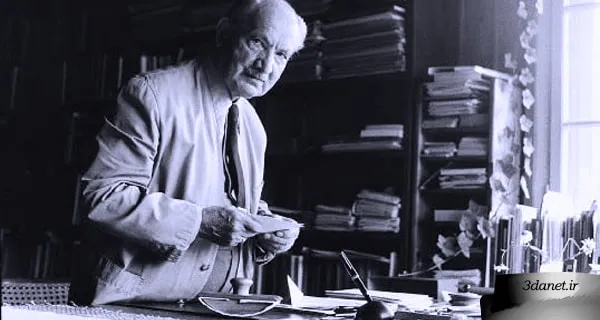
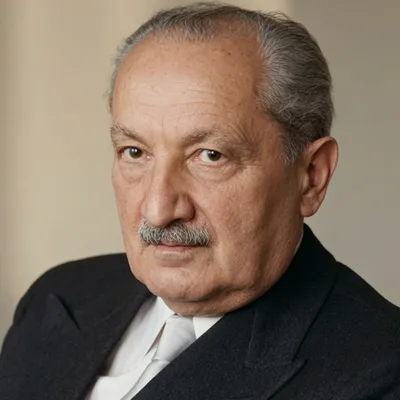
Martin Heidegger (1889–1976) was a German philosopher and one of the most influential thinkers of the twentieth century, whose thought is known for its questioning of “Being.” His most important work is the book Being and Time, which analyzes Dasein and the human relationship with the world.
Martin Heidegger (26 September 1889 – 26 May 1976) was a German philosopher and one of the most influential thinkers of the twentieth century. His thought is known for its questioning of “Being”; a question that, in Heidegger’s view, the history of Western philosophy since Plato had forgotten, attending more to beings than to Being itself. He sought to reorient philosophy toward this fundamental question: What is the meaning of being?
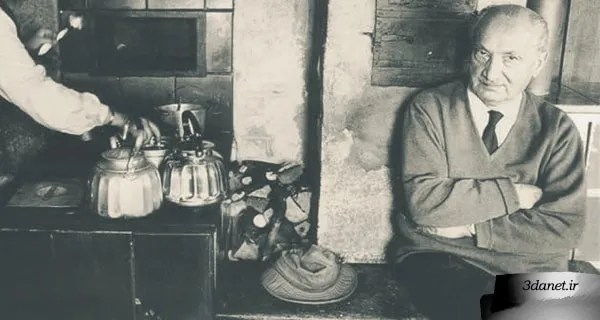
Heidegger was born in Meßkirch, in southwestern Germany, into a traditional Catholic family. His father was a church sexton, and the religious and rural atmosphere of his birthplace left a deep imprint on his language, imagination, and way of thinking. Later, the forest, the path, the hut, silence, the earth, and dwelling came to play an important role in his writings, and many of the titles of his works carry the flavor of this rural, contemplative world.
He began his studies with theology at the University of Freiburg but gradually turned to philosophy. His encounter with Edmund Husserl’s phenomenology transformed his intellectual path. Heidegger served for a time as Husserl’s assistant, but soon struck out on an independent course. He shifted phenomenology from the analysis of consciousness toward the analysis of human existence and its relation to the world.
Heidegger’s most important work, Being and Time, was published in 1927. It is one of the most difficult and influential philosophical works of the twentieth century. Instead of beginning with the mind, the subject, or cognition, Heidegger begins with “Dasein”—the being for whom Being is an issue. Dasein is the human being, but not as a merely biological or psychological entity; rather, it is the human being thrown into the world, living with others, moving toward death, and possessing the possibility of living authentically or inauthentically.
In Being and Time, concepts such as being-in-the-world, anxiety, death, temporality, falling, authenticity, and everydayness occupy a central place. Heidegger shows that our understanding of the world is formed in practical, everyday life, prior to any scientific theory or cognition. Tools, work, language, fear, death, and the relation to others are ways through which Dasein understands the world.
After Being and Time, Heidegger’s thought underwent a significant turn. He focused less on the analysis of Dasein and more on Being itself, language, truth, technology, poetry, and the history of metaphysics. In his later works, Heidegger speaks of language as the “house of Being” and regards poetry as a way of approaching a truth that conceptual and technological thinking cannot grasp.
In his essay “The Question Concerning Technology,” Heidegger does not view technology merely as a collection of instruments, but understands it as a mode of the world’s revealing. In his view, modern technology transforms the world into a standing-reserve, a resource, and material to be exploited, and places the human being within this same logic. Hence, the real danger of technology lies not in the devices, but in the dominant way of looking at Being that it imposes.
Heidegger’s intellectual life is also accompanied by political controversy. In 1933, he accepted the rectorship of the University of Freiburg and for a time aligned himself with the Nazi Party. This part of his life later became one of the most contentious subjects in the interpretation of his philosophy. Despite this controversy, his philosophical influence on thinkers such as Jean-Paul Sartre, Hans-Georg Gadamer, Hannah Arendt, Herbert Marcuse, Paul Ricœur, Jacques Derrida, Michel Foucault, and many currents of continental philosophy is undeniable.
In his final years, Heidegger lived in Freiburg and Meßkirch, continuing to write, lecture, and rethink language, poetry, the history of philosophy, and the human relation to Being. He died on 26 May 1976 and, at his own request, was buried in his birthplace of Meßkirch.