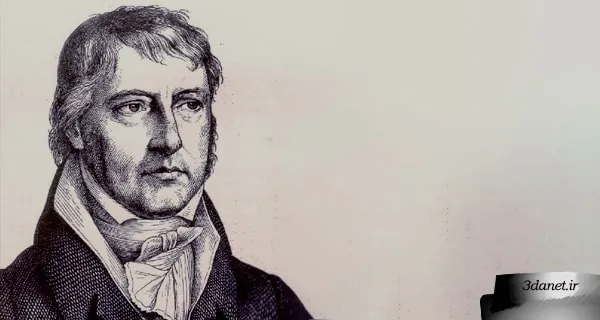
Foreign thinker
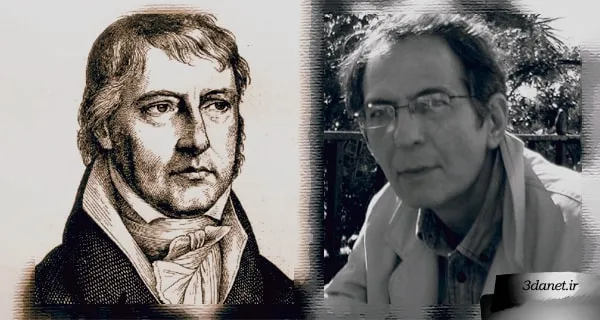
Georg Wilhelm Friedrich Hegel
Georg Wilhelm Friedrich HegelPhilosophyGerman1770–1831
What is rational is actual, and what is actual is rational.




Life and Thought
Georg Wilhelm Friedrich Hegel (1770–1831) was a German philosopher and a central figure of German Idealism. His system of thought had a wide-ranging influence on philosophy, politics, history, and theology, and he introduced the idea of dialectics as the driving force of history and thought.
Georg Wilhelm Friedrich Hegel (27 August 1770 – 14 November 1831) was a German philosopher and one of the most important figures of German Idealism. He is considered one of the most influential philosophers in the history of Western philosophy, and his system of thought had a broad impact on philosophy, theology, politics, historiography, aesthetics, and social theory. Hegel's philosophy is an attempt to understand the world as a historical, rational, and evolving process—a process in which thought, history, and freedom gradually reveal themselves.
Hegel was born in Stuttgart into a cultured Protestant family. From childhood, he had a passion for study and became acquainted with literature, history, theology, and philosophy. He studied at the Tübinger Stift, where he formed close friendships with Friedrich Schelling and Friedrich Hölderlin. Like many European intellectuals of the time, these three young men regarded the French Revolution as a decisive event and saw it as a sign of freedom entering the stage of history.
After completing his studies, Hegel worked for several years as a private tutor in Bern and Frankfurt. During this period, he focused on theology, Christianity, ethics, and the relationship between religion and freedom, writing manuscripts that mostly remained unpublished during his lifetime. His serious entry into the academic world began with Schelling's invitation to Jena. In Jena, Hegel wrote his first major work, Phenomenology of Spirit, a book published precisely during the turmoil of the Napoleonic era and the occupation of Jena.
Phenomenology of Spirit is one of Hegel's most difficult yet most fundamental works. In this book, he traces the path of consciousness from sensory experience to self-consciousness, reason, spirit, religion, and finally absolute knowing. One of the most famous sections of the book is the discussion of "Lordship and Bondage," which later became highly influential in political philosophy, existentialism, Marxism, psychoanalysis, and critical theory.
After the closure of the University of Jena, Hegel briefly became the editor of a newspaper in Bamberg and then became the headmaster of a gymnasium in Nuremberg. It was during this period that he wrote Science of Logic, a work in which he viewed logic not merely as a formal tool for reasoning, but as the inner form of the movement of thought itself. He then became a professor of philosophy at Heidelberg and published the Encyclopedia of the Philosophical Sciences. In 1818, he moved to the University of Berlin, where he reached the peak of his fame.
In Berlin, Hegel became one of the central figures of German philosophy. His lectures on the philosophy of history, the history of philosophy, aesthetics, and the philosophy of religion were compiled and published after his death and played a major role in spreading the Hegelian school. In 1821, he published Elements of the Philosophy of Right, his most important political work, in which he discusses the state, civil society, the family, right, ethics, and freedom.
Hegel's philosophy is founded on the idea of "dialectics": the movement of thought and reality through contradiction, negation, sublation, and development. For him, history is the stage on which freedom becomes manifest, and reason operates not outside the world but within the world and history itself. This perspective led Hegel to inspire both conservative and statist currents, as well as to influence radical thinkers like Marx and critical theorists.
In 1830, Hegel became the rector of the University of Berlin. A year later, on 14 November 1831, at the age of 61, he died of cholera. After his death, his students and followers collected his unpublished works and lectures. Since then, Hegel's philosophy has become one of the main arenas of intellectual struggle in modern philosophy.