He who has a 'why' to live for can bear almost any 'how'.
In their times
Open in the Timeline of ThoughtInfluenced41




Influenced by15


Critiqued3


Critics1

Contemporaries1

Life and Thought
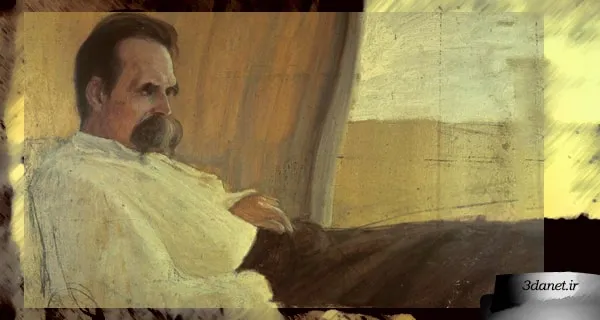
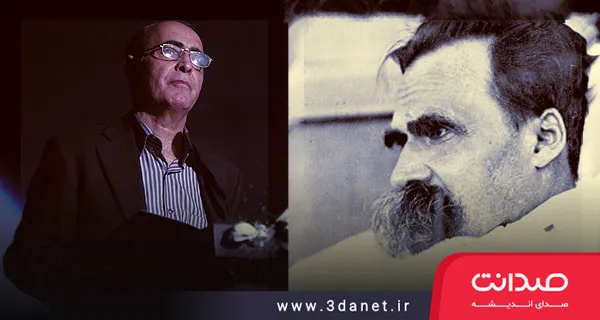
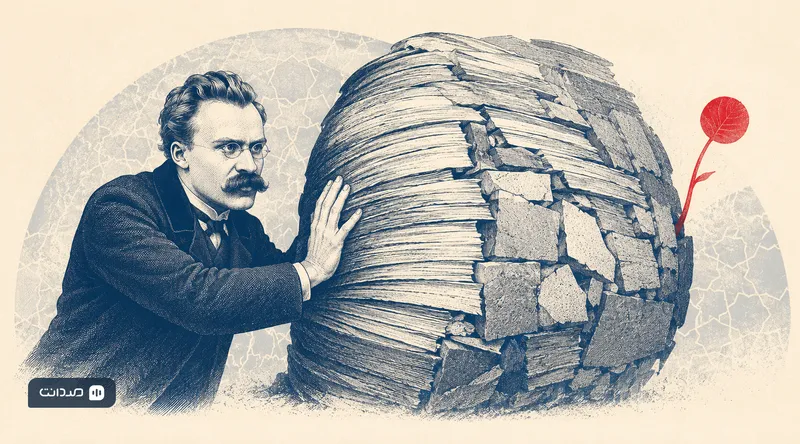
Friedrich Wilhelm Nietzsche was a German philosopher, writer, and cultural critic, considered one of the most influential figures in the history of modern thought. His works have had a profound impact on philosophy, literature, psychology, and the arts of the twentieth and twenty-first centuries.
Friedrich Wilhelm Nietzsche, born October 15, 1844, and died August 25, 1900, was a German philosopher, writer, and cultural critic. He is considered one of the most influential figures in the history of modern thought, and his works have had a profound impact on philosophy, literature, psychology, art, and cultural criticism of the twentieth and twenty-first centuries.
In his youth, Nietzsche excelled in classical philology and became a professor at the University of Basel at the age of 24. However, due to illness, he withdrew from academic teaching and wrote his most important works in the years that followed. His writings are a blend of philosophy, literature, aphorism, poetry, cultural critique, and epigram, and stylistically, they hold a special place in the German language.
Nietzsche's thought centers on the critique of established values, traditional morality, absolute truth, religion, European culture, and the condition of modern humanity. He introduced concepts such as the "death of God," "will to power," "Übermensch," "eternal recurrence," "master–slave morality," and "perspectivism" into philosophy and sought to examine the possibility of creating new values in the face of the crisis of nihilism.
Nietzsche's cultural significance lies in his expression of philosophy in a poetic, fierce, personal, and creative language. His works have been inspiring not only for philosophers but also for writers, artists, literary critics, and cultural thinkers. Thus Spoke Zarathustra is his most famous literary-philosophical work and is considered one of the most enduring philosophical texts of the modern world.
Bibliography
Writings and transcribed lectures18 titles
Thus Spoke Zarathustra
The Birth of Tragedy
Untimely Meditations
Human, All Too Human
Daybreak
The Gay Science
Beyond Good and Evil
On the Genealogy of Morality
The Wagner Affair
Twilight of the Idols
Dajjal
Ecce Homo
Nietzsche contra Wagner
The Will to Power
Nietzsche's Letters and Notes
Posthumous Fragments
Philosophy in the Tragic Age of the Greeks
Truth and Lie in an Extra-Moral Sense